

Health News
sponsored by VCU Health
The Journeys of a Teenager
By: J. Chevonte’ Alexander
Urban Views Health News is a bi-monthly article focusing on health, specific health-related issues, fitness and fun and giving tips on how we can become healthier individually and as a community.
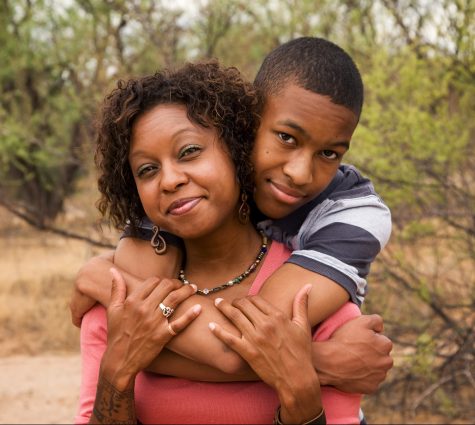
According to the World Health Organization, around 1 in 6 persons in the world is an adolescent: that is 1.2 billion people aged 10 to 19. As consecutive life stages, adolescence and young adulthood mark periods of developmental transition from childhood to full-fledged adulthood; the experiences that take place and the behavioral patterns that form during these years can have lasting effects on adult health, well-being and productivity. It is even more important for the community to aid in the successful transition and growth of our youth during this time. Understanding adolescents in these crucial years is prudent to helping our community progress and be successful. Urban Views Weekly had the opportunity to chat with Dr. Stephanie Crewe, a physician in the Division of Adolescent Health at the Children’s Hospital of Richmond at Virginia Commonwealth University. A native of Richmond, Dr. Crewe was born and raised as an inner city kid attending George Wythe High School. Attending a rough inner city school, the goal for college seemed bleak but with great parents and support system, Dr. Crewe made a successful future a reality.
“I chose pediatrics because I knew I could connect with this vulnerable population,” says Crewe. “I wanted to be the voice for underserved populations and be a sounding board for this major transition in a child’s life.”
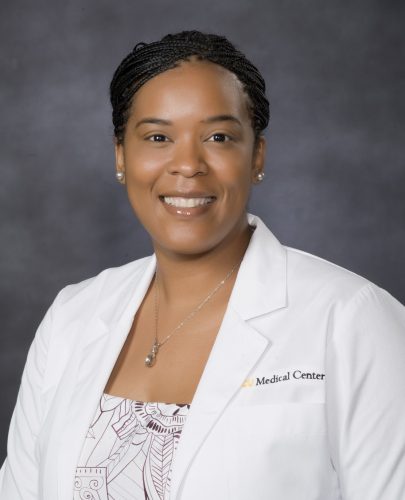
Dr. Stephanie Crewe
The Children’s Hospital of Richmond at VCU considers adolescents ages 12 to 22 years old. This age group sees a lot of health issues and illness – but most are preventable. Risky behaviors are the main issues adolescents are experiencing. This includes sexual risk behaviors, texting while driving, unintentional behavior like violence in our communities or homes and finally prominent health issues like undertreated or undiagnosed mental health issues (depression, suicidal thoughts and self-injury).
So how can we as a community connect with our adolescents more to help ease this transition?
“We need to increase community based organizations involvement to expose our adolescents to things they have never experienced before.” comments Crewe. “We have to broaden their possibility scope – if you do not think you will make it, then you will think you are stuck or have unrealistic expectations.”
Supporting clinical services that are developmentally appropriate, culturally attuned – address issues before they blow up and become serious.
“Adolescence is the most phenomenal stage of a human’s life – physically, psychologically, , developmentally, emotionally, socially – no other time in a person’s life is this critical. So, we have to understand the tenets of this change and that equates to the ability to understand what our children are experiencing and how to apply the health facet to it.” says Crewe.
Crewe also gives some other suggestions of what we can all do to better understand our adolescents:
- Medical practitioners have the opportunity to develop a rapport with their patients at this age – having this relationship can yield better health outcomes in that youth understand that their doctor is there to listen and serve you
- Be a voice of advocacy
- Do not assume what youth want or issues they are experiencing
- Adolescent health has to be put at the top of the priority list because teens’ lives matter as well
- Increase the dialogue – do not only talk at our teens, but also listen
- Once we are better listeners, we have to show and prove by our actions
- Once we act, we have to have improved follow-up action
- Do not be fearful of what your teens will say
- Have honesty, be direct and build the trust – if teens do not feel safe and cared for they will not respond
- Teens have to see adults as a team – this includes parents, guardians, teachers, doctors, coaches, etc.
- If teens see they have a whole team, it is remarkable the changes that will occur – we have to guide them along this path of positivity and hope
“We have to believe in teens’ resiliency, we have to give them kudos, we have to put down the notion that they do not care or they are lost and let them know that! When you say ‘good job’, it boosts their level of self-esteem and confidence.” comments Crewe.