

September is Prostate Cancer Awareness Month. Prostate cancer is the second most common type of cancer in American men (21%) and third leading cause of cancer-related death in men in the United States. Approximately, 1 out of 7 men will be diagnosed with prostate cancer in their life-time. The American Cancer Society estimates that 161,360 men will be diagnosed with prostate cancer in the U.S. in 2017 and 26,730 men will die from their disease. Prostate cancer is a disease of the prostate where cancer cells form in the prostate tissue. The prostate is a gland of the male reproductive system. It is located just below the bladder and produces fluid that makes part of semen.
“Prostate cancer is a disease of the elderly with an average age of 66 years at diagnosis.” says Asit Paul, M.D., Ph.D., medical oncologist and member of the Developmental Therapeutics research program at VCU Massey Cancer Center and assistant professor in the Division of Hematology, Oncology and Palliative Care at the VCU School of Medicine. “Eighty percent of cases are diagnosed in early stage as localized cancer. Patients may have no symptoms or may have weak urinary flow, difficulty urinating or frequent urination. Advance stage may have bone pain and other symptoms because of the spread of disease to the bones and other organs.” he continues. [mycred_link id=virtscav27 href=”https://dev.urbanviewsweekly.com/congratulations/”] [/mycred_link]
Usually prostate cancer grows slowly and is initially confined to the prostate gland, where it may not cause serious harm. However, while some types of prostate cancer grow slowly and may need minimal or even no treatment, other types are aggressive and can spread quickly.
Prostate cancer that’s detected early — when it’s still confined to the prostate gland— has a better chance of successful treatment. Prostate cancer may cause no signs or symptoms in its early stages. Prostate cancer that’s more advanced may cause signs and symptoms such as:
- Trouble urinating
- Decreased force in the stream of urine
- Blood in semen
- Discomfort in the pelvic area
- Bone pain
- Erectile dysfunction
Make an appointment with your doctor if you have any signs or symptoms that worry you.
“Treatment of prostate cancer depends on the stage at diagnosis.” says Dr. Paul. “The options for early stage prostate cancer include observation, active monitoring, surgery and radiation. Advance stage requires hormone treatment with or without chemotherapy.”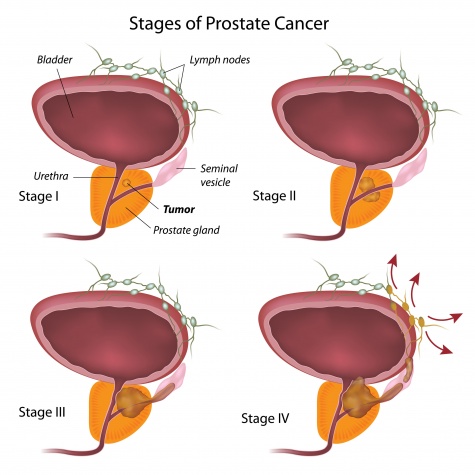
Factors that can increase your risk of prostate cancer include:
- Your risk of prostate cancer increases as you age.
- Prostate cancer affects African American men disproportionately. African American men have a 70% higher incidence and 2.3 times higher risk of death from prostate cancer compared to Caucasian men. African American men are also diagnosed at earlier age and have higher incidence of aggressive disease.
- Family history. If men in your family have had prostate cancer, your risk may be increased. Also, if you have a family history of genes that increase the risk of breast cancer or a very strong family history of breast cancer, your risk of prostate cancer may be higher.
- Obese men diagnosed with prostate cancer may be more likely to have advanced disease that’s more difficult to treat.
“Regular exercise and healthy diet can reduce the risk of several cancers, including prostate cancer.” comments Dr. Paul. “Use of certain medications can reduce the risk of prostate cancer, but should not be used without a physician’s consultation.”
As the month of September brings prostate cancer into focus, it’s time to increase public understanding of the disease, including its prevalence, approaches to screening and prevention, treatment options, and resources that help save all of our men!

2 comments
Hi Great article.It is tough to experience symptoms of stomach cancer at early stages, and this is one of the reasons why it was difficult to detect stomach cancer until it advances.I’ve read an article about Stomach Cancer.The symptoms of Stomach cancer are Unexplained Loss of Appetite,Stomach Pain and Nausea and Vomiting. Do you agree with that?
Great article. It will help man to be safe from prostate cancer.
Comments are closed.