

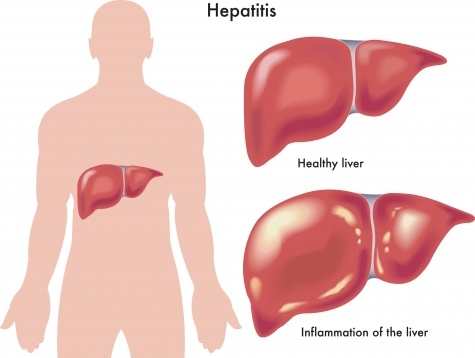
 Hepatitis is the inflammation of the liver. Your liver is the largest organ inside your body. It helps your body digest food, store energy and remove poisons.
Viruses are a common cause of hepatitis. The type of hepatitis is named for the virus that causes it; for example, hepatitis A, hepatitis B or hepatitis C.
“Hepatitis C is common cause of liver disease that occurs in 5 million individuals, and is common in baby boomers. Studies have shown that ? of the total population of Americans with chronic hepatitis C were born between 1945 and 1965.” says Dr. Richard Sterling, professor of internal medicine and chief of liver disease at Virginia Commonwealth University’s School of Medicine.
Drug or alcohol use can also cause hepatitis. In other cases, your body mistakenly attacks healthy cells in the liver.
Some people who have hepatitis have no symptoms. Others may have:
- Loss of appetite
- Nausea and vomiting
- Diarrhea
- Dark-colored urine and pale bowel movements
- Stomach pain
- Jaundice, yellowing of skin and eyes
Some forms of hepatitis are mild, and others can be serious. Some can lead to scarring, called cirrhosis, or to liver cancer. Sometimes hepatitis goes away by itself. If it does not, it can be treated with drugs. Sometimes hepatitis lasts a lifetime. Vaccines can help prevent some viral forms.
According to the Centers for Disease Control and Prevention (CDC), approximately 4.4 million Americans are currently living with chronic hepatitis B and C. Many more people don’t even know that they have hepatitis.
5 types of viral hepatitis
Viral infections of the liver that are classified as hepatitis include hepatitis A, B, C, D and E. A different virus is responsible for each type of virally transmitted hepatitis.
Hepatitis A is always an acute, short-term disease, while hepatitis B, C, and D are most likely to become ongoing and chronic. Hepatitis E is usually acute but can be particularly dangerous in pregnant women.
Hepatitis A
Hepatitis A is caused by an infection with the hepatitis A virus (HAV). This type of hepatitis is most commonly transmitted by consuming food or water contaminated by feces from a person infected with hepatitis A.
Hepatitis B
Hepatitis B is transmitted through contact with infectious body fluids, such as blood, vaginal secretions, or semen, containing the hepatitis B virus (HBV). Injection drug use, having sex with an infected partner, or sharing razors with an infected person increase your risk of getting hepatitis B. It’s estimated by the CDC that 1.2 million people in the United States and 350 million people worldwide live with this chronic disease.
Hepatitis C
Hepatitis C comes from the hepatitis C virus (HCV). HCV is among the most common blood borne viral infections in the United States. Approximately 2.7 to 3.9 million Americans are currently living with a chronic form of this infection.
Hepatitis D
Also called delta hepatitis, hepatitis D is a serious liver disease caused by the hepatitis D virus (HDV). HDV is contracted through direct contact with infected blood. Hepatitis D is a rare form of hepatitis that only occurs in conjunction with hepatitis B infection. The hepatitis D virus cannot multiply without the presence of hepatitis B. It’s very uncommon in the United States.
Hepatitis E
Hepatitis E is a waterborne disease caused by the hepatitis E virus (HEV). Hepatitis E is mainly found in areas with poor sanitation and typically results from ingesting fecal matter that contaminates the water supply. This disease is uncommon in the United States. However, cases of hepatitis E have been reported in the Middle East, Asia, Central America, and Africa, according to the CDC.
As stated before, Hepatitis C is the most common among all of them. Hepatitis C leads to cirrhosis or liver cancer in a quarter of individuals diagnosed.
So, how can you contract Hepatitis C?
Hepatitis C is transmitted through direct contact with infected body fluids, typically through injection drug use and sexual contact. Once you are diagnosed with hepatitis, the next step is for the physician to determine how bad it has damaged the liver.
“Assessment of liver damage and treatments for hepatitis C have advanced tremendously in the last few years, and the process of finding out what’s going on in your body should not be a barrier of moving forward with treatment.” comments Dr. Sterling.

