

By Janna M. Hall
 A new year is on the horizon! We’re days away from 2017, grateful to have made it out of 2016 alive and well. With the countless deaths of historical figures and loved ones, the election cycle, and the fight for justice across the nation, we can all agree that it’s time for a fresh start. We’re collectively excited for a new year, and another chance to make this world a better place for everyone. Actually accomplishing that, though, begins with us. It begins with our health and in our homes, and making us healthy, happy, and productive members of society that can then impact the world. The start of the New Year isn’t just about New Year’s Eve celebrations, but more so about everything that comes after the confetti has dropped and the balloons have deflated.
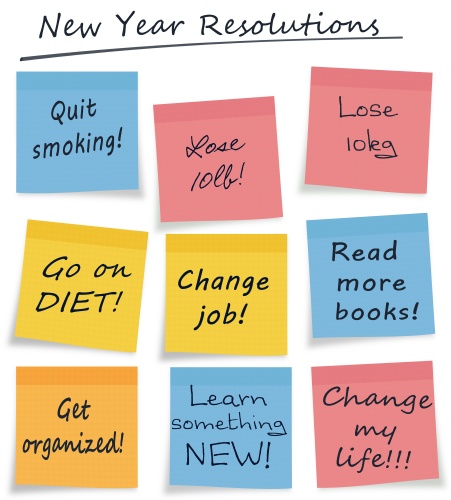
Every January, millions of Americans kick off the new year with visions of a fresh start dancing in their head. They create laundry lists of ways they can become better versions of themselves, from weight loss and fitness goals to plans of becoming more active in their community. And for the most part, those people are determined to make serious changes. Sometimes, their livelihoods depend on it—sickness and health may be a matter of 50 pounds, or more community involvement could mean crime rates drop—and other times, it’s a pesky goal that you’ve never been able to stick to, so the new year’s your shot. According to the University of Scranton’s Journal of Clinical Psychology, 45% of America ends their New Year’s Eve celebrations with promises to do things differently with this fresh start they’ve been given. Unfortunately, only 8% of that 45% actually achieve their goals. That’s right—with all of the promises made, goals set, and “accountability buddies” joining forces, only 8% make it to their self-determined finish line. Why is this?
![[ File # csp12563221, License # 2693137 ] Licensed through http://www.canstockphoto.com in accordance with the End User License Agreement (http://www.canstockphoto.com/legal.php) (c) Can Stock Photo Inc. / sam74100](https://dev.urbanviewsweekly.com/wp-content/uploads/2016/12/canstockphoto12563221-333x500.jpg)
The answer is simple: unrealistic expectations paired with poor planning. Too often, we fail to set manageable goals, neglecting to take into consideration the habits we’ve already established in contrast to the new lifestyle we want. Is it realistic to think you’ll make it to the gym five days a week when you’ve never made exercise a priority before? Do you really think it’s possible to build up a bulky savings account right away when you’ve never actually created a solid budget for yourself? Is it more realistic to plan to perform small acts of kindness every day versus expecting to lead a movement in your community tomorrow? When goal-setting, consider both where you’d like to be and where you are now. Develop a solid game plan that makes for a smooth transition and prevents you from falling in line with the “maybe next year” folks.
Making an impact in your community begins on a small scale. Sure, we can aspire to be the Martin Luther Kings, the Fred Hamptons, the Angela Davises, and the Marcus Garveys of our time, but none of that comes overnight. It doesn’t come after a week or even a month of community involvement. If your New Year’s resolution is to become more active in your community, start small. Identify problems, seek out solutions, hold events that educate your neighborhood, bring more members on board, and activate. Perform small acts of kindness that inject the community with more humanity, more compassion, and more love. Reach one person at a time, and you’ll see that the impact you make touches individual lives, which will in turn permeate the community with those things that bring about true change. More imperative than actually wanting to see change—both in yourself and in the community—is setting realistic timelines, and realistic goals for the change you want to see. If 2017 is your year to serve others, then pace yourself, and each month make more of an effort to reach your neighbor and create a movement.
As exciting as they are, resolutions are meant to be accomplished slowly, planned out with tangible, measurable milestones. Hitting the ground running full speed on January 1st leads to inevitable burnout—develop a plan of action early on, so that you’re able to execute when the New Year hits.
Diet and exercise goals in particular are also tricky when it comes to long-term commitments. Living in a “microwave culture,” where information can be obtained with a quick .05 second Google search, we’re no longer willing to wait for things we desire. And that includes waiting for weight-loss results. We step on the scale daily, praying we’ve lost at least one pound since the day before, and check the mirror daily for a semblance of progress after a few days in the gym. Such lofty ideas about what it truly takes to achieve a goal leaves many heading into February having already abandoned their goal. 
Charlene Lewis, Fitness Instructor in the Richmond area, works with countless gym members both in her aerobic classes and personal training sessions who quickly abandon their resolutions before ever truly seeing even a fraction of the results they set out to achieve.
“The number one reason why people fail their New Year’s resolutions is due to expectations that weren’t realistic,” she explains. “When working with people trying to improve their health, or when setting any goal, for that matter, I stress that goals need to be S.M.A.R.T. Goals must be Specific, Measurable, Achievable, Realistic, and Time-bound.”
Lewis stresses to both herself and fitness clients that any positive change—big or small—is a step in the right direction. And that’s where many self-sabotage; they believe that when seeking a change, it must be grand in order for it to count. But slow and steady wins the race. Slow and steady gets true results.
“For example, your goal shouldn’t be to work out every single day—that’s not realistic, and it’s not achievable,” she explains. “Instead, set your goal at maybe three days a week.”
 Aiming for three days instead of the entire week allows you to maintain a sense of normalcy—your day-to-day schedule isn’t thrown off drastically, which provides more of an opportunity to incorporate working out into your already-established lifestyle instead of a complete takeover. Lewis takes the same approach when it comes to weight loss.
“Losing 30 pounds in a month isn’t realistic (or even healthy, for that matter). Instead, aim for a healthy five-pound weight loss, which is much easier to maintain.”
Above all, Lewis believes that the mindset is everything. “Wanting something and working towards it are two fundamentally different things,” she explains. “Keep your goals a priority while also carving out the time to follow through.”
Lastly, don’t wait to get started. If you know what you want to accomplish in the New Year, start working towards  that now. Don’t make the common mistake of prolonging your start date. Don’t wait until Monday, January 2nd to get started just because technically, January 1st is still the weekend. And if you’ve got your New Year’s resolution planned out with S.M.A.R.T goals now, why not start now? If you want to volunteer more, start on Christmas. If you want to lose weight in the New Year, start making slight changes to your eating habits today. It’s never too soon to begin the life you imagine for yourself.
“Always make time for things that really matter to you,” Lewis reminds us. “Get one step closer to fulfilling the promises you made to yourself.”
