

By Janeal Downs
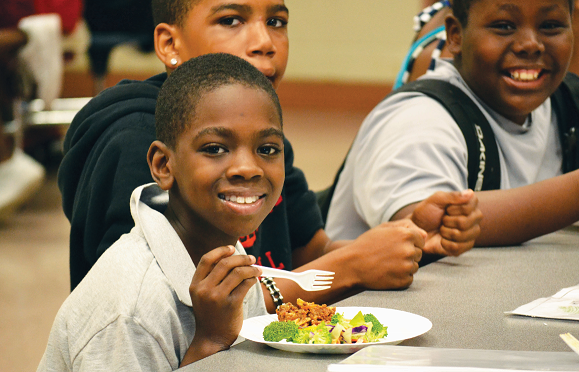
Whether they pay full price, prostate pay a reduced rate, advice or it is free, students have lunch as a resource to them at school. There are even after school programs where children are able to get meals late in the day. However, when summertime comes around and school is let out, parents who rely on these meals to feed their children have a summer-long dilemma to face. In a partnership with the U.S. Department of Agriculture and the Virginia Department of Health, FeedMore is working to take control of this situation with its Summer Feeding Program.
This service is free and Hope Kestle, the Children’s Program Manager of FeedMore, said the only requirement is for the children to be under 18. She said FeedMore will work with 48 food service sites this summer. “Nutrition is important not only for bodily growth but for brain development, Kestle said. “When school’s out, it’s very critical that kids still have access to healthy nutrition and a place to go to be able to have a meal.”
Media and Public Relations manager of FeedMore, Jeff Baldwin said FeedMore is one of several organizations who will participate and aid communities with summer feeding programs across the commonwealth. Through their community kitchen, FeedMore will prepare lunches every day and distribute pre-prepared breakfasts of shelf-stable breakfast items. “We all know that kids rely on nutritious food to develop mentally, to develop physically, so to know that without a program like Summer Food Service by FeedMore, these kids have the potential to go hungry in the summer months,” Baldwin said. “They don’t have that access to the same food they do while they’re in school.”
Depending on how capable parents are on different days of the week, Baldwin said a certain amount of meals are prepared and the different sites help determine if they need to raise or decrease the number of meals the site is receiving. He said last year over 152,000 meals were distributed. Some of the sites serve only breakfast, some serve only lunch, and sites can be added over the summer. Most of the sites are open enrollment for any child under the age of 18. A closed enrollment site would be something such as the Higher Achievement Programs of Richmond. “These are kids of working class families who struggle, who live paycheck to paycheck, and so we need to do everything we can to ensure that these kids can grow up to be productive members of the Richmond community,” Baldwin said.
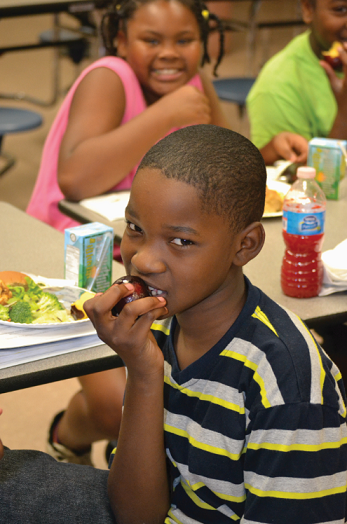
Baldwin said FeedMore, which is the core form of relief agency in central Virginia and operator of a community kitchen and Meals on Wheels, is meant to serve families, children and seniors who go hungry every day. “We partner with a network of partner agencies through our 31 county footprint. We have about 330 partner agencies that we work with to try and ensure that people have food on their tables or people may otherwise go without,” Baldwin said about the organization. As a member of the Feeding America partner network and with USDA, Baldwin said this is a national program that has been happening locally for at least 20 years. The Summer Feeding Program is what he called an extension of FeedMore’s Kid’s café program which is an after school feeding program that sometimes is the last meal a child can get in a day.
The Summer Feeding Program does get funding through USDA reimbursements, donations, and volunteers, but he said they need more support. He said in Virginia one in seven people, about 205,000 individuals, struggle to put food on the table. “We can only change that if we all do that together and all pitch in and make sure that our neighbors in need have food on their tables; it’s such a basic human thing, and we can all work together and really help these people get back on their feet,” Baldwin said. “We can build the community together by working to make sure these people have food.”
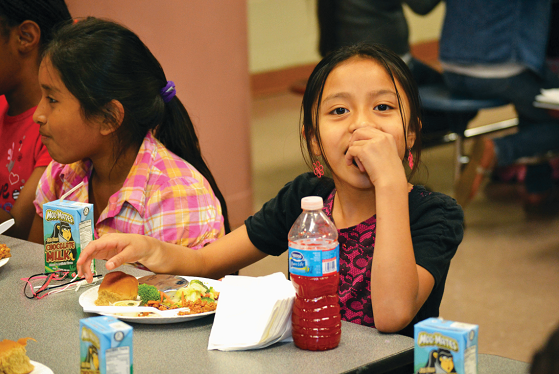
One of the sites to work with FeedMore this summer is Salvation Army Boys and Girls Club in Churchill. Communications director of the Salvation Army of Central Virginia, Matt Pochily said the Boys and Girls Club has about 100 to 115 children come every day. He said the club is open five days a week and has been working with FeedMore for at least ten years. With the help of FeedMore, he said it is important they get a meal because they are there until almost seven every night. “During the summer, it’s almost more important that we have food for the children that are there because a lot of these children who are coming to the summer camps would be receiving free or discounted meals at school, and now that they’re home and school’s out, those meals are not there,” Pochily said.
Pochily said the communities’ support of programs such as the Summer Feeding Program helps keep the children with free or reduced lunches nourished and helps take some of the burden off of parents who would normally worry over how to feed the children over the summer break. “For them to be able to come to the club, where they can participate in educational and recreational activities, and still be able to get the meals and nourishment that they need to participate to stay healthy and engaged in the activities is huge.”
