

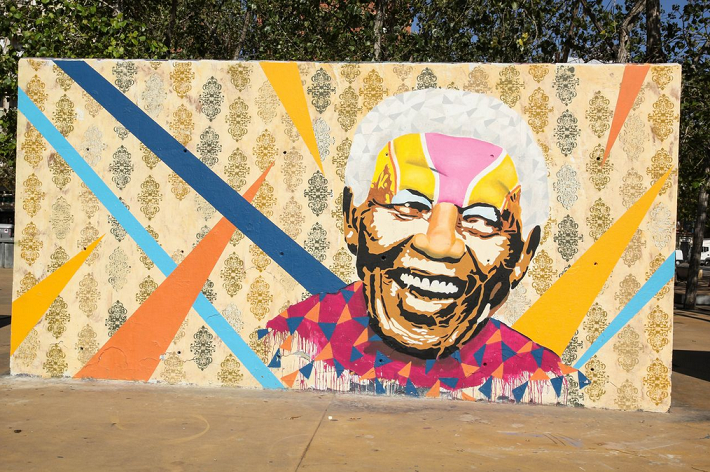
Nelson Mandela, buy cialis South Africa’s first black president and world civil rights leader, capsule died Dec. 5 at his home in Johannesburg, South Africa. Mandela was most remembered for serving 27 years in prison for treason against South Africa in his non-violent protests against the apartheid system. After being released from prison in 1990 and becoming president in 1994, Mandela quickly made strides to improve race relations in Africa. He also improved the education system so that all races could have equal access to it; and he successfully ended the apartheid system in South Africa. Due to his efforts with apartheid and improving the state of relations in South Africa, Mandela was awarded the Nobel Peace Prize in 1993.
The legacy Mandela has left behind is one of peace, patience, and persistence. He has influenced many leaders and activists throughout the world to follow in his footsteps and not accept racial discrimination or give up in the face of adversity. He has successfully shown what it means to fight for what one believes to be right and true. He has also shown two generations of young, black people what it means to be goal-driven. It is because of this that Urban Views Weekly, with the help of Biography.com and BBC News, has decided to look into the life of Nelson Mandela, analyze who he was as a man and see how he became a symbol of hope to everyone in South Africa.
This is his story.
Early Life
Nelson Mandela was actually born Rolihlahla Mandela on July 18, 1918 in the small village of Mveso, Transkei, South Africa. The reason the name “Nelson” was added was because of the British education system at the time that changed Mandela’s name during the first day of school. His father, Gadla Henry Mphakanyiswa, died when he was only 9 years old. Mandela was then adopted by, according to Biography.com, Chief Jongintaba Dalindyebo who was returning the favor to Mandela’s father for making him chief.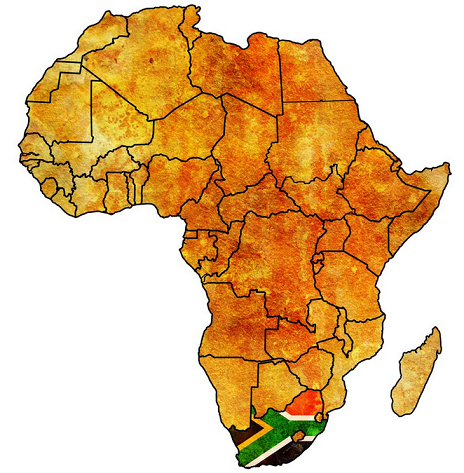
As the adopted son of a chief, Mandela received the same treatment as his biological children. He received a quality education at the Clarkebury Boarding Institute in Engcobo District of South Africa. It was during this period that Mandela became interested in African history. “He learned how the African people had lived in relative peace until the coming of the white people” (Biography.com). When the British colonized South Africa, they instituted many laws based on race. A lot of black Africans did not have many of the same rights that the white British did, such as access to education, healthcare and equal treatment under the law. Mandela also learned how the British took advantage of African resources, taking it all for themselves and leaving none for the actual people. Learning this, Mandela knew there needed to be change. The beginnings of an activist were born during this time.
Nelson Mandela also attended Wesleyan College and in 1939 enrolled in the University College of Fort Hare. This was at the time the best education a black man in South Africa could obtain. The first example of a young activist was shown when, during his second year at Fort Hare, Mandela was elected to the Student Representative Council. Howard University’s website states that students who were a part of the SRC voted to boycott the cafeterias because of the quality of food. Fort Hare then expelled Mandela for the rest of that year.
Political Activism and Imprisonment
After running away from home because he did not want to participate in an arranged marriage, Mandela moved to Johannesburg. It was here that he became involved in the anti-apartheid movement. In 1942, at the age of 24, Mandela joined the African National Congress. Within the ANC, Mandela and a small group of young Africans formed a group called the African National Congress Youth League whose goal was to “transform the ANC into a mass grassroots movement, deriving strength from millions of rural peasants and working people who had no voice under the current regime.” The group quickly made strides to improve the ANC’s tactics to change policy in South Africa. They now adopted the methods of boycotting, civil disobedience and non-cooperation with goals of creating policy for “full citizenship, redistribution of land, trade union rights, and free and compulsory education for all children” (Biography.com).
The next 20 years saw Mandela acting in peaceful, nonviolent acts of protests against apartheid. He was arrested in 1956 and charged with treason against the country for his anti-apartheid protests, but the charges were dropped. Then, according to BBC News, in 1958 the ANC was outlawed causing Mandela and his movement to go underground. It was in 1964 that Mandela was arrested again and charged with sabotage and attempting to participate in a violent coup, BBC News said. Unlike last time, though, Mandela and 10 other ANC leaders were sentenced to life in prison. For the next 27 years, Mandela would spend his life behind bars. He spent his first 18 years on Robben Island and the last nine years at Pollsmoor Prison.
Mandela made the most out of his time in prison. While he was offered freedom for exchange of changing his political positions, he refused. “I have cherished the ideal of a democratic and free society in which all persons will live together in harmony and with equal opportunities,” he said in a recording on the BBC News website. “It is an ideal for which I hope to live for and to see realized. But if needs be, it is an ideal for which I am prepared to die.”
Mandela received his Bachelor of Law degree through a correspondence program with the University of London. He also secretly wrote on his experiences in jail, which would later become his 1994 autobiography Long Walk to Freedom.
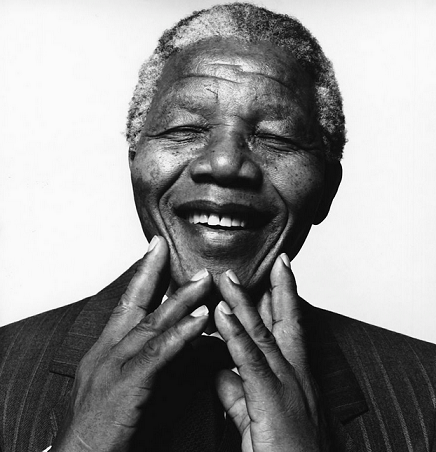
Freedom, Presidency, Later Life
During his time in prison, Mandela became a symbol of the anti-apartheid movement worldwide. Biography.com stated that Africans within the country planned for his escape, but were foiled by British intelligence. World leaders also attempted deals with the South African government for his release. Nelson Mandela’s imprisonment would surely become a worldwide issue. It all came to a halt on February 11, 1990 when he was released from prison and the ANC was unbanned in South Africa.
Upon his release, Mandela was named president of the newly reinstated ANC. He worked towards having the country’s first multiracial elections. However, whites were willing to share the power, but blacks wanted a complete power transfer so that they could run themselves. Violence still ensued, but Mandela kept positive and worked toward his goal of a new and better South Africa.
Because of his efforts, he was awarded the Nobel Peace Prize in 1993. On April 27, 1994, South Africa held its first democratic elections. It was on May 10, 1994, that Mandela was named South Africa’s first black president at the age of 77. During his tenure as president from 1994 to 1999 Mandela worked hard to transition South Africa from the apartheid system to black majority rule. In order to unite the whites and blacks of South Africa, Mandela used sports to unify them. The classic example of this was the 1995 World Rugby Championships, which South Africa hosted, that showed the new republic was making strides in the right direction. Mandela also established the Nelson Mandela Foundation and the Mandela Children’s Fund during his presidency. The Nelson Mandela Foundation saw the creation of clinics and schools across the heartland of South Africa, Biography.com states. The Mandela Children’s Fund helps children, from birth to 22, from disenfranchised families gain better opportunities such as education and healthcare.
After retiring from political involvement in 1999, Mandela continued to make appearances with world leaders and help out with South African issues. He published a number of other books. Some include: No Easy Walk to Freedom; Nelson Mandela: The Struggle is My Life; and Nelson Mandela’s Favorite African Folktales. He even started another group with activists from around the world, calling themselves “The Elders.” Their main purpose was to find solutions to the world’s leading problems.
The legacy of Nelson Mandela not only lives on in Africa, but around the world. His story of patience and perseverance has influenced many, especially young activists, on what it means to truly accomplish their goals. Mandela’s story has also shown what it means to not give up in the face of adversity no matter how long or how bad the consequences may be. It is because of leaders like Nelson Mandela that children and adults alike have an example of what it means to truly be a symbol of hope and courage.
