
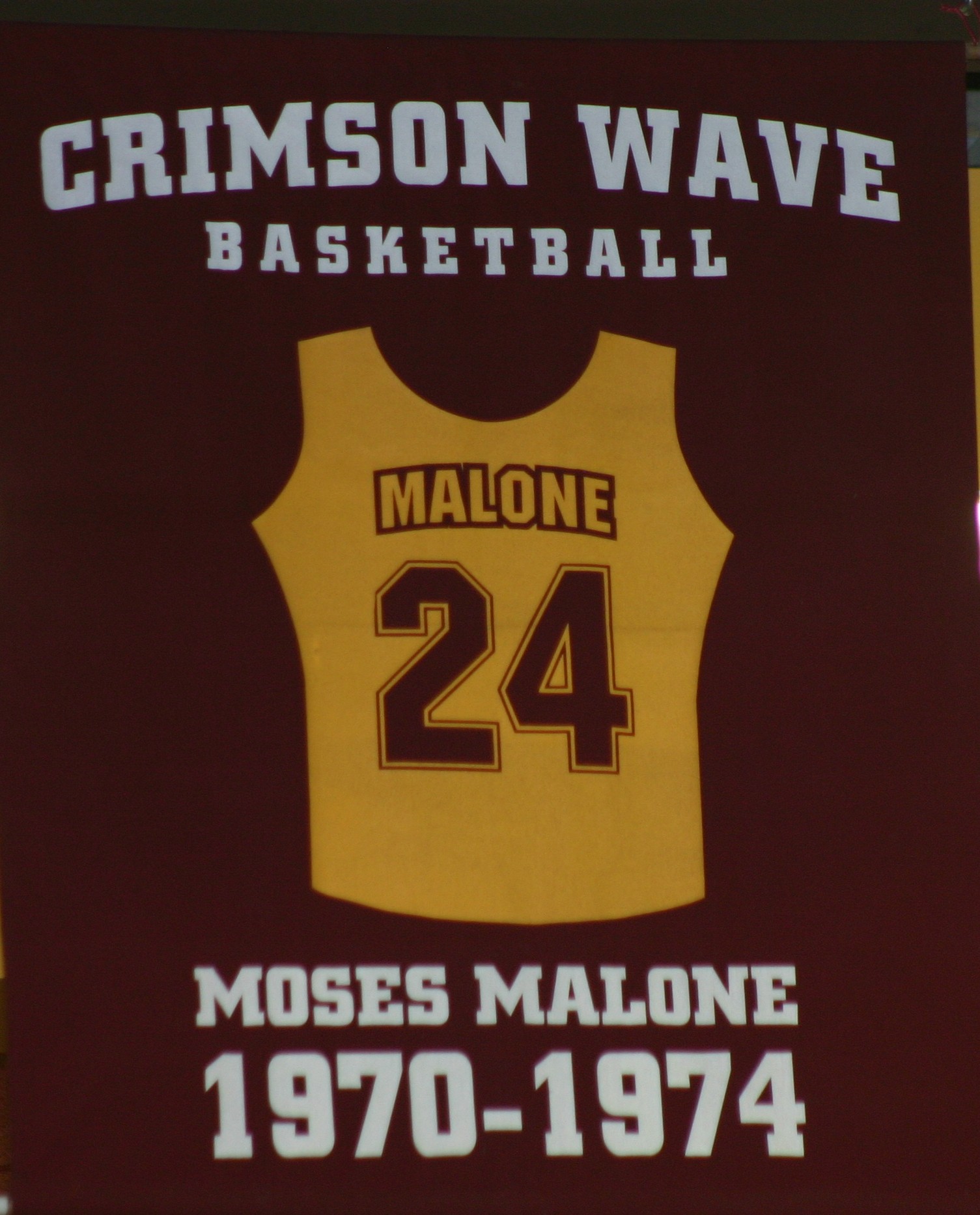
Moses Malone: A Gentle Giant Who Made Petersburg,VA – and America — Proud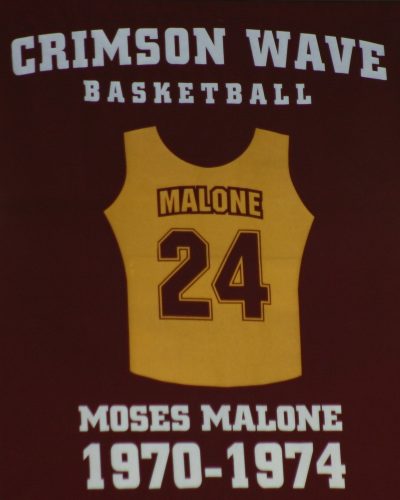
By Bonnie Newman Davis
Like millions of basketball fans, Ronald Robinson of Chesterfield County was shocked to learn that Moses Malone, the legendary three-time NBA MVP player, died Sept. 13 in Norfolk, Va.
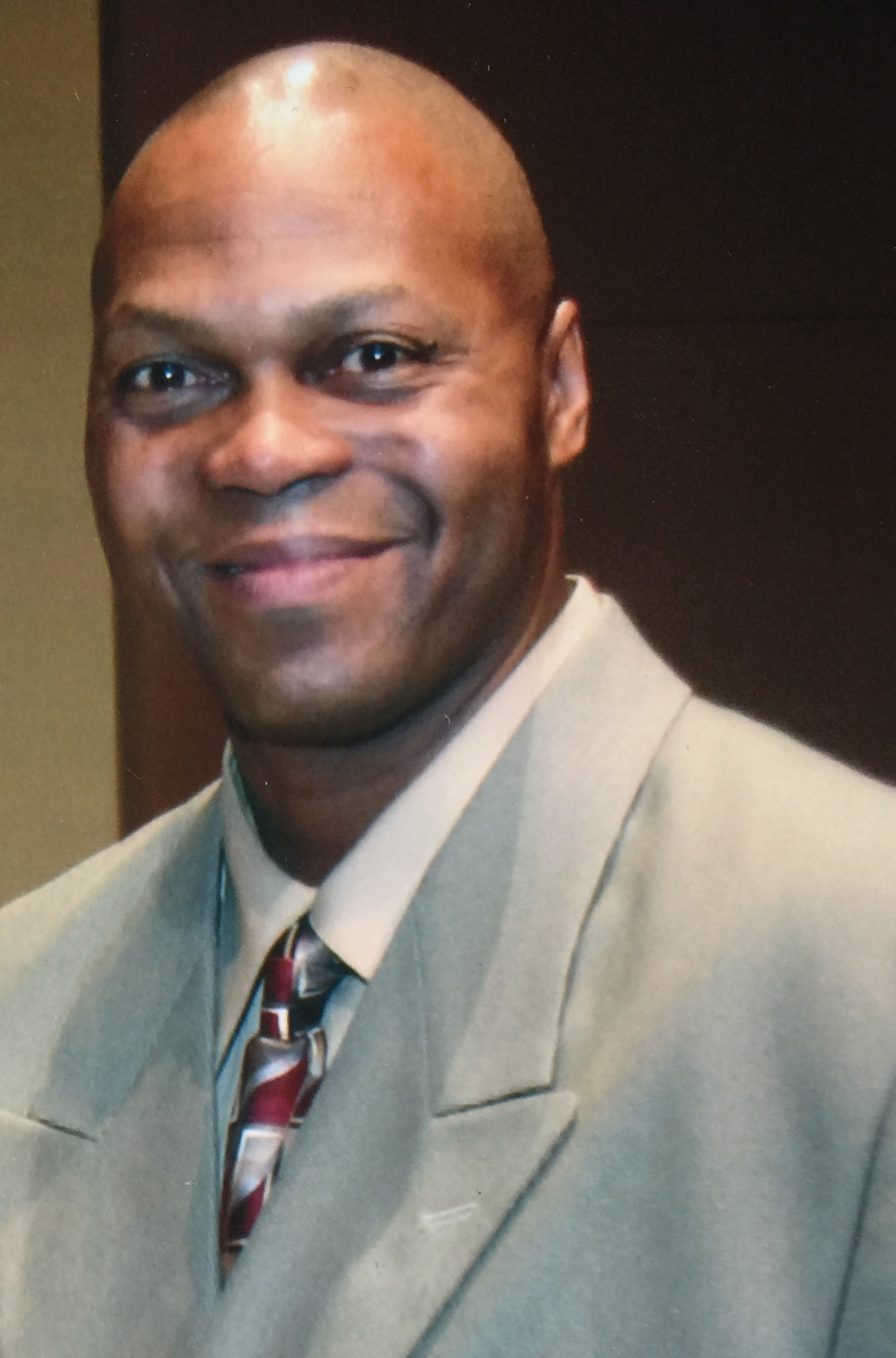
Ronald Robinson
Malone, whose death was attributed to cardiovascular disease, was 60 years old. A member of the Pro Basketball Hall of Fame, Malone first captured the nation’s eye as a 6-foot-10 center at Petersburg High School where he led the team to 50 consecutive wins and two state championships in 1973 and 1974. He later led the Philadelphia 76ers’ win of the 1983 NBA finals over the Los Angeles Lakers.
Robinson, who played basketball with Malone, first as a seventh grader on Virginia Avenue in Petersburg, Va., then later on the courts at Petersburg High School, read and listened closely to news media reports about his former teammates’ untimely death.
“Gentle,” “sweet,” “fierce” and “noble” are just some of the labels bestowed on Malone, who during his 21-year career with eight different teams was affectionately known as “Chairman of the Boards” for his dominating athleticism and rebounds.
While Robinson appreciates the continuing coverage of Malone’s stellar career, he can’t help but think that much of what he’s read fails to fully capture the Moses Malone that he and other Petersburg residents knew and loved.
“Back then, guys played 12 hours a day during the summer,” said Robinson, who adds that it wasn’t unusual for Malone to eschew parties and other adolescent pastimes to practice the game, alone with his ball under the glow of a single streetlight.
The youth’s diligence paid off.
 “By the time of my senior year and his junior year, Moses was considered to be one of the best players in the country,” said Robinson, an enrollment specialist for Richmond Public Schools. “Moses made it by dominating the team.”
In addition to being a student of the game and having “incredible” coordination and dribbling skills, Malone also was a strong role model.
“He never talked back to the coach (Carl Peal) or tried to get out of practice,” said Robinson. “He was so humble and modest. He never said ‘I got 200 colleges beckoning me.’”
Probably because he didn’t have to.
“All the famous coaches were calling him, but that never fazed him,” said Robinson. “He never changed.”
However, life did change for Malone once he chose professional basketball over college. Petersburg took second place to cities such as Utah, Houston and Philadelphia.
Yet the glow that Malone left behind continues to burn bright for Robinson and others who knew him.
“I remember how we played Hopewell High, Thomas Dale, Colonial Heights,” said Robinson. “We played all of those games at Virginia State University because so many people wanted to see Moses play.”
When the team traveled to away games, Petersburg and surrounding communities often followed them, said Robinson.
“It showed that the city had a lot of support. Moses helped put Petersburg on the map.”
Indeed, Malone, an only child who was raised by his mother after his father moved to Texas, became a role model for young black males throughout the country, especially when he turned pro.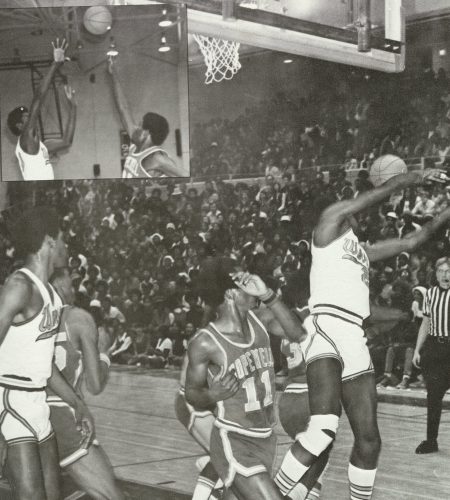
Malone began his professional career out of high school in 1974 with the American Basketball Association’s Utah Stars. He went to the NBA’s Buffalo Braves two years later and later was traded to the Houston Rockets where he became a five-time All-Star in six seasons with the Rockets. After leading the NBA in rebounding in 1979, he was named league MVP for the first time. He led the Rockets to NBA Finals in 1981, and won his second MVP award in 1982. Malone was traded to Philadelphia the following season, when he repeated as MVP and led the 76ers to a championship in his first year. In his first of two stints with Philadelphia, he was an All-Star in each of his four seasons.
“‘Fo-fo-fo,’ Malone said of his 1983 championship-year run with the 76ers,” recalls Wayne Dawkins, a journalism historian and associate professor at Hampton University, referring to Malone’s response when asked his prediction for the upcoming playoffs. Malone, speaking in the vernacular, meant that the Sixers would sweep each round of the playoffs. However, it turned out to be “fo, fi, fo,” (four, five, four) as the Sixers needed five games to beat the Milwaukee Bucks in the conference finals.
“It was amazing to watch him pound hapless opponents on the offensive glass,” said Dawkins. “So Malone, Darryl “Chocolate Thunder” Dawkins [RIP] and the guy from Englewood, N.J. who did not stick were the first high school ballers to jump to the NBA.”
Yet, long before the glitter of the ABA and NBA, Petersburg High School basked in its own special glow molded by Malone.
“Our team was the first team to ever win a state championship and to go undefeated,” said Robinson, who, upon graduating from Petersburg High School, played basketball for Three Rivers Community College and Southwest Baptist Union College in Missouri.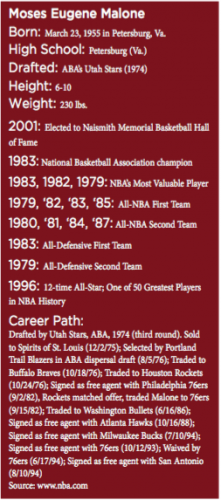
Although Robinson eventually returned to Virginia, he said that, to his knowledge, Malone seldom came back. And although the high school basketball team was close during its heyday, over time members drifted apart.
“I last saw him two years ago when his mom passed,” said Robinson. “We didn’t do a whole lot of talking.”
Perhaps because Malone, who was never known for much talk, preferred to let his actions speak for him.
Thus, Robinson believes that Malone’s final words to current and aspiring professional athletes might read something like this:
“A lot of guys want to be good, but they don’t want to put the time into it,” he said. “They (the best athletes) make the game look easy. But champions are made when people aren’t looking. A lot of work takes place behind the scenes.”
Bonnie Newman Davis is a veteran journalist and journalism educator who has written for several local and national news outlets. Davis currently is a visiting professor in School of Media and Journalism at the University of North Carolina -Chapel Hill.
