
Adia Shabazz
This is the third installment in a series on Options for Education. Previously, viagra 60mg we discussed homeschooling and charter schools. If you’ve not had a chance to check them out, you can visit urbanviewsweekly.com. Some wonderful families contributed their own personal deliberations about their education choices, and they educated this writer on the options available to families to help develop their children into well rounded, confident, intelligent people.
This week, we are considering private school as an option for education. Richmond is rich in private school options for education. There are similarities between the private schools in Richmond as well as some distinct differences. In general, about a third of the elementary and secondary schools in the United States are private schools. Private schools do not receive any public funding and depend on tuition and funds from nonpublic sources, which includes monies from religious organizations, endowments, grants, and charitable donations.
Contrary to public schools, which cannot by law be selective, private schools select from a pool of students who apply for admission. They may be coed or single sex.
 Private schools can be separated into one of three categories: independent schools, parochial schools, and proprietary schools. An independent school is governed by a board of trustees and is non-profit. They receive their funding from tuition, endowments, and charitable contributions rather than taxes or church funds. If they are affiliated with a church, they do not receive funds from them and they are not governed by the church. Many of these schools have boarding school students as well as day school students. Parochial schools, by definition, are church related; more often than not they are operated by Catholic dioceses or parishes. However, there are parochial schools that are also Protestant and Hebrew. Most private schools in the U.S. are parochial schools. The academic curriculum at parochial schools is supplemented with mandatory religious instruction and prayer. Children do not have to share the religious practices of the school to attend, but they must still attend the religious education classes, services and prayers. Teachers at these schools are not required to be trained teachers and may be clergy or trained in a field outside of education. Proprietary schools are private schools run for profit. Their structure does not include elected officials or a board of trustees.
Many private schools are religious in nature, and for that same reason many parents who enroll their children in a private school do so, because they want certain values instilled in their children and would like them to be educated in an environment that upholds and reinforces their religious practices and beliefs.
A common stereotype of families who enroll their children in private school is that they are wealthy. This is not true for most families who enroll their children in private school, and many private schools create incentives and payment plans that allow families to make private school a choice for their child.
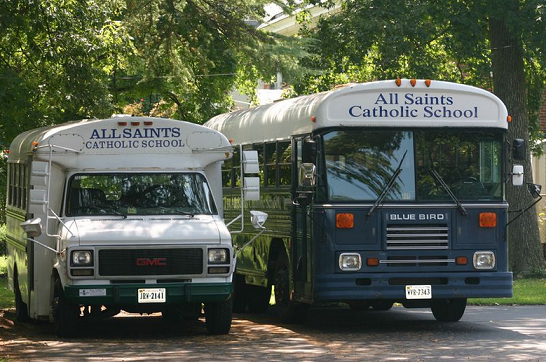
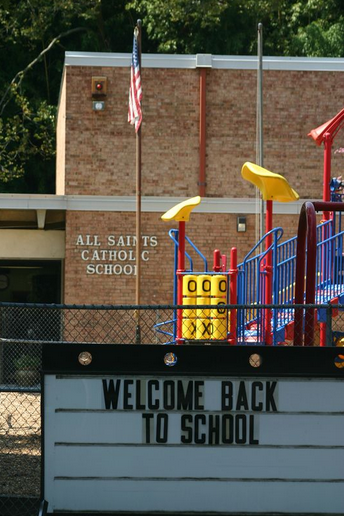
I had the privilege to speak to a few families about their decisions to enroll their children in private schools. One family has a very diverse educational profile, with children attending public and private school. The mother, Janet (a product of a private school education) extolled the virtues of the support her character and academic excellence received in her private school education. She stated that her mother enrolled her in All Saints Catholic School for elementary school, because it supported the Christian atmosphere established in her home. Janet also added that her mother didn’t want negative influences to be prominent in her life and wanted to be the primary influence. During the 80s, All Saints was primarily staffed and attended by African American staff and students. This became a benefit to Janet, because she felt that it enhanced her self-esteem and pride in her culture. She remembers celebrating Kwanzaa throughout her elementary experience. She said she didn’t realize the importance of being educated in an environment that reflected her until she attended St. Gertrude High School which was primarily staffed and attended by Caucasian staff and students. At that point in her development, her mother chose to enroll her in an all female school to discourage distraction by a developing interest in boys. Janet confesses she was “getting wild” and felt her mother’s decision to send her to an all girls’ school was tailored to her behavior and needs, and for that she truly appreciates her mother. Though she didn’t receive the same support culturally, she felt much support as a young woman and realized that her teachers made it a point to expand her horizons academically and prepare her for college. Once she reached college, she realized she was head and shoulders above her peers, especially when it came to her writing.
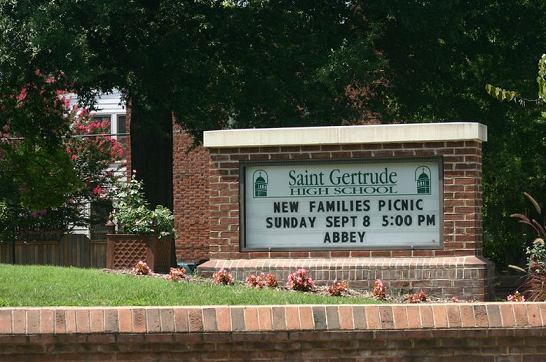
All Saints and St. Gertrude are both parochial and both Catholic, but vary in their aims and history. All Saints has gone through many changes. Established in 1982, as the result of a merger between two other Catholic schools, All Saints was unique in that it had 100% African American enrollment in the early 80s. One of the schools that merged to create All Saints saw itself go from serving a primarily middle class White population from 1948-1978 to becoming 100% African American by 1981. It was this demographic that remained once All Saints came into existence in 1982. Present day enrollment boasts a student population that draws from a wide area in Metropolitan Richmond, serving and valuing the diversity of the cultures and creeds of the students who enroll. St. Gertrude serves an all girl population and is able to counter the low confidence and performance in mathematics and sciences often demonstrated by girls in the public school system.
Janet shared that often she wonders what her children in public school are learning, “I wonder what my children are learning every day. I know (they) are taking tests, but by the time I was in middle school I was reading Nikki Giovanni and that was because I had women in my life that expanded my horizons.”
Her children, who are in public school, are no longer of age to attend the private school of their family’s choice. The younger child who is attending private school is finding greater success and support than he did during his tenure in public school.
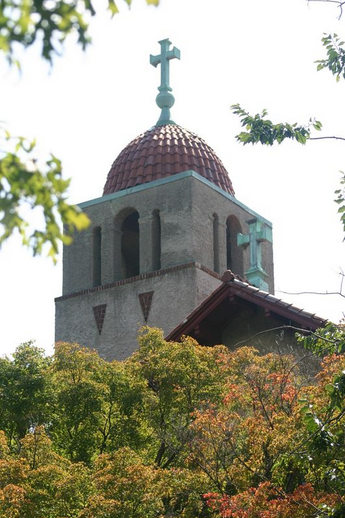 Another family enrolled their children in private school because opportunity and relationship intersected. A relationship with people involved in the school allowed the family the opportunity to choose private school for their children. Theresa, the mother, stated that an education at Richmond Prep resonated with her. She is certain that her children are safe and receiving a quality education. In addition, the fact that the population of the school is largely African American gives her the feeling of a village assembled to develop and educate her children in love.
As she speaks of Richmond Prep she states, “Everyone is focused on loving one another and has a common ground. We are all centered on making everyone successful. You see that from the administration to the teachers to the parents. If a teacher’s child got sick and the teacher had to leave, an administrator would step in (and teach in his/her absence). Parents meet the administrators as well as the teachers. Whenever someone comes into the school they meet everyone. The beautiful thing is that we have elders and young teachers in their 20s. Mentoring is happening and varieties of teaching styles are shared between adults and children.”
In public school, she felt she was watching her child be groomed to become a child with special needs. Her son, who flourished in other educational environments, began to hate school and his self-esteem suffered. She stated that homework in the evenings became a fight when it wasn’t before. At Richmond Prep, she feels that everyone wants her son to succeed and is invested in his success.
For all of the pros that these families shared with me about a private school education, there are a few drawbacks. Private school teachers are not required to be licensed with the state which can be seen as either a pro or a con. According to Janet, there are some teachers who have the passion and lack the skill. Conversely, there are those who lack the passion but have the skill. Private schools make space for someone who has a passion to teach to demonstrate and build their skills. In addition, private schools are not always equipped to meet the needs of the IEPs (Individualized Educational Programs) of students with special needs. So if a student, who requires certain accommodations, applies for a private school that is unable to meet his/her needs, that student will not be able to attend. Finally, private schools vary on the electives and extra-curricular activities that they provide. Many middle school and high school attendees of private schools have to join community organizations to play sports.
Even though she has found a home at Richmond Prep, Theresa affirms, “It doesn’t matter what school you choose, as a parent it depends on what you put into your child at the end of the day.”
