

 Adia Shabazz
What do Will and Jada Pinkett Smith, Brad Pitt and Angelina Jolie, Tom Cruise and both wives (Kidman and Holmes) have in common with this author? Being stalked by paparazzi and perusing movie scripts? No, we are all homeschooling families. Homeschooling is a very popular topic of discussion sometimes considered and sometimes condemned as an option for educating our children. Homeschooling is often seen as the choice for rebels, privileged and rich families, and the ultra religious. Generally, people have felt like the public school system is just fine and far more convenient than deciding to educate outside of those walls.
My husband and I are both products of the public school system and are sometimes met with statements like, “Why are you all going to homeschool? You attended public school and you came out just fine.” The time commitment also compromises my ability to make use of my teaching license to return to the public school system and make us a solid two income family. When I first made my intentions to homeschool known, a family member questioned my ability to provide my children with a full, rounded out academic experience. I wondered why this same person did not question my ability in the classroom, but wondered how I would fare outside of it. There are also many other concerns people raise about homeschooled children, the primary one being socialization.
Socialization
This is the question I know most homeschooling parents hear when others find out about their intention to homeschool their children. Some people believe homeschooled children will end up socially inadequate, cloistered beings who won’t be able to navigate a crowd of new people and make friends. However, for many families, this is far from the truth! Many homeschooling families are just as intent on building their children’s social IQ as they are building their children’s academic IQ.
Socialization, like most things, is not a “one size fits all” characteristic of life. Admittedly so, there may be some homeschooled children who prefer being alone than in the crowd and then there are some who are social butterflies. It isn’t the educational environment that encapsulates the entirety of a child’s social nurturing, but also the natural temperament of the child and the work the family does to engage the child in their community. There are homeschool associations that serve to connect families and students across cities and states. Many of the families involved know each other and regularly see each other at various events like sporting and art events their children are involved in, just like public school students, but often with more parental involvement.
I was surprised to find that a particularly dynamic, astute and articulate friend of mine was homeschooled until high school where she transitioned into public school. Lydia reflects that her parents not only did a “great job” intentionally socializing her and her siblings, but that they provided a solid foundation that allowed for independent thought and self-confidence while homeschooling.
Lydia was exposed to many peers and people through activities like church and regular interaction and play with children in her community, whether they were homeschooled or not. Her reflections also include her perception of some other homeschooled children who didn’t seem to be adequately socialized. She stated that some had trouble carrying on regular conversations.
Once in public school there were more opportunities for socialization through activities, however Lydia also states that things were also a little more “hectic”. Her foundation as a homeschooled student of intentional parents developed her strong sense of self and, in my observation of Lydia, fearless critical thought. She reflects that her parents’ determination to produce well-rounded children also made her transition to public school easy.
Lydia also shared that she appreciates the foundation granted her by homeschooling, but also that her parents transitioned her (and her siblings) into public school, so she could learn how to navigate through that world as well. Lydia also shared that they had a “great public school system”. Overall, she credits her confidence and overall success to the foundation her parents provided.
Lydia’s reflections help to show that there are as many varied approaches to homeschooling as there are families and students. There is no cookie cutter way to achieve success in homeschooling, and parents have to be continually attentive to the growth and needs of their family.
Although I enjoyed my childhood, I have no desire to repeat some of the experiences that are accepted as the norm when it comes to socialization in the public school system. I’m not convinced that throwing our children into a large cauldron where cliques, bullying and a social hierarchy exists is the best way to develop adults with social finesse. Public school education does not equal a well socialized person, or for that matter a poorly socialized person. A child’s ability to navigate the delicate world of friendship and conflict is something taught and nurtured at home. I would like my children to experience many different settings and groups of people, but I won’t sacrifice their education to the experiment of “normative” socialization.

A mother shared the difference between her son’s preschool experiences that were very “homeschool” in nature and his experiences in a public school setting. He was nurtured and the children were regarded as family and treated each other the same way. Now that he is in a public school setting he is still behaving in a benevolent, welcoming fashion with children who receive his kindness and proclivity to sharing and community as alien and reciprocate with antagonistic, threatening behavior. This is heart wrenching for his mother, to say the least. While there is no formula for making a “perfectly” well-adjusted child, there are many perspectives on how homeschooling can affect a child’s esteem, independence and yes, social skills.
For a reflection on socialization for homeschooled students from a mother’s perspective and a student’s perspective check out the article I wrote in Yeye Magazine (“Homeschool and Socialization: A Mother’s Take/ “Homeschool and Socialization: A Student’s Take” Fall 2011) (www.yeyemag.com)
(I wrote a series of articles on socialization. To check them out visit http://www.examiner.com/homeschooling-in-richmond/adia-shabazz)
Curriculum
Another concern is that homeschooling children will fall behind their public school peers, regarding what is covered in their academic curriculum, at home. The curriculum in public school is often the standard for what many public, private, charter, and homeschool educated students receive in their respective settings. Many parents feel they don’t have the money to attempt homeschooling. They consider buying materials, curriculum, and supplies. Even when considering many of the celebrities who homeschool, it is easy to see how their money benefits their ability to secure tutors and private classes to supplement their homeschool educating. However, there are many ways to educate a homeschooled child for FREE! Not only is it easy to find the world at your fingertips online, but thinking outside the box will afford any parent more resources than they could use. There are many websites that provide free resources to parents. Some of those websites are subject specific, and some cover the entire academic school year. For many families, all they need is Google and a printer and they are on their way.
There are also numerous groups on Facebook who invite parents to share their homeschooling ideas. Many of these groups also serve to help families round out their children’s socialization needs as well as fun and cultural experiences. Pinterest is also a place where there are amazing ideas for curriculum, activities, field trips, crafts and more.
Beyond the internet, there are also homeschooling cooperatives that allow families to collaborate and work together to educate all of the children in their village. Students benefit from the wisdom and experiences of more than one adult and are nurtured (even if behind the scenes) by a wealth of mothers and fathers who care for each child as their own. Homeschool cooperatives allow for families to share a wealth of resources without spending large amounts of money. Will and Jada Smith created a homeschool cooperative with other families. Jada told ESSENCE magazine, “The school system in this country — public and private — is designed for the industrial age. We’re in a technological age. We don’t want our kids to memorize. We want them to learn.”
One thing homeschooling parents have to consider is that they chose to homeschool to afford their families a different choice than public school. This means that copying the same curriculum of the public school is not their desire. There is a freedom in determining the structure that works best for your child’s intellect and the make and schedule of the family. With care and patience, the curriculum parents form for their children won’t just enrich the child but the parents as well.
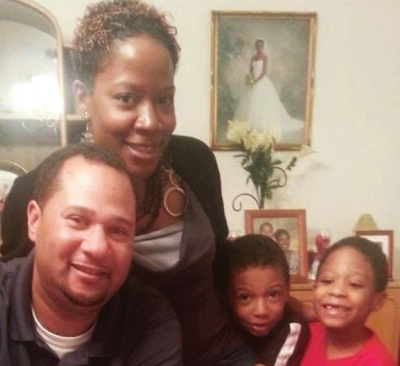
The Snead Family
Values
For many families, particularly here in Virginia, homeschooling allows them to support and encourage the values held dear to them. I attended a Home Educators Association of Virginia school fair (HEAV) a few years ago, and though HEAV serves all homeschoolers in Virginia, they are a largely Christian based organization and support families who want those values instilled in their children. HEAV provides a network where families can find each other as well as the resources to flourish in their beliefs. Many homeschoolers also homeschool to provide an educational experience that is rich in cultural heritage and awareness. This summer I watched a child that I worked with in summer camp, was dropped off by her mother, who told her “Happy Juneteenth!” as she headed out of the door. My ears perked up to find another family who incorporated African American history and culture so readily into their children’s daily lives.
The other perspective on values is creating a learning environment where our children are valued uniquely, where the environment they are in reflects a value system deserving of them. For many African American boys, fourth grade becomes the place where they feel left out of the public schooling process as it starts to lean toward the academic tendencies of women. Also, in the public school system, the behavior and academic records of third graders are used to project the amount of space necessary in prisons anticipating receiving many of our children. Homeschooling removes our sons and daughters from that dismal equation. Homeschooling helps a child see their unique space in the world instead of feeling like one of a number.
Is Homeschooling for You?
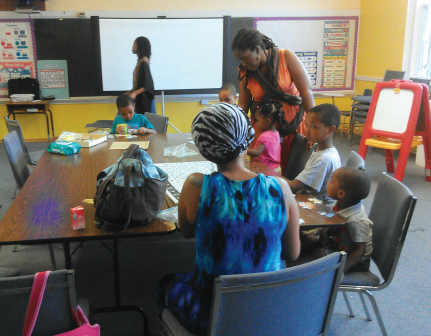
Homeschooling isn’t the voyage into the unknown world of off-kilter independent rebels. There are actually close to 3 million students currently being homeschooled in the United States. Homeschooling takes on so many different forms and is applied in so many different ways. For many African American families, the financial sacrifices and time commitment aren’t realistic. Homeschooling allows for the community to lean on each other. It truly isn’t always one mother and her child sitting at the kitchen table. Some of the families we have relationships with have joined in our efforts to provide a homeschooling experience for our children in a shared space. All of the parents aren’t able to participate with their physical presence, so retired members from our community have volunteered to come and assist in providing our children the richest educational experience we can. It allows a family to create an educational plan that is tailored to their child. When executed with care, homeschooling can complement the intelligence and spirit of a child the way a finely tailored garment complements a person’s frame. Created just for them with them in mind, they excel in unimaginable ways.
So, instead of dropping my children off during the day so that I can nurture other children in exchange for the financial wherewithal to provide many of the things parents relish giving their children, I choose to give my children myself and give them many of the things money can’t buy. My husband and I choose to sacrifice some of the material trappings we could give our children in exchange for working to give them a secure sense of self and an appreciation for their own love of knowledge.
In a culture of continual blame and control, it is assumed that we are able to manipulate every detail to create the desired outcome. There are many things beyond our control and we aren’t able to manipulate every detail, however we can do our best to attentively provide for the needs of those we care for. Though I’ve seen children who I don’t believe were optimally served by the public school system, there are some who feel their niece/nephew/grandchild was done a disservice by homeschooling. Our children are not little machines; no formula will produce a perfect “product”. This philosophy is held often in a public school system that serves within a consumer/commodity society. The blessing of homeschooling is the opportunity to follow the lead of your intuition and your child’s needs to provide the best environment within which your child can blossom. It is important to realize your instruction and environment will be just as dynamic and fluid as your child.
