

By Camisha Jones
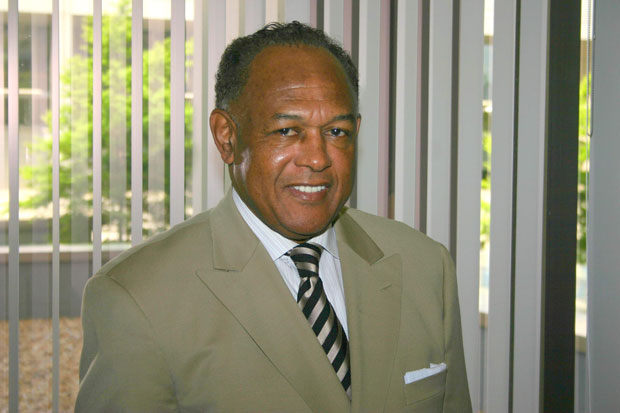
Mayor Dwight C. Jones’ commitment to empowering people and communities runs deeper than his term in office. As a child of the civil rights movement and Senior Pastor of First Baptist Church of South Richmond, Mayor Jones says his calling to social-justice oriented ministry is at the heart of what drew him into politics. Having spent 15 years as a General Assembly member, he looks deeper than numbers to understand the realities of our city. “(The) unemployment numbers take a broad look at the population but then when you get down into the weeds,” says the Mayor, “…you find individuals who are really suffering at a greater rate than the numbers would suggest. So, when we talk about 25% poverty in the city of Richmond, we’re talking about some real difficult situations.”
For Mayor Jones, an important strategy for alleviating poverty is increasing the number of successful minority businesses in the city. He has focused much of the work of his administration since taking office in January 2009 on providing support systems and opportunities to make that happen. In his words, small and minority businesses are a “part of the engine that revives the economy while providing uplift for many people in the community who need to build wealth.”
One of the ways that Mayor Jones has sought to improve the support system available to small and minority businesses is by strengthening the Office of Minority Business Development. Early in his term, he elevated the position of leading that office to a director’s level. His administration also developed two new loan programs housed there. The Citywide Revolving Loan Program is available to small businesses, entrepreneurs, developers and non-profits desiring to help revive Richmond neighborhoods and promote permanent job creation for low to moderate income citizens. The Contractor Assistance Loan Program provides Richmond-based contractors with financing to which they would otherwise not have access. The office also provides resources such as technical assistance and counseling.
“I… went out each week and visited Black businesses or ate at Black restaurants to be an example of how we have to be proactive in supporting that business base,” the Mayor explains.
Buildings matter in the Mayor’s efforts to offer opportunities to small and minority businesses. With approximately $300 million worth of capital projects on the horizon including 4 new schools and a new justice center, there have been lots of opportunities to create jobs for individuals and businesses. “(We’ve) made it known that we want to have minority participation in these deals,” states Mayor Jones. Since 2009, the city has increased its spending with small and minority contractors and vendors by 59%. A majority of the funds (92%) spent with minority firms in 2011 went to African-American owned businesses and was largely spent on construction services.
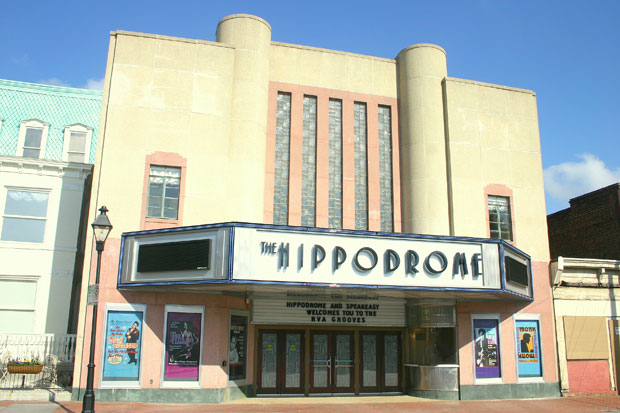
Another building project that illustrates the Mayor’s desire to support minority businesses as well as to preserving our city’s rich African American history is the Hippodrome. The theater which initially opened in 1914 and had been mostly shuttered since 1982, attracted stars such as Ella Fitzgerald, Billie Holiday, Ray Charles and James Brown during its heyday in the 1930s and 40s. Renovated by a Black developer named Ron Stallings, the city provided the gap funding that helped bring the venue back to life. “I had dinner there last night. It’s really just thriving…It’s really going to be the anchor to bring back 2nd Street. Now Calvin Hanson (another Black developer) is doing a project right across the street…Those two venues are really going to bring some life back to Jackson Ward.”
Mayor Jones believes it is not only important for the city to invest in minority owned businesses but for individuals to do so as well. To make that point, this past February in honor of Black History Month, his administration highlighted Black-owned businesses through various communication vehicles. Mayor Jones also demonstrated his personal commitment to investing in minority businesses by patronizing Black businesses. “I… went out each week and visited Black businesses or ate at Black restaurants to be an example of how we have to be proactive in supporting that business base,” the Mayor explains. He believes the success of minority owned businesses can play a vital role in turning the tide of the recession, stating, “We just can’t have some businesses revived. We have to have all businesses revived and that includes Black businesses.”
Additionally, the Mayor asserts that alleviating poverty in the city requires not only programs and business development but also strategies related to affordable housing. Mayor Jones is dedicated to pursuing, in his words, “a radical transformation of public housing as we know it” which he believes will then bring even more opportunities for capital projects and job creation.
His aspirations come largely from exposure to the work of Maynard Jackson, former mayor and the first African American mayor of Atlanta. “Atlanta is a city that had notorious problems with their public housing and as we speak today they no longer have public housing. They have senior citizen’s housing, some specialty housing but public housing as we know it in Richmond no longer exists in Atlanta. It’s a wonderful model,” states Mayor Jones. He describes the idea of bringing the kind of improvements he’s seen in Atlanta into the lives of the 19,000 public housing residents in Richmond as “absolutely electrifying.”
Mayor Jones believes it is not only important for the city to invest in minority owned businesses but for individuals to do so as well.
The Mayor believes Richmond can be a model that inspires more win-win partnerships between minority and majority businesses. He will be honorary chair of the Virginia Business Opportunity Fair to be held this May. Sponsored by the Virginia Minority Supplier Development Council, the fair is described on its website as “the Commonwealth’s largest conference that connects minority-owned businesses with some of the nation’s premiere corporations.” The Mayor says, “I’m hoping to be able to take the template of what we’re doing in Richmond and utilize that as a platform for advocacy on a broader scale throughout the state.”
“It’s important for us to support minority businesses and that’s what we’re trying to do in the city,” asserts Mayor Jones. “I think that the city has a wonderful opportunity to be a leader and to be a role model in that regard and to change some of the old traditional habits that we have and to make opportunities available to people who might not otherwise have that opportunity…”
