

By Chevont’e Alexander
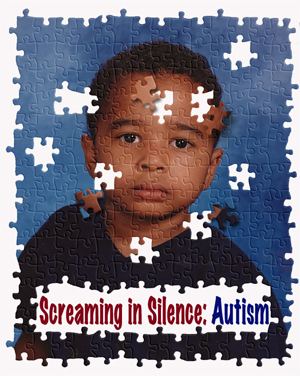 April is National Autism Awareness Month. Autism is a general term used to describe a group of complex developmental brain disorders known as Pervasive Developmental Disorders (PDD). The other pervasive developmental disorders are PDD-NOS (Pervasive Developmental Disorder – Not Otherwise Specified), Asperger’s Syndrome, Rett Syndrome and Childhood Disintegrative Disorder.
The Centers for Disease Control (CDC) recently estimates that there are about 1 in 88 children in the United States that have been identified with an ASD (autism spectrum disorder), and 1 in 54 boys identified. The CDC released its latest report last month, showing autism rates increasing rapidly and reconfirming that autism spectrum disorders are more prevalent than juvenile diabetes, childhood cancer and pediatric AIDS combined. The largest increases nationwide were among Hispanic and African American children. Most say autism in our children has become an epidemic, but could it be something that was there before, we just did not know what it was?
This question alone leads to African American children frequently being confronted with late diagnosis or misdiagnosis. It has also been reported that black children have significantly higher rates of mild mental retardation than white children. Although early intervention is key, African American children with autism are one to two years older than white children before they are even diagnosed. Sadly, undiagnosed or misdiagnosed children can often end up as statistics in the criminal justice system, because behaviors are shrugged off as being bad children.
Founder of The Color of Autism Foundation in Atlanta, Camille Proctor’s second child was diagnosed with autism in 2008 when his development in basic words became hard to comprehend. She struggled to get the correct services for him. Support groups talked in their “inside voice” like she did not understand. “We can start to overturn these disparities by helping African Americans with autism reach their full potential and empowering families with information on autism that they can use to advocate services for their child” says Proctor.
So often the Black community refers to family members on what to do, or brush it off as something they may outgrow. The Black community excuses a lot of things, which cause them not to seek out professionals. Proctor encourages all parents to be proactive about seeking help. Individualized education programs (IEP) in the public school systems are not a medical diagnosis. You have to seek professional help.
What to Look For
As a parent, it is hard to accept that your child may have a problem, but when it comes to autism, catching it early makes all the difference. If autism is diagnosed in its early stages, ideally by the age of eighteen months, this can interrupt the development and minimize problems associated with autism. The signs and symptoms of autism vary widely. However, every child on the autism spectrum has problems in communicating verbally and nonverbally, relating to others, and thinking and behaving flexibly. Some children with autism spectrum disorders start to develop communication skills and then regress, usually between 12 and 24 months. Similar to Proctor’s son, a child who was clearly pronouncing “Mommy” may stop using language entirely.
And, as a parent you are in the best position to spot the earliest warning signs of autism, better than any licensed pediatrician. Tips for parents:
• Monitor your child’s development
• Take action if you are concerned
• Do not accept a ‘wait and see’ approach
• Trust your instincts
Questions to Ask the Doctor
• Is my child’s development on target for his or her age?
• Are my child’s social skills developing normally?
• What further evaluation and testing are necessary to evaluate my child for possible autism?
• What resources are available to support our child and family?
Treatment
Each autism intervention plan should be tailored to address specific needs. Intervention can involve behavioral and management treatments, medicines, or a combination of both. Behavioral training and management treatments use positive reinforcement, self-help, and social skills training to improve behavior and communication. Many types of treatments have been developed including Applied Behavioral Analysis (ABA), Treatment and Education of Autistic and Related Communication Handicapped Children (TEACCH), and sensory integration.
Applied behavioral analysis (ABA) is designed to both correct behavior and teach skills for dealing with specific situations. It is based on the principle of reinforcement; that behavior can be changed by rewarding desired behavior and removing reinforcement for unwanted behavior.
Developmental pediatricians are key. They help children set milestones, and then compare these milestones a year later, to see improvements in their development. Specialized therapies for speech, occupational, and physical therapy are important for managing autism. Medicines are most commonly used to treat related conditions and possibly problem behaviors, including depression, anxiety, hyperactivity, and obsessive-compulsive behaviors.
Be aware that every child is different. So, whatever approach is used for the child, an individualized treatment plan designed to meet his or her unique needs is essential. The benefits of early detection are so monumental. Usually by seven and eight years old, if autism goes undetected, a child is written off as mentally retarded with no hope. So, it is important to do your research and increase your awareness with the right information.
Defining the Disparities and Finding the Solutions
Awareness is key. Several resources have highlighted medical, educational, and cultural issues as the basis for the causes of the disparities. According to the CDC, 95.9% of Black children do have medical insurance; however, many of these children are poor and receive health care via Medicaid, limiting their options for care.
Many parents in the African American community do not have or maintain a “family doctor” they see regularly. Due to the lack of private practice doctors in the Black community, and the growth of public clinics, many African American children may see different physicians throughout their childhood.
A social stigma attached to mental health issues within the Black community may add to the problem of late diagnosis. Some Black parents find it hard to accept their child has autism, so even when the disorder is diagnosed, there may be a reluctance to use autism treatment services. The Black community tends to shy away from anything that may resemble psychosis, but autism is treatable and able to be controlled if detected early on.
Marlena Kirkwood is a mother of a beautiful seven-year-old daughter who was diagnosed with autism four years ago. “Many people are actually afraid to have their child diagnosed with a disorder. But, seeing Kayla do so much more than doctors said she couldn’t do has taught me strength and patience. I look at the diagnosis as being a blessing. It explained so much,” comments Kirkwood.
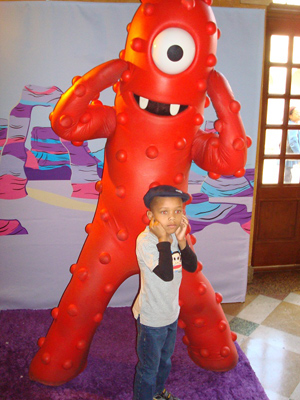 Intervention for any autistic child needs to start around age three, so the child can begin to learn how to eat right and develop normal, healthy routines, which will result in a better developmental outcome. There are services and organizations that aid in early detection, finding resources, receiving support, and just increasing the general awareness. Marlena took her daughter to the doctor at three years old, after noticing she was not as active or sociable. Basic activities confused her and she would just shut down. But, Kayla has beaten the odds, and at seven years old she is lively, intelligent, bright, and just a true joy.
This is a call to action for us all, directly affected by autism or not. We have to help spread the right information, increase awareness, and help to put the demand of initiatives and services in the areas that really need it.
“Autism is a diagnosis, not a brick wall. Kids can still have successful and normal lives. That’s why it is vital to be educated about this matter,” continues Kirkwood.
“Autism does speak!”
For more information on The Color of Autism Foundation or to find out how you can assist in the awareness of autism, please visit www.thecolorofautism.org.
