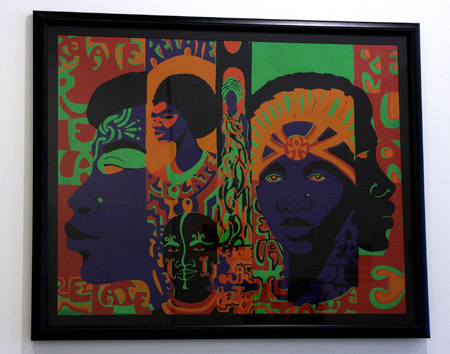
Barbara Hogu’s painting “Female to Be Free”
Come join Historic Hopewell Foundation Inc. in a celebration of Women’s History Month with a presentation by Françoise Bonnell, Acting Director of the U.S. Army Women’s Museum, Fort Lee. Bring a bag lunch and HHFI will supply drinks and dessert. Guests invited to bring memorabilia relating to women and the U.S. Armed Services. HHFI Director of Museums will be on hand to provide advice for the care and storage of those items.
March 24, 12 noon, Hopewell library, 209 E. Cawson St. Hopewell. 458-4682

Barbara Jones-Hogu
Barbara Jones-Hogu is an influential artist associated with the Black Arts Movement of the 1960s and 1970s. Born in Chicago, Barbara received a B.A. from Howard University in 1959, a B.F.A. from the School of the Art Institute of Chicago in 1964, and an M.S., with a concentration in printmaking from the Institute of Design at the Illinois Institute of Technology in Chicago in 1970.
As a member of OBAC (Organization for Black American Culture), she was one of the muralists who created the important “Wall of Respect” in 1967 on the south side of Chicago – a public work that inspired the creation of socially, politically and culturally themed murals across the urban American landscape. In 1968, Jones-Hogu became a founding member of the African Commune of Bad Relevant Artists (AfriCOBRA). As a member of AfriCOBRA she participated in formulating the group’s mission statement, which stressed Black independence and artistic self-determination.
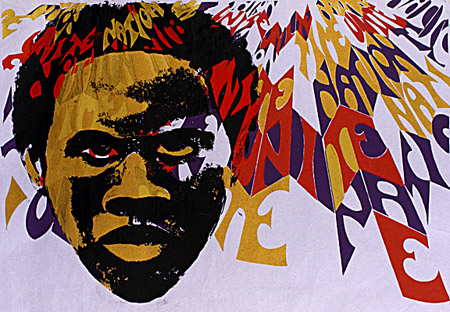
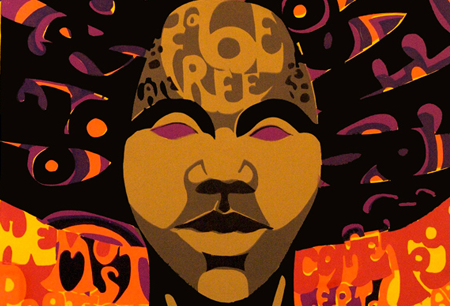
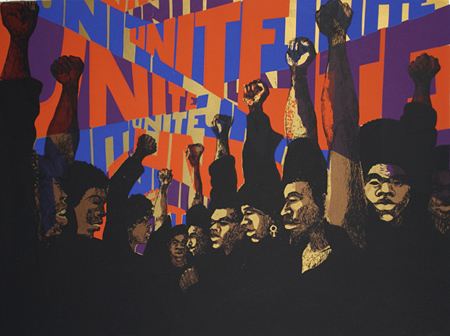
Her signature use of lettering in her artwork became a hallmark of the AfriCOBRA aesthetic. Her famed screen prints created during her participation in the group were exhibited widely at venues including the Studio Museum in Harlem, Howard University, Cornell University, and the National Center of Afro-American Artists in Boston. Several books and catalogues over the years have included her work, and she is featured in “Creating Their Own Image: The History of African American Women Artists,” the most important text on the subject, published in 2005. Unite, perhaps her most well known screen printed image, is included in the permanent collection of the Art Institute of Chicago and the Smithsonian’s National Museum of African American History and Culture.