


As the seasons change, we anticipate newness all around. When spring arrives after a long winter, we look forward to flowers blooming and the leaves returning to their rightful place on the trees. As summer makes its transition into fall, we take notice of the single leaf that floats down and lands on our windshield. Before long, the piles of leaves we’ve raked all Autumn long are coated with a fresh white blanket from the first snowfall. Every season is marked by what we can see, but very rarely do we pay attention to the seasonal changes we cannot see.
Seasonal Affective Disorder (SAD) affects nearly 20% of Americans each year, sparking a hormonal change that triggers depression and anxiety. For some, it’s the idea that everything’s changing without our control that creates the imbalance. For others, it’s the sadness that comes with bidding adieu to what may have been a wonderful season with pleasant memories and moving on to one full of uncertainty. Whatever the case, millions of Americans experience emotional and mental setbacks that affect how we interact with others, how we perform on our jobs, and ultimately, how we enjoy this precious thing called life.
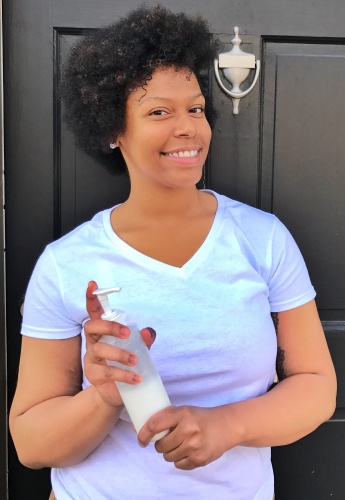
Shaniqua Washington
Contrary to popular belief, SAD doesn’t just occur as we move from summer to fall, or fall to winter. Actually, for 1 in 10 suffering from the disorder, the pattern is reversed and depression doesn’t return until spring and summer. As we welcome a new season and grow excited for warm days ahead, it’s imperative that we focus on self-care. Attention must be paid not only to how the forecast will change, but also to how our hormones and emotions change, and we must be prepared to act fast should we find ourselves slipping into even the slightest state of mental instability.
Whether you experience Seasonal Affective Disorder or not, self-care is a practice necessary for our own mental and physical health. It comes in the form of blocking off your lunch hour to escape into a good book or even taking early morning yoga classes to help with meditation. Whatever the case, decide what you need to feel rejuvenated.
Richmond native Shaniqua Washington understood early on the importance of self-care, and has learned through research and schooling how essential physical touch is to our mental and physical well-being. The owner of Mahogany Massage, a massage parlor that operates out of a physical therapy office in the Museum District, Washington uses the art of touch to bring about healing and peace of mind to everyone who walks through her door. There’s a real need for human contact—not just through stimulating conversation, but also actual physical touch—and she prides herself in providing both at Mahogany Massage.
“When I first started school, I wanted to go into social work because I know that people need help,” Washington explains. “When I got to Fortis College here in Richmond and plans changed, I ended up studying massage therapy and learned about the need for human interaction. I knew then that my previous dreams of impacting people could still come about in another form.”
While in school, Washington learned of studies conducted at orphanages to evaluate the effects of lack of human contact. She learned that the children who received no physical contact or no compassionate touches developed mental illnesses, while those who did were able to build healthy relationships with others. That study solidified what she knew all along: while social work is important, her dreams of touching lives didn’t have to end there.
Today, she prides herself on being a massage therapist who focuses on the complete human experience. She focuses on relationship building, taking much needed time to learn about her clients’ lives, history, and any special needs they have.
“When you come in for a massage, you’re at your most vulnerable state,” she says. “You’re literally stripped completely, laying on the massage table. I don’t take lightly what my clients trust me with, so I make it a point to really talk to them. I block out 30 minutes between each appointment to give us time to address any questions they have, show them stretches, and offer things I wouldn’t normally have time to offer. I’ve worked for larger massage spas, and I really wanted to get away from the in-and-out, time-slot, mechanical feel that I got from that environment. I wanted something that was more personal.”
 Through her relationships, she’s noticed a common thread, and that’s the importance of services like massage therapy when it comes to self-care, particularly in the African American community. What she’s noticed is that as a culture, we don’t take the time for such “luxuries,” but we have generational trauma and mental illnesses that must be addressed. Instead, we pile them on as time passes, never prioritizing self-care. But our joints and muscles suffer from the wear and tear we put on our bodies day-in and day-out, and there aren’t too many Black massage therapists who understand the cultural need for the stress relief.
“Not only do we need massage therapy to heal from generational wounds that we don’t acknowledge,” she says, “but it helps our bodies heal naturally in a time where we have to rely on so many medications.”
In fact, Washington is working on becoming medically certified so that she can be paid through insurance companies. There’s certainly a need for it in our communities, and she’s looking to fill it. In the meantime, she encourages clients who take daily medication for depression, anxiety, high blood pressure, arthritis, etc. to see her as often as their budget allows.
“If you can afford to get a massage regularly, shoot for every two weeks,” she advises. “Think about how much your body and mind go through in a week span. With family issues and working corporate jobs, we have constant pressure weighing on us every day. Massage therapy is holistic healing, so instead of relying on medication to alleviate life’s stressors, give it a try to see its effects.”
Through various modalities such as deep tissue and prenatal massages, and reflexology of the feet, Washington gives all of herself to provide an even amazing experience. She also offers children’s massage, something she believes helps introduce them to  good touch versus bad touch.
“I’ve massaged children as young as eight years old,” she explains. “Many children, especially those who may have been abused, identify all touch with bad touch, but I introduce a safe, healing touch that brings peace and relief.”
Just like season changing, massage therapy is about so much more than surface-level stimulants. Sure, blooming flowers are nice, just as nice as a massage so relaxing that we drift to sleep. But we must consider what’s happening below the surface. Massage therapy reduces inflammation and relieves joint pain associated with arthritis. It stimulates blood flow, boosts the immune system, and releases endorphins. Pay close attention to your hormone levels, and remain open to the power of physical touch in your self-care routine.
“If you’re open to it, you’ll feel a physical and emotional release,” Washington explains. “You’ll let go of tension and pressure and stress that you never realized you were holding onto. At the end of the day, we all need touch; it’s necessary to live a fruitful life.”
Cover and spread photos: Janna M. Hall
