

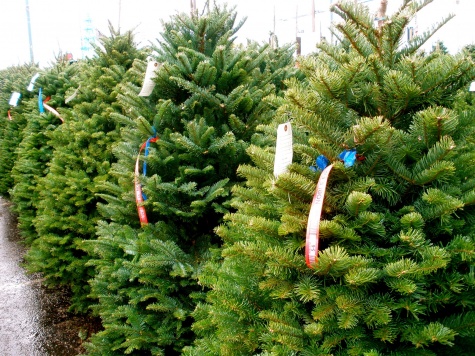
 Everyone’s favorite season (ok, nearly everyone) is upon us again. Which means it’s time to bring out or purchase a Christmas tree.
The Christmas tree is the biggest symbol of the holiday season, the centerpiece of holiday decor. You could spend as much as $40 or $50 and potentially hundreds of dollars. You could get a green one or a white one. You could get a plastic one that comes out of a box or a sweet smelling pine one harvested from a Christmas tree farm.
Choices! Choices!
So how do you go about picking the perfect Christmas tree? The answer to that question depends on personal taste. It also depends on you doing a lot of research so you can make an informed decision. Here are some things to keep in mind.
Know Your Space
The first and most important thing to know is what kind of space you have to set up and display your tree. You should measure for not only the height of the room, but also for the ideal width of your tree.
You should also know whether part of the tree will be obscured from view. Because Mother Nature rarely makes perfectly symmetrical, filled-in trees, it can be helpful to position the tree in a way that will hide its “ugly” side.
If your tree has to be visible from all angles — 360 degrees around — then it makes your search a little tougher. The important thing is to be aware of the space your tree is going to be placed in so you can choose the right shape and size.
Know the Freshness
If you’re cutting a Christmas tree yourself at a farm, you know it’s as fresh as possible. But if you take the more popular route and pick a pre-cut tree from a store or roadside stand, it can be harder to tell how long it’s been since the tree was harvested.
You can often tell the freshness of a tree from the strength of its needles. Take a branch in your hand, gently wrap your fingers around it and pull toward yourself to see how many needles fall off. If they seem securely attached, that’s a good sign.
You can also tell freshness from its fragrance and color. Freshly cut trees will often have a strong scent to them and an attractive green color.
Check the limbs for strength, too. They should be sturdy enough to easily hold the weight of your ornaments and strings of lights without sagging too much or snapping off.
Know the Variety
The most popular varieties of Christmas trees is as follows:
Douglas fir: With the classic wedge-shaped look and needles that range from blue to dark green, the Douglas fir is known for its longevity after it is cut.
Fraser fir: With a rich fragrance and elegant look, the Fraser fir has needles that are dark green on top and silvery white below. It often has a skinny shape that suits small rooms.
Noble fir: The upward-curving needles and dense branches of the noble fir make it a holiday favorite.
Scotch pine: The Scotch pine has a cone shape and ability to retain its needles for a long time with or without water.
White pine: With long needles and a beautiful green color, this is one of the more fragrant pines.
These are by no means the only Christmas trees you should consider. There are dozens of different varieties available each year, so find out the strengths and weaknesses of each kind.
Whether you value the needle retention, scent, needle texture or color, a good tree farm or Christmas tree retailer will be able to explain the differences and steer you toward the variety that will best meet your wishes.
Merry Christmas!
