

by Janna M Hall
African American culture is so rich in history, traditions, and rituals. Everything from the food we eat, the way we worship, and the colloquialisms we use have been passed down through generations, and connect African Americans across the nation, regardless of region. Too often, though, the black community is defined by negative stereotypes and assumptions, and rarely viewed through the complex nature of our being. Our story is unique, and the eyes through which we view the world are different than our non-African American counterparts. Unfortunately, our unique story is rarely told from our perspective, and the ones that are told rarely cross over into mainstream media.
Until Romare Bearden.
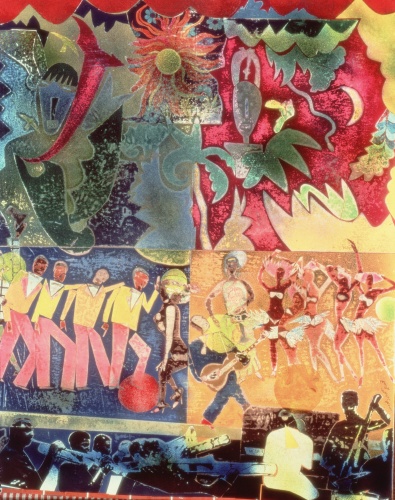
Wrapping It Up At The Lafayette
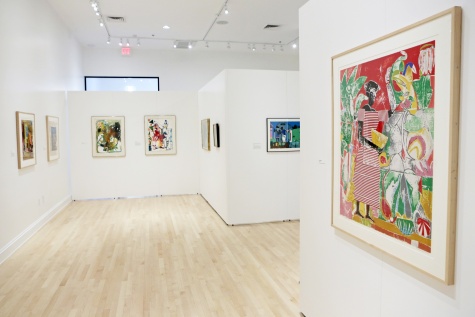
Richmond’s Black History Museum & Cultural Center’s newest traveling exhibition, “Romare Bearden: Vision and Activism,” displays the works of the renowned artist who dedicated his life’s work to activism and telling that story through various mediums. For over 50 years, Charlotte, North Carolina native Romare Bearden used oil paintings, watercolors, and photomontages to not only depict, define, and celebrate African American life, but to also push for social change during a tumultuous time in our nation’s history. His desire was to present an honest narrative about black life—completely raw and devoid of any propaganda. The exhibit boasts over 50 pieces of Bearden’s work, including limited edition prints and several magazine covers from the Romare Bearden Foundation’s archive.
Bearden began his artistic career while studying at New York University. He took on the role of lead cartoonist and art editor for the school’s monthly journal, The Medley. Vision and Activism takes visitors on a complete journey of Bearden’s artistic development, beginning with the social and political cartoons he produced for various black journals dedicated to social purpose. In 1935, after finishing his studies at NYU, Bearden began working for the Baltimore Afro-American as a weekly editorial cartoonist. His unique style quickly became a distinguishing trait, one that sets him apart from the cartoonists we’re more familiar with today. Through his sketches, we get a glimpse into racial prejudice, war, and politics through the eyes and perspective of Black Americans in the 1930s.
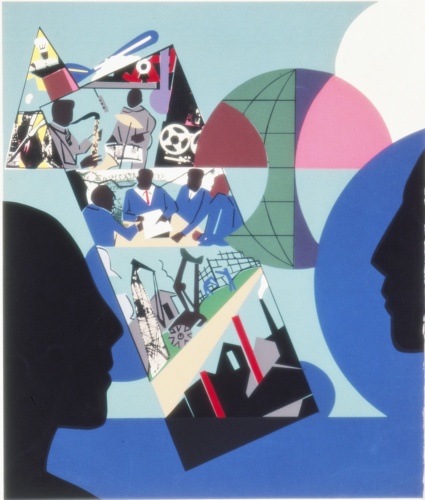
Black Enterprise
As his career progresses, we see more complex works and the exploration of other techniques through which to portray Black American life. His 1937 painting, Soup Kitchen, depicts real-life social concerns that stemmed from the Depression era. It is with this painting that we see the parallel between Blacks and Whites in America during this financially stressing time—and realize how similar those experiences actually were.
The exhibit also showcases powerful cover art from publications such as TIME magazine, The New York Times Magazine, Black Enterprise, and TV Guide. Moving to Harlem in the 1940s, Bearden’s purview shifted, and he became more involved in the state of affairs in New York City. Using his famous collage technique, Bearden created captivating covers for these publications, speaking to the pressing issues of the city, again, from the perspective of Black Americans. He developed collages that showcase the city’s Mayor at a time of social and racial strife, as well as pieces that spoke to the need for education reform for the city’s Black population.
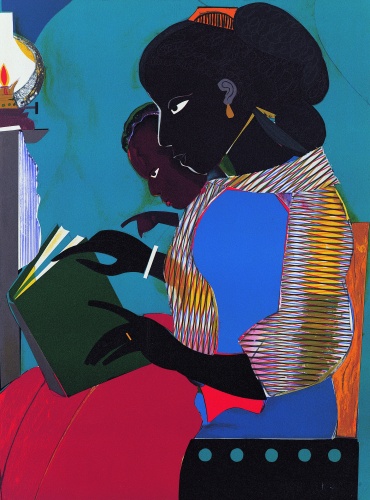
The exhibits discussion of education reform doesn’t begin and end with the New York Times Magazine’s cover, but his famous The Lamp work, developed from a sketch Bearden drew of Susan Taylor, longtime editor of ESSENCE magazine, also speaks to that issue. In the screen print, Taylor is reading to her daughter, speaking to the heavy education many Black parents had to conduct at home to supplement the separate and unequal education system. In fact, that piece of work, courtesy of the Nanette Bearden Estate, later came to represent
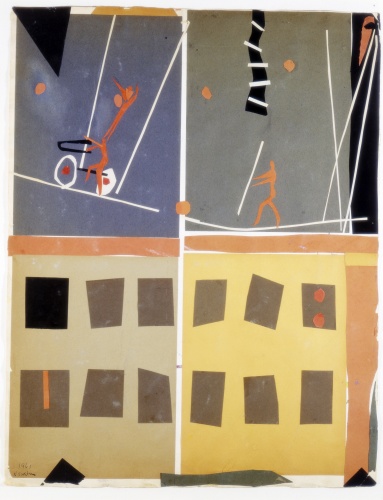
Circus
the case of Brown v Board of Education in the 2005 US Stamp collection, commemorating important movements in the Civil Rights Movement.
All in all, Bearden’s art allows the world to view an often misunderstood and stigmatized people as beautifully complex, culturally and politically aware, and a people who have endured and overcome struggles both with America and because of her. His 1978 Black Enterprise magazine cover, for example, puts on display the upward mobility of African Americans. In this piece, he portrays Black men in the boardroom, Black musicians, and the industrial work our Black men were an integral part of. He made it his life’s mission to play an active role in the liberation of his people, freeing them from damaging stigmas and harmful propaganda.
Bearden’s very life outside of art was spent encouraging and supporting Black aspiring artists to participate in the black freedom movement alongside him. Through the Studio Museum, a Harlem-based museum he helped found with a group of fellow artists, Bearden created a space where black artists could perfect their craft. He believed in the transformative power art held, and supported those who wanted to be a part of the social transformation.
The Lamp
When asked, “What is the most effective role an artist can play in the freedom movement?” Bearden answers, “Do everything in your power not to just protest a failed world, but depict one where community responsibility and love are real.”
The themes of community responsibility and love are showcased throughout this traveling exhibit, particularly with the detailed watercolor and oil paintings. The watercolors use themes of religion and unity through shared religious experiences, and also retell popular biblical and religious tales, something that continues to be an integral part of the Black community. His oil paintings, while abstract, focus primarily on themes of music. Though he’s able to tell a thousand tales with his art, the greatest story he tells is one of unity within the community, with depictions of real, raw relationships between Black Americans.
What’s incredible about the Black History Museum & Cultural Center is its use of technology to tell a complete and comprehensive narrative of Black history, dating back to ancient civilization and constantly updating as history is continually made today. It’s clear that its modern design attracts a younger audience, perhaps an audience that once viewed museum visits as an activity reserved for the older generation. Now that the youth are in the door, drawn to the museum’s use of technology, the exhibits are able to fill the gaps in history. Their first exhibition, Funky Turns 40: Black Character Revolution, commemorated the 40th anniversary of iconic 1970s Saturday Morning Cartoons that featured positive Black characters for the first time in television history. With Romare Bearden: Vision & Activism, our youth and young adults gain exposure to one of the most important visual artists of the 20th century. The narrative of Black life in a positive light continues, and those messages and stories are what need to be told. As we honor the mark Bearden made during his time, we must also recognize the place he holds in today’s world. The Black History Museum opens the door for such recognition. 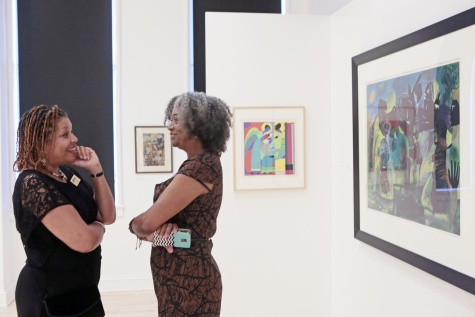
Romare Bearden: Vision & Activism is on view at the Black History Museum and Cultural Center, Richmond, VA, through December 13, 2016.
