
By Dr. Hollee Freeman, Director, MathScience Innovation Center
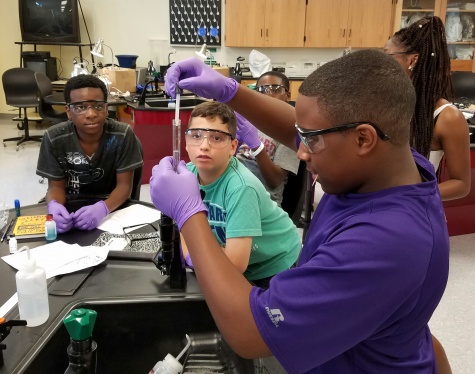
Student are testing for ammonia nitrogen levels in their James River water.
Left to right: Dewayne , Alex, and Elijah
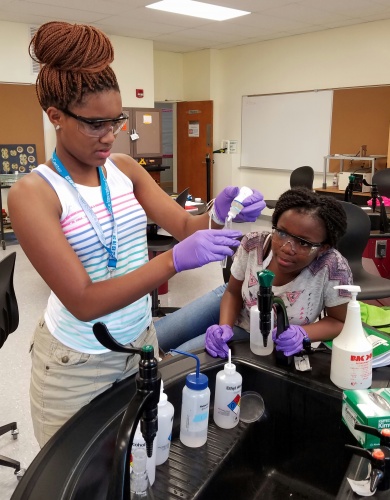
Melyoge (Mely) & Haniya are testing the dissolved oxygen levels in their water sample.
The importance of having students explore questions related to their communities is vitally important. We are living in tense and confusing times and student voices need to be heard. We have all seen news reports and read articles about what is ailing our schools and communities. In all of this, where are the voices of the students? Not just voices to identify issues, complain, and admonish but rather, where are the voices that will speak life into issues, work to figure out root causes, and come up with possible solutions that can be implemented? We need student voices. Yes, students talking for themselves and to their peers and community members. Solutions are not only in the purview of policymakers. Students can (and do) provide a great deal of insight, knowledge, and energy when tackling issues within their own communities. Students can (and should be) community leaders as well.
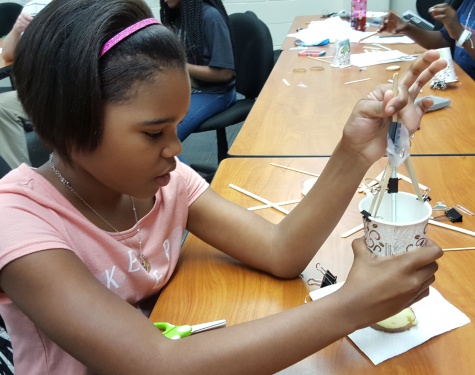
Sahara is testing her device on a potato, which represents an asteroid.
During the MathScience Innovation Center’s Project Explore: Research and Inquiry class, instructors Carroll Ellis and Brian Domroes asked a group of Richmond Public School middle school students the question: What issues matter to you, and what are you willing to do about it? For three weeks during the summer, students explored their questions and ideas, learned research techniques in both the physical and social sciences, interacted with a data scientist, a lobbyist and mentors from the Center for Undergraduate Research at Virginia Union University. These students also worked with a writing coach, developed presentations, and solidified action plans focused on their particular issue – the issue that matters to them.
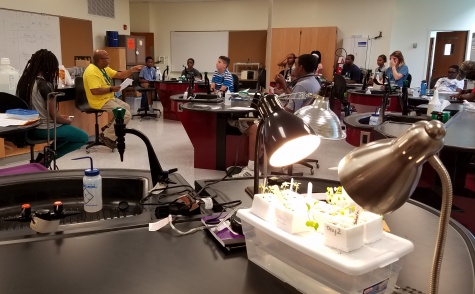
In this NASA asteroid mission, students are designing a probe to retrieve core samples from an asteroid.
The work generated by these middle school students is powerful and insightful. As a result of their work with the MathScience Innovation Center’s Project Explore Research and Inquiry course, students were provided an opportunity, by Clovia Lawrence and Radio One, to present their research during the Teen Forum held on September 10 at the Trinity Life Center. Students delivered their research and action plans around homelessness and housing with a sense of ownership, confidence and data.
Here are excerpts of the presentations of Elijah Woodward, 7th grade IB student at Lucille Brown Middle School and Melyoge Kale, 8th grade student at Albert Hill Middle School.
Elijah Woodward on Youth Homelessness
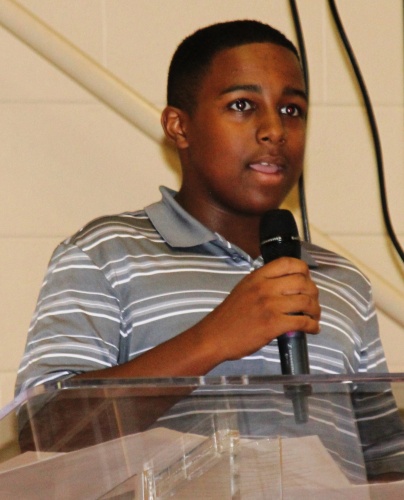
Elijah Woodward
Youth Homelessness Statistics
- 4 million students in the U.S. were homeless during 2014/2015
- 78% of these students were homeless more than once during the school year
- 18,000 were right here in Virginia
- 2/3 admit to being too embarrassed to talk about it with school administrators
Homelessness includes many things
- Not having a place to sleep
- Not having adequate clothing
- Not having enough to eat
Solution to one problem (specifically, the stigma of not having a lunch or having to admit that you receive free/reduced lunch) is to create an “elective food bank”.
- Students can “elect” to bring a lunch and forgo theirs, so it can be donated to their school’s food bank.
- Donated food can be distributed to those in need.
- Distributed items can be given in a place other than the cafeteria, so students will not be embarrassed to accept the food.
- Following this presentation, Elijah wanted to pose a question to students about what they can do to help with teen homelessness.
Melyoge Kale on Housing
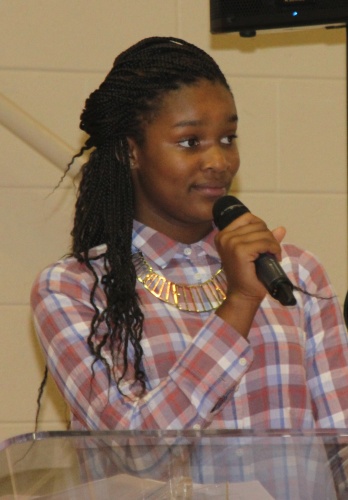
Melyoge Kale
The move to develop public housing began in the 1930s. In 1939, the government sought to demolish all “slums” (dilapidated, unsanitized housing) and replace them with public housing. In 1942, Gilpin Court was the 1st public housing community in Richmond, Virginia, followed by Creighton & Hillside in 1952, Fairfield & Whitcomb in 1958, Mosby in 1962, and Blackwell in 1970. Unfortunately, many people look at people who live in public housing as bad people. This may be because 85% of all crimes that happen in the city of Richmond happen near or around public housing. However, it is important to note that a very small percentage of the offenders who commit these crimes actually live in public housing.
We often hear about the crimes that occur in the housing communities but what is not reported are all the wonderful activities that happen in these same communities. In these communities, there are STEM programs for young people, access to organizations which provide scholarships that help young people enter into college, Community Days that bring the residents together, strong partnerships with the police department and other City agencies which provide young people with opportunities and skills that will help them move into a successful adult life.
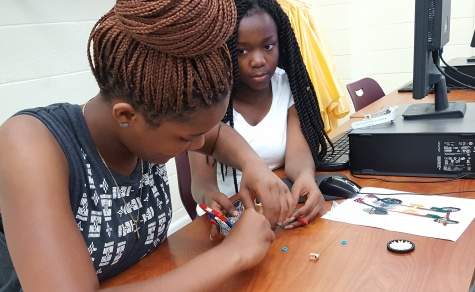
Students are designing & building race cars as they work on their engineering skills. Left to right: Mely & Haniya
At the MathScience Innovation Center, we are very proud of these (and all of the other students) in the Project Explore Inquiry and Rigor class. For more information or to find out how you can apply to this program, visit the MathScience Innovation Center website www.mymsic.org or ask your middle school counselor. To get a first-hand experience with our vast array of student and adult programs, come to our Community Open House on Saturday, October 1st from12:30-3:30 for food trucks, hands-on STEM activities, tours of the campus and much more. Our Project Explore students will be there to talk more about their work.
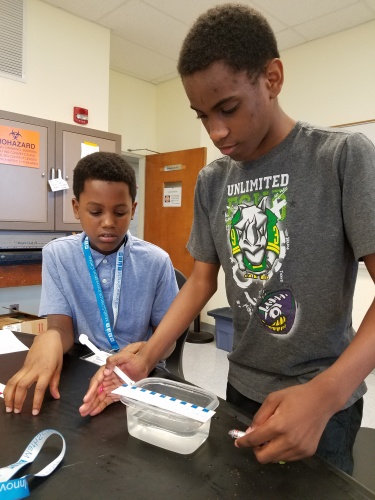
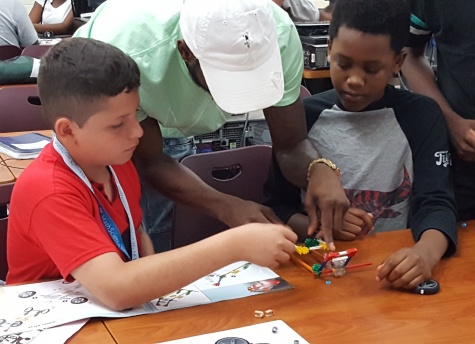
Students are modeling the effect of aerosols in the atmosphere on climate. Left image: D’Andre, left, and Kimahri.
Right image: Alex, left, and D’Andre.
Photos submitted by MSIC.
