
Health News sponsored by VCU Health
~ Immunization Awareness Month ~
By J. Chevonte’ Alexander
Do we really need vaccines? We all hear a lot about vaccines and vaccine safety – some good things and some bad things! But, what is the real story on vaccines?
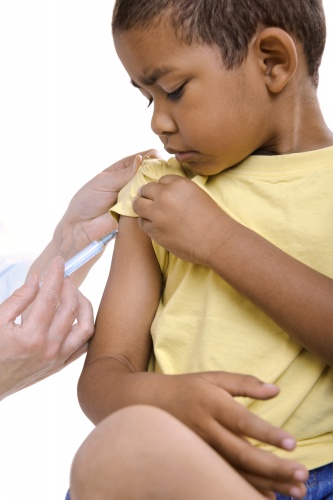 It’s critical for you and your child’s health that we know the important facts. Vaccination is an extremely controversial topic these days. Whatever side of the aisle you may fall with regard to your opinion about vaccination, one thing is for certain. The choice to vaccinate or not to vaccinate is a decision that has the potential to greatly impact the health of you and, most importantly, your children for the rest of their lives.
To help us in figuring out this information, we asked Dr. Elizabeth Wolf, a general pediatrician at the Children’s Hospital of Richmond at Virginia Commonwealth University (VCU). Dr. Wolf completed a pediatric residency at the Children’s Hospital Colorado and a fellowship in General Academic Pediatrics at the University of Washington/Seattle Children’s Hospital. As part of her fellowship, she obtained a Masters in Public Health in Epidemiology. She currently conducts research at VCU on what makes people vaccinate or refuse vaccinations. She is interested in what affects immunization coverage within a community and the differences in immunization coverage between various groups.
Her passion in pediatrics first began during her study of vaccine preventable diseases when she worked in Africa after residency and saw children dying needlessly from meningitis and diarrhea.
“This is why National Immunization Awareness month is so important,” comments Dr. Wolf. “I think about how important it is to spread the word on the importance of vaccines and how life saving they can be.”
Throughout the lifespan, doctors give vaccines to protect against bacteria and viruses that can kill or cause serious disability or illness. Different immunizations are given at different ages based on when people are most susceptible to vaccine preventable diseases and when people’s immune systems respond the best to the vaccinations. In adolescence, we give a vaccine (HPV) that prevents cervical cancer. There are certain vaccines that are recommended for pregnant women including influenza and tetanus, diphtheria and acellular pertussis (TDaP). These vaccines help protect their infants against the flu and whooping cough.
The key here is education; making an informed decision by investigating the facts with an open mind and knowing exactly what you are getting yourself into before you commit to do anything.
According to the American Academy of Pediatrics, the following information is very important for parents on the fence about immunizations.
The statistics include:
- Out of 1,000 U.S. children who will catch the measles, one to three of them will die.
- The average number of annual cases of measles in the 20th century in the United States was over a half million. In 2010, thanks to successful vaccines, there were only 63 cases.
- 38 percent of children younger than 5 years who had measles required hospitalization.
- 85 percent of babies born to mothers who had rubella in the first trimester will have birth defects.
- More than 95 percent of people who receive measles, mumps and rubella vaccine become immune to all three diseases.
If you’re like most parents, you don’t think twice before having your children vaccinated. You want your kids to be healthy, so you make sure they get their shots. In fact, nearly 90 percent of kids in the United States are fully immunized against ailments that once killed thousands of children every year.
Yet, despite the fact that vaccines can prevent many serious diseases, a small but growing number of parents are questioning the need for, and benefits of, immunization.
What do you think? Vaccinate or not? Let us know what you think!
