




![Tamika_3[1]](https://dev.urbanviewsweekly.com/wp-content/uploads/2016/05/Tamika_31-e1464277745246-475x446.jpg)
Tamika Quinn, Photo: thirdimage.com
However, eating a healthy diet was not always the case for Quinn. Growing up in the heart of North Philadelphia, she recalls, “I remember as a young child wondering why we had to travel so far to go grocery shopping. There was a small market not that far away but it had more convenience foods than fresh.” Her poor diet led her to being overweight and having high blood pressure. She says, “In my mind it was okay because everyone in my family had high blood pressure, and what’s wrong with being a little thick?”
At the age of 27, and just 10 days after the birth of her second daughter, Quinn suffered a brain bleed or hemorrhagic stroke. The incident left her left side partially paralyzed. While recovering in the hospital, she suffered another stroke at the front of her brain. Now faced with relearning how to do everything from feeding herself to combing her hair, she was also told that she would probably need a walker for the rest of her life. However, months of physical and occupational therapy – coupled with a strong faith -helped Quinn regain most of her mobility and function.
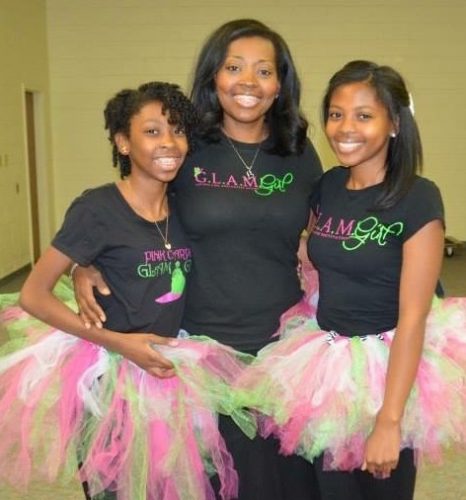
Tamika Quinn with her daughters (left) Sequoia and Cashara.
According to the American Stroke Association, Quinn had stroke risk factors that tend to be stronger or more common in women than in men: high blood pressure, a history of migraines and a recent childbirth. In addition, African Americans have nearly twice the risk of first-ever stroke than white people, and a much higher death rate from stroke.
Although some factors like race or family history cannot be changed, 80% of strokes are preventable.
For Quinn, that prevention did not happen right away, but rather when her youngest daughter was diagnosed with high cholesterol and being overweight at age 8. “I did not want my daughter taking cholesterol medication at such a young age. Also knowing that her dad had a history of high cholesterol along, with my own medical history, I knew this put her at an increased risk, and I was determined to do something about that.” Quinn and her daughter attended a program at their local children’s hospital which taught them nutrition and weight management. Quinn says, “We changed everything about the way we ate as a family. We drank water instead of sweet tea and sodas. We limited our portion sizes by eating off of saucers instead of plates.”
These changes paid off in a big way. Quinn’s entire family is now healthier, her blood pressure came down, and she is off 2 of her 3 medications. While she credits lots of intensive therapy, prayer, and love for getting to where she is today, she says, “I wish I had known how to prevent all that I’ve gone through. Any health issue that can be prevented should be!”
Find Answers, Support For Stroke
 Finding help to navigate your stroke is as easy as opening a web browser with two resources from American Heart Association/American Stroke Association.
Cryptogenic Stroke Initiative: For stroke survivors who don’t know the cause of their stroke, the American Stroke Association’s cryptogenic stroke resources for patients and healthcare providers can help navigate the diagnostic options available to help prevent another stroke. Learn more at StrokeAssociation.org/CS
Online Support Network: Experiencing a stroke or becoming a caregiver to a stroke survivor can leave you feeling alone and overwhelmed. Meet others going through similar experiences, get advice, or pay forward kindness you received through the Support Network. Visit StrokeAssociation.org/SupportNetwork to connect any time day or night.


About three in four people who suffer a first stroke have blood pressure higher than 140/90 mm Hg. Keep and eye out for these sneaky blood pressure raisers.


