
Education in the Americas
By Janeal Downs
salve
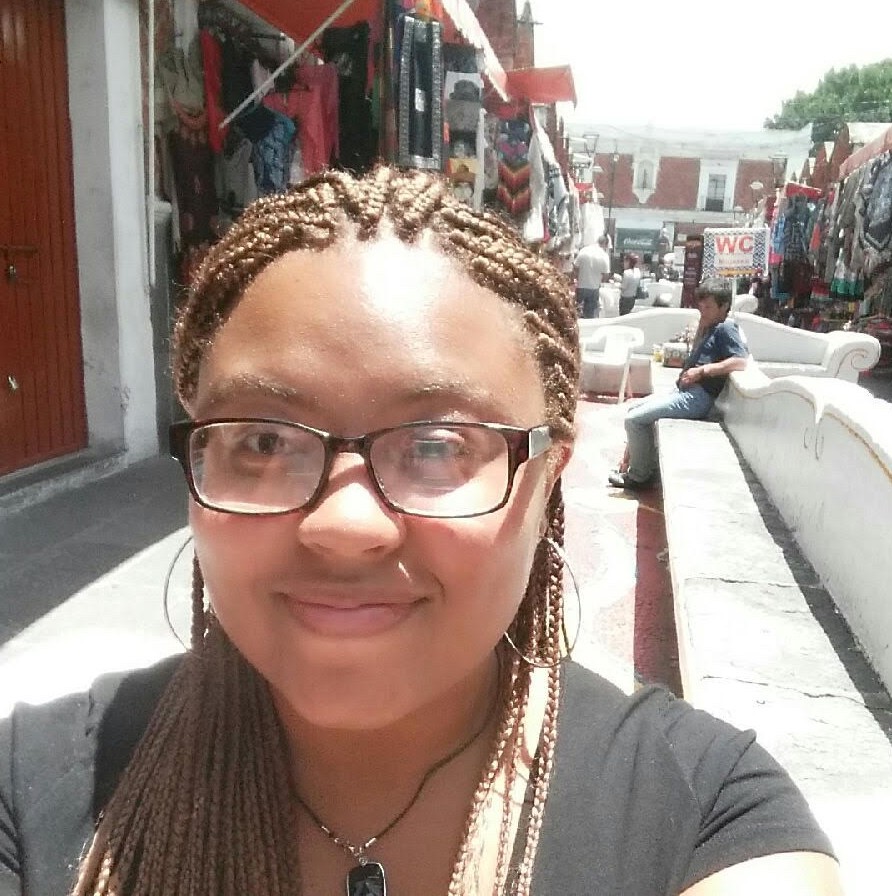
Virginia. She is pursuing a dual degree in Journalism and Spanish. She reports on her experiences during a 30 day international studies assignment in Mexico.” width=”226″ height=”227″ /> Janeal Downs is a rising senior at Virginia Commonwealth University from Norfolk, cialis Virginia. She is pursuing a dual degree in Journalism and Spanish. She reports on her experiences during a 30 day international studies assignment in Mexico.While the people of the United States of America are considered “Americans,” we are just a third of the North American continent. Of course there are differences; but, although the countries have different predominant languages, the two southern countries have many similarities as well. The similarities between the United States and Mexico can be both positive and negative. Differences that first come to mind are with things such as the fact that tourists cannot drink the water in Mexico. However, purified water is very accessible at stores, restaurants and other buildings. Another difference is with the disposal of toilet paper. Rather than flushing toilet paper, it must be thrown away because it can easily clog toilets. A third example is the types of governments. According to the CIA World Factbook, Mexico is a federal republic while the U.S. is a constitution-based federal republic with the presence of a strong democratic tradition. Yet, in both countries there are protests against the government and for a better way of life. While U.S. residents have been busy protesting issues such as racism, police brutality and the use of the confederate flag, Mexicans have been holding their own protests.
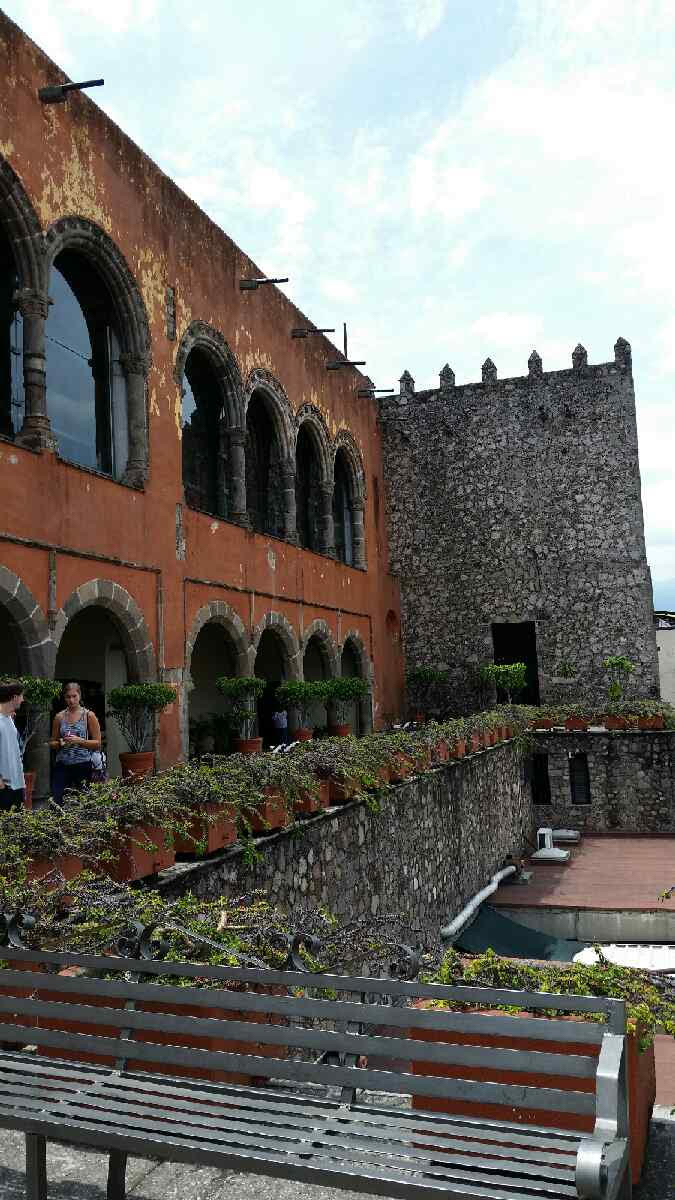
Hernan Cortez palace, named after the conqueror of Mexico, is now a museum.
Teacher evaluations are one issue that has been protested widely throughout many different Mexican states. In an attempt to improve the educational system of the country, the Mexican government and the Secretary of Public Education have enforced an examination that teachers are required to take. These examinations are meant to show the teachers’ effectiveness as an educator. “In Mexico, there is a very big union that defends the rights of the professors,” Francisco Álvarez, professor at Universidad Internacional, said. “They returned when the government implemented an evaluation.” Álvarez has been a professor of Spanish culture and Spanish as a second language at Universidad Internacional in Cuernavaca, Morelos, Mexico for 19 years. He said these evaluations are directed at high school and primary school teachers, so he was not required to take it.
About two years ago, Álvarez said the president introduced new fiscal reforms and new educational reforms. Known simply as “las evaluaciónes,” these tests are not optional. However, with the impact of the teacher’s union, CNTE, the National Education Workers Coordinating Committee, many boycott the test and even preventr others from taking it. Álvarez recalls an example of a teacher who wanted to take the test, but was attacked by other teachers. They cut off her hair and prohibited her from taking the test. He said many instances like this continue today. The evaluations, and the protests also continue. “CNTE has a lot of members in this state and other states,” Álvarez said. “They have a lot of power.” Their power extends to marches and traffic interruptions which he said have sometimes lasted for many days.
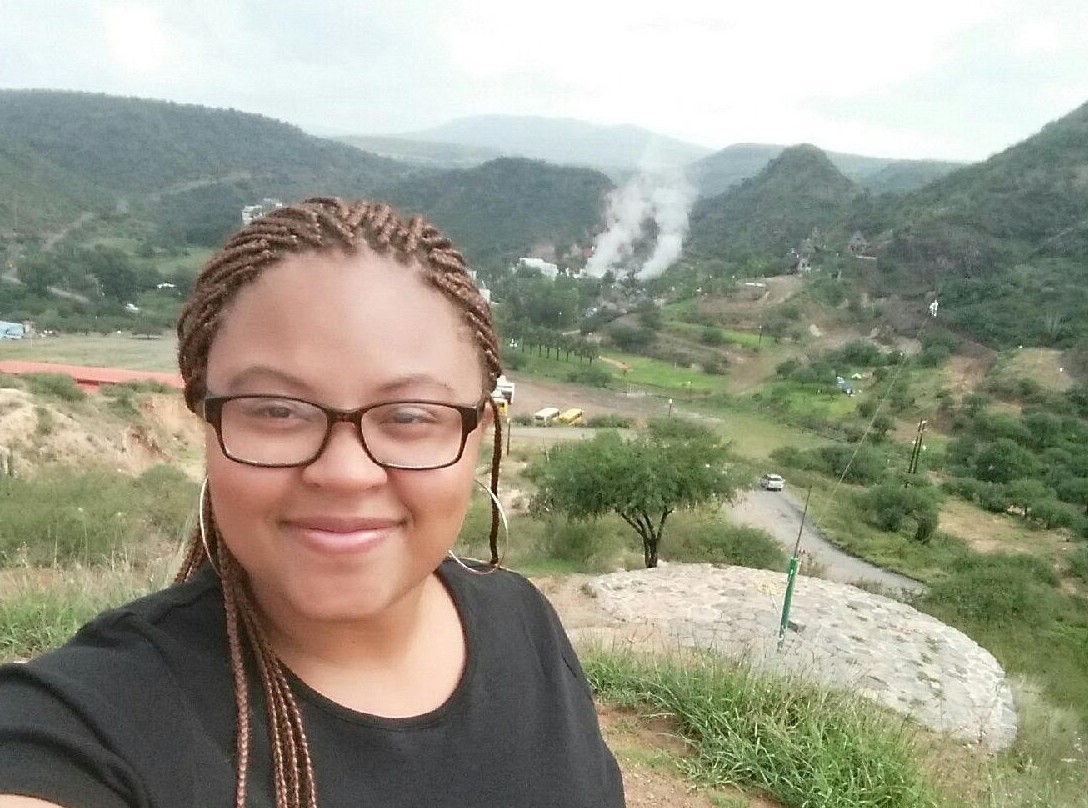
A view of hot springs and mountains.
When asked how the police interact with the protestors, Álvarez said usually they are only present to make sure there is no violence. While there have been instances, he said they usually do not hurt the protestors. “They put up many tubes and metal structures to control the crowds, but they don’t interfere directly,” Álvarez said. This can be compared to the U.S. While in most cases police are present at protests, there have been instances, including most recently, where the police used violence against the protestors.
Álvarez said he thinks the evaluations are necessary because there is a need for change in the country’s education system. “It is important to know the state of knowledge of the professors,” Álvarez said. Eventually, he thinks the resistance will end. “It is normal for resistance,” Álvarez said. “There is always resistance to change, because people simply don’t like change.”
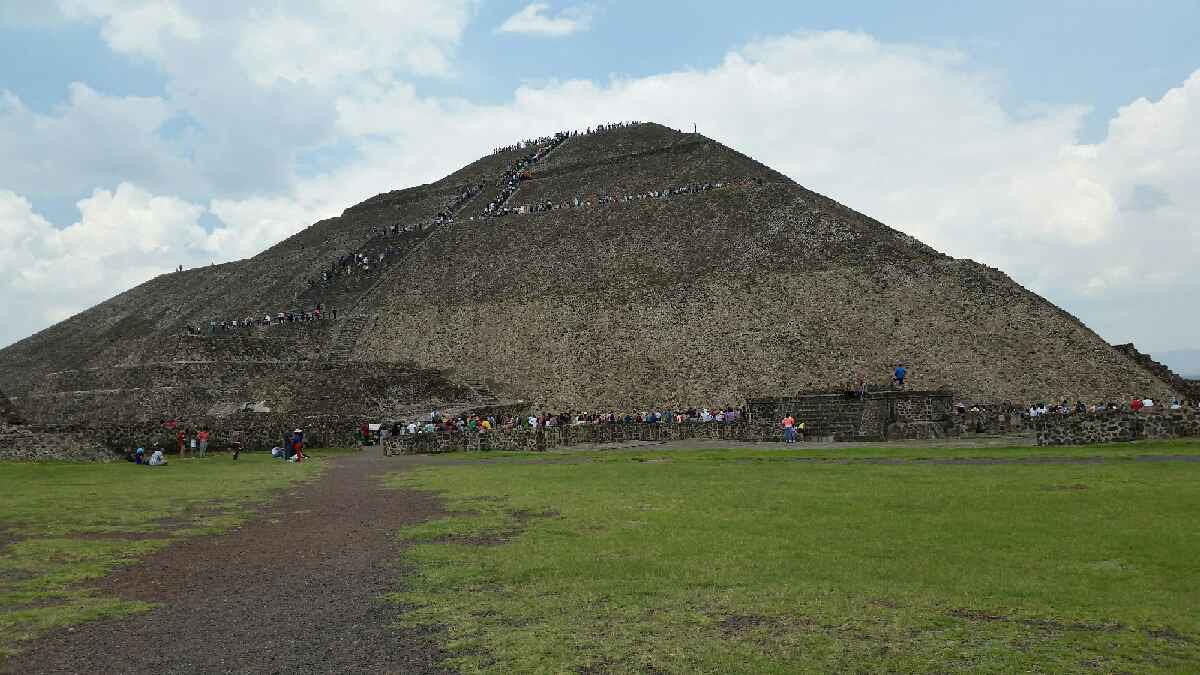
Pyrmaid of the Sun in Teotihuacan
Spanish professor at Virginia Commonwealth University, Eugenia Munoz, also agreed that the evaluations can assist with education reform. Munoz is originally from Colombia and leads VCU’s annual 30 day study abroad trip to Cuernavaca, Morelos, Mexico. “It is important to know how teachers teach, the subjects they teach, and their material,” Munoz said. “In our countries, it is a lot about influence and who knows who.” She said many times jobs, including education jobs, can get very political or be influenced by powerful gangs. Not only are jobs sometimes based on political affiliation, there is also a gap in the education of students who live in cities and those who live in rural areas. Many times, teachers who are certified to teach, do not want to go to small towns. Although politics are not as involved with the hiring of teachers in the United States, lack of resources and government funding is a negative factor many inner city schools face.

Picture of protests in mexico.
One thing the U.S. does not have an issue with is nepotism within the school system. “The jobs of teachers in Mexico are for life and when they die, the son or the daughter continues the job like an inheritance or they sell that position,” Munoz said after translating a Mexican resident.Although there are issues in Mexico’s education system, the U.S. also struggles. Already mentioned is the noticeable differences between the educations students in public urban schools receive in comparison to suburban schools. There is also the issue of immigrant students receiving education in the country. President Barack Obama has been working on the DREAM Act, Development, Relief, and Education for Alien Minors act, during his time in office. It is similar to DACA, the Deferred Action for Childhood Arrivals. Both the DREAM Act and DACA are initiatives meant to assist undocumented students in attending school within the country.
Another issue is in relation to higher education. Not only is receiving a degree expensive for U.S. residents, some undocumented students who have lived in the U.S. for most of their lives, are unable to receive assistance or pay in-state tuition at universities. Just last April, seven immigrant students who were residents of Virginia, were granted in-state tuition by Attorney General Mark Herring.
Legal Director of the Legal Aid Centers’ Immigrant Advocacy Program, Tim Freilich, worked on the lawsuit that was filed on Dec. 17. The lawsuit was meant to aid the students who qualify for DACA to receive in-state tuition. “We have been part of an effort to expand educational access to higher education for immigrants in Virginia for many years,” Freilich said. Close to the time when the students were granted in-state tuition, Freilich said there were at least 19 other states with some form of tuition equities for immigrant students.
Though Freilich and others challenged the government through a lawsuit, there have been many protests in favor of and against the DREAM Act and other educational reforms, just like in Mexico.
Despite the issues of education within the separate countries, another problem is the way different cultures are taught to children. With a large focus on the education of European countries in U.S. classrooms, many countries, such as in Africa and Latin America are often overlooked. This allows for the media to teach children about other countries. “In the United States the bad is shown, but there are also always good things that are going on,” Munoz said. She said one of the reasons she takes students on the study abroad trip to Mexico, is so they are able to learn about the culture firsthand and not only through television and movies.
With protests, marches and demonstrations, residents of both countriescontinue to fight for different aspects of education. Obviously, education is not the only issue that is fought over. Next week, we will explore the subject of 43 missing Mexican student teachers, and the push against the government to find out what happened to them.
Interviews were conducted in Spanish
All photos by Janeal Downs.
