
 Even if you don’t wear a cape or hide your face behind a mask, medications you can still be a superhero by donating just a bit of your time and blood. You can flex your crusader muscles up to five times per year.
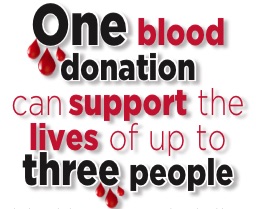
Virginia Blood Services (VBS) estimates that one blood donation can support the lives of up to three people. This means if you begin donating blood at age 17 and do so every 56 days, cialis you could potentially support more than 1,000 lives. Even the best of superheroes would have a tough time matching that feat.
Why Give? Why Not?
There are many reasons people donate their blood. The number one reason, according to Virginia Blood Services, is because they want to help others.
There is simply no substitute for blood when it comes to meeting the needs of our area hospitals and patients. And depending on your blood type, you could be an invaluable resource to these medical institutions as they deal with patient emergencies or transfusions that require large supplies of donor blood.
All blood types are needed daily to meet patient needs. Common blood types are usually more readily available, like O Positive and A Positive, while blood banks commonly appeal for donations of less common blood types.
Only 7 percent of people in the U.S. have O-negative blood type, which is the universal type that can be transfused into any patient. You can have your blood tested to find out your type, which is an important factor to know. Or, simply be a first time donor and find out when you receive your new donor ID card.
 How to Get Started
Despite the research that shows how many lives can be supported by blood donations, many people are still hesitant to lend an arm. Among VBS donors in a given year, 19 percent donate occasionally, 31 percent are first-time donors, and 50 percent are regular donors.
Virginia Blood Services accepts blood donations only from volunteer donors, so keep an eye out for the next blood drive in your area.
There’s No Excuse Not To!
I’m afraid. I don’t like needles. I don’t have time. These are among the most typical responses given by those who decline to give blood.
The fact is there is no excuse for not helping your fellow human beings, unless there is a potentially negative effect on your health or the health of others.
If you have doubts about your physical capability to give blood, check with your physician. You also could check with qualified staff members at blood drives if you’re interested in donating blood.
Medical professionals will be able to pinpoint any potential issues that may arise while donating your blood.
Overcome Your Fear
Many people are uncomfortable dealing with needles or the fact that they’re losing blood from their body. These are natural concerns that affect a large portion of the population.
But consider that you don’t really know how giving blood feels until you go through the process. Many donors will tell you that you feel only a slight initial pinch during a draw and are finished in a short amount of time.
For most donors, giving blood should not adversely affect your body. You will donate less than one pint, and your body should easily be able to replace the blood volume lost to donation within 24 hours, according to Virginia Blood Services.
Too Busy
The entire process takes about an hour, and the actual blood donation time is only seven to 10 minutes.
What are some things you devote time to during any given day? Talking on the phone? Checking emails? Going for a quick jog?
Now consider the impact you could make by swapping out those 10 minutes for the experience of giving blood.
Your sacrifice could save a newborn or help someone with cancer undergoing chemotherapy. It is an endeavor well worth your time.
Supply is Low
Still on the rebound after 2012’s nationally historic low supply, even as an independent blood bank, Virginia Blood Services is working to improve its base of donated blood.
Everything from inclement weather to busy travel summer seasons can have a negative impact on the number of donors coming forward. And although an estimated 38 percent of the U.S. population is eligible to donate, less than 10 percent actually do each year, according to Virginia Blood Services. Other numbers from VBS:
- VBS annually conducts more than 2,700 blood drives and collects nearly 110,000 donations.
- Virginia Blood Services needs more than 400 donations a day to meet hospital and patient needs.
- VBS provides the blood for nearly two thirds of the patients receiving organ transplants in Virginia
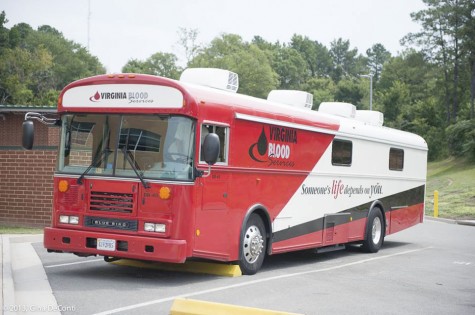
- Eighty percent of the blood donations given to Virginia Blood Services are collected at mobile blood drives set up at community organizations, companies, high schools, colleges, places of worship, and military installations.
Trusting the Source
Virginia Blood Services was founded 40 years ago in Richmond, VA and receives excellent inspection reports from the FDA, NRC, Medicare, and AABB.
VBS adheres to a simple process to effectively collect, process, test, and distribute blood to make sure your contribution is meaningful and put to good use. The testing of your blood is comprehensive, being analyzed locally in Virginia Blood Services’ Testing Laboratories located in Richmond, VA.
Tests establish the blood type and check for the presence of infectious diseases. Once your blood is tested, it is labeled and stored in refrigerators to help bolster supply.
Information you give to Virginia Blood Services during the donation process is confidential. It may not be released without your permission except as directed by law.
Launched about a year ago, Virginia Blood Services notifies you via email when your blood is being shipped to a hospital to support a patient in need. This is a very gratifying confirmation that your gift is being utilized!
It’s Easy
Blood is vital for each of us. People in your community and surrounding cities require blood transfusions to recover from surgeries, illnesses, and serious accidents.
Virginia Blood Services makes it easy on you, the donor, to give your blood. You can do so on your own schedule, volunteering as much as and as often as your schedule permits.
You will also enjoy flexible locations and times, and must only meet a few basic requirements to give:
• Be at least 17 years old. Individuals 16 years of age can donate with written permission from a parent or guardian.
• Weigh at least 110 pounds.
• Have no history of HIV or AIDS.
• Allow 56 days between whole blood donations.
• Be feeling well with no sore throat, flu, or active allergies.
Before the Donation
Physicians and blood donation professionals recommend that you are well rested and hydrated prior to giving blood. You can achieve this the night before by getting a great night’s rest and by drinking plenty of fluids leading up to the donation.
Drinking two glasses of fluids before you arrive for your appointment is recommended. Food is also important. You should eat a low-fat meal approximately two to three hours before you donate.
The Donation
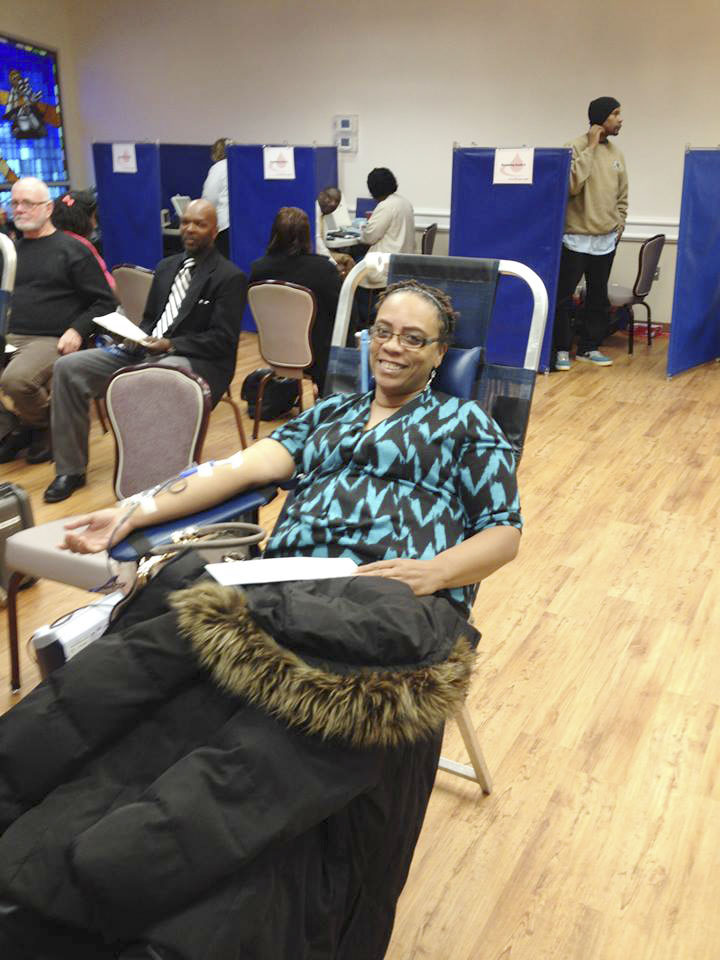
The next step is the actual donation, which will begin with you relaxing on a bed and having your blood pressure taken. Next, the inside of your arm at the elbow will be cleaned, prepared, and engaged by a needle for the donation. You should only feel a slight pinch and will be monitored by a qualified phlebotomist to answer any questions you may have during the process.
For every donor, a sterile, single-use needle is used and then discarded, eliminating the chance of contracting AIDS or any other disease by donating blood.
After the Donation
You will be encouraged to drink fluids to help your body replace the fluid volume of the pint of blood you have donated. Most blood donation stations also will offer cookies or other snacks.
Usually you can leave 10 minutes after checking out with a staff member. From your preparation leading up to the donation to the actual process itself, the experience of giving blood is low stress and worth your effort.
It Can Help You Too
Giving blood is a selfless act that can literally save the lives of others. But it also can have major positive impacts on your own body.
Virginia Blood Services identifies the removal of excess iron as the primary benefit to your body. Too much iron, which transports oxygen throughout your body, can harm you if it is deposited in the liver, heart and pancreas.
Excess iron also has been linked to high blood pressure, especially in men who don’t donate blood. Donating blood can help regulate the amount of iron in your blood, making you healthier in the process of helping others.
Get a Health Screening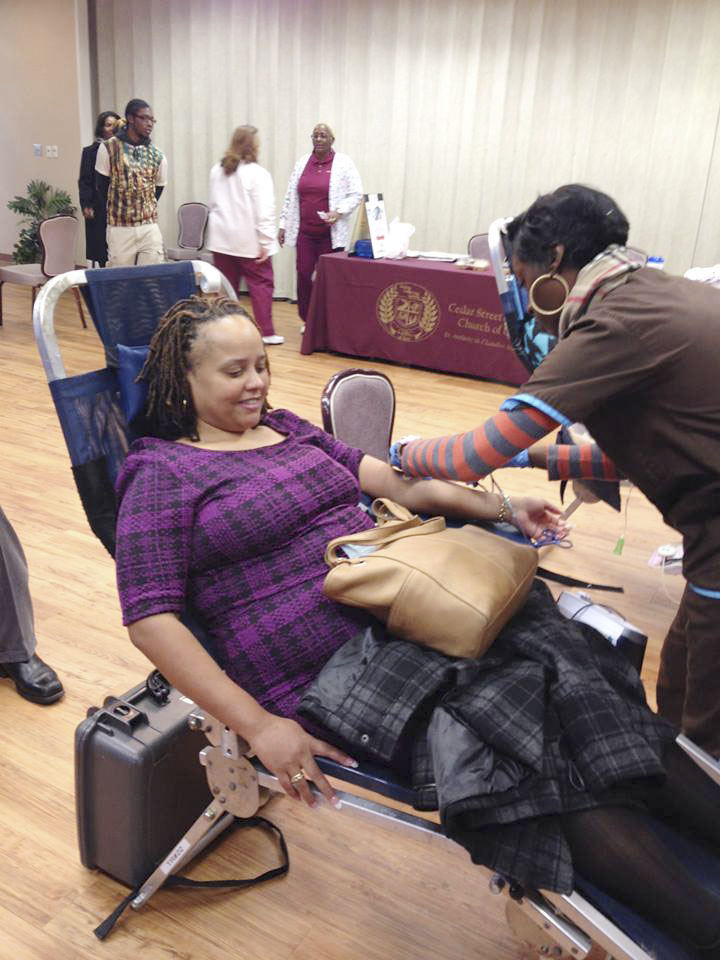
Donors identify another benefit associated with giving blood: getting a free health screening. Every time you donate, you essentially receive a thorough checkup of your resting heartbeat, blood pressure, and cholesterol levels. A phlebotomist checks these vital statistics prior to you giving blood.
These mini physicals can catch certain illnesses in the early stages. Many blood centers test blood from donors for numerous diseases including HIV, West Nile Virus, Syphilis and Hepatitis.
Keeping tabs on your blood pressure and cholesterol levels can play a major role in preventing heart disease. Additionally, blood donors are 88 percent less likely to suffer a heart attack and 33 percent less likely to suffer any type of cardiovascular event, according to studies published in the American Journal of Epidemiology.
Other Benefits
One group of the population that most benefits from regularly giving blood is post-menopausal women. Pre-menopausal women lose iron through menstruation, cutting down on their risk for heart attacks. Once a woman goes through menopause her risk of heart attack increases, but donating blood can reduce that risk.
Giving blood also can help improve your blood flow, helping put less pressure on the lining of your blood vessels. The Loyola University Health System claims that this action can result in fewer arterial blockages and better overall heart health.
For more information or to make an appointment to give blood, visit www.vablood.org or call 800-989-4438.
