

By Erika Winston
More than 500,000 Virginia residents are currently diagnosed as diabetic, according to the Virginia Department of Health. In addition, another 300,000 individuals have no idea that they are walking around with undiagnosed diabetes. Though it’s a disease that attacks people of all ethnicities, diabetes is more prevalent among Hispanics and African Americans. The disease that your grandmother called “the sugar” remains a major health concern within the Black community. November is Diabetes Awareness Month and health care professionals are working to shed life on the disease that, left untreated, can take away an individual’s basic ability to see the world around them.
The Richmond metropolitan health district reports one of the highest levels of diabetic prevalence in the state. More than 12% of Richmond city residents are living with diagnosed diabetes. The dangers of the disease are plentiful, especially without regular treatment and daily maintenance. Most diabetes patients manage the condition through diet and consistent monitoring of glucose levels. If they remain elevated, physicians may prescribe oral medications or insulin injections. While many diabetic patients are able to control the illness with these treatment methods, others experience serious complications related to the disease. One common, but lesser known condition, is sight loss.

Sabrina Simmons
According to the American Academy of Ophthalmology (AAO), diabetes is the leading cause of vision loss among adults age 20 – 64 in the United States. The vast majority of these cases are preventable, but the segments of the population with the highest risk are unfortunately the least aware about diabetes-related vision loss. The Alliance for Eye and Vision Research reportedly commissioned a recent study. The results showed that only 27 and 32 percent of Hispanics and African Americans reported knowledge about diabetic eye disease. This unawareness is extremely dangerous because these patients are not taking preventable steps to maintain healthy eyesight.
“It’s alarming that so many people with diabetes or at risk for diabetes may be unaware of the damage their condition can do to their eyes and may not be getting exams to check for it,” stated Raj K. Maturi, M.D., ophthalmologist and clinical spokesperson for the American Academy of Ophthalmology. “Outside of maintaining good blood glucose levels, having an annual dilated eye exam is the best first line defense against vision loss from diabetic eye disease.”
Sabrina Simmons is an African American woman living with diabetes-related vision loss. She was first diagnosed with gestational diabetes during pregnancy. The condition went away after the birth of her son, but she was diagnosed again in 2006. Six years later, on January 18, 2012, she learned that she had developed Diabetic Eye Retinopathy. After a routine eye exam, she was referred to a retina specialist who made the official diagnosis. “It was extremely difficult,” she explained, “because of my fear of the unknown.” The condition advanced quickly and Simmons was declared legally blind within a month of diagnosis.
Diabetes-related Eye Diseases
There are a number of diabetes-related eye diseases that may lead to blindness if left untreated. The AAO lists the following three as the most common:
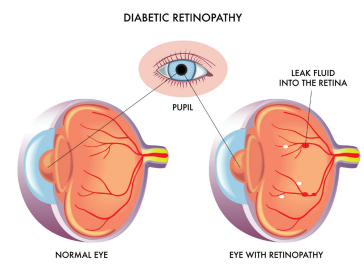
- Diabetic Retinopathy affects more than 25 percent of diabetic individuals over the age of 40. As described by the AAO, the condition develops when the eye’s blood vessels change. This prevents blood from reaching the retina. There are no symptoms in the early stages of diabetic retinopathy, but without treatment, it can lead to macular edema, a common cause of diabetic-related vision loss. Laser surgery and injections are commonly used treatments for diabetic retinopathy.
- Glaucoma is the world’s leading cause of irreversible eye loss. It occurs when the pressure builds up within the eye, damaging the optic nerve and diminishing peripheral vision. Glaucoma is common among people with diabetes because the disease prevents fluid within the eye from draining correctly, adding to the buildup of pressure. There usually aren’t any symptoms at the outset of the disease, making regular eye examinations vitally important for prevention.
- Cataracts develop when the lens of the eye becomes cloudy. This leads to vision that is extremely blurry. Cataracts are commonly associated with aging, but many people are unaware that individuals with diabetes are more likely to develop cataracts. While mild cataracts are generally treated with prescription glasses, more serious cases may require surgery.
Protecting Your Vision
Regular eye examinations are important for everyone, but they are particularly vital for individuals with diabetes. The AAO recommends a dilated eye examination at the first diagnosis of type 2 diabetes, followed by yearly examinations. Additionally, individuals with type 1 diabetes are encouraged to get annual dilated eye examinations in the fifth year following an initial diagnosis. During a dilated eye exam, the doctor uses eye-drops to widen the pupils of your eye. Then, a bright light is used to examine the back of the eye for any problems or issues.
Simmons encourages those with diabetes to get eye exams even more frequently. “If the doctor says every six months, do it every three months,” she said. “I was seeing an ophthalmologist regularly and it still happened to me.” She also talked about the importance of managing your condition. “You have to do it because you can die from the many different complications of the diabetes.”
For those who are unable to afford eye examinations, there are numerous resources available for assistance. EyeCare America, an AAO sponsored program, offers eye exams to eligible seniors at no out-of-pocket cost. To find more information, visit www.eyecareamerica.org.
Vision USA is a program coordinated by the American Optometry Association Foundation It provides free eye exams to low-income workers and their families. For more information, call 1-800-766-4466. The Virginia Department of Health also offers a number of resources regarding the diagnosis and treatment of diabetes.
Simmons is living a happy and fulfilling life, despite her loss of vision. She continues to maintain her diabetes with oral medications and injections. Though four eye surgeries did not improve her eyesight, she remains positive about her future. “My faith helped me to overcome it. Get with a support group, around people in similar situations. Consider it a challenge of life and always push forward.”
