

By Erika Winston
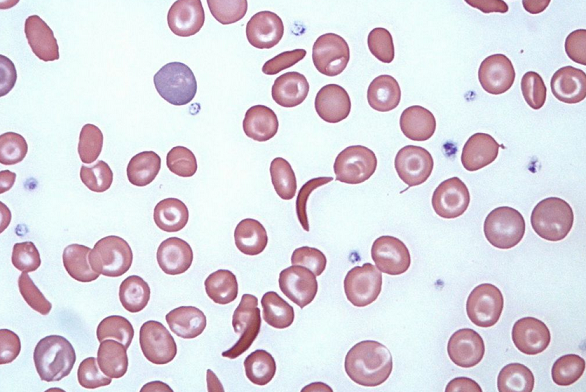
There is a large segment of the African American community that silently suffers with excruciating pain, inadequate medical treatment, and societal stigmatization. September is Sickle Cell Awareness Month, and there is a tremendous need for increased knowledge about this debilitating disease.
Sickle cell disease occurs when normal, round red blood cells shift into crescent moon shapes, resembling sickles. The irregular shape impedes the free movement of the cells through small blood vessels. As a result, the cells pile up and create a blockage that impedes the flow of blood and oxygen throughout the body. This lack of oxygen causes extreme pain and also leads to serious medical complications, with damage to muscles and internal organs. The disease is not contagious. Instead, it is inherited from parents who carry the sickle cell trait.
According to the Sickle Cell Association of Richmond (OSCAR), about 4,000 Virginia residents potentially live with the disease. Nationwide, one out of every 500 African American babies are born with the sickle cell illness. However, the ratio increases to one in every 325 babies born in the Commonwealth. George Harris Carter is the Administrator of OSCAR. He explained that the above average frequency of Virginia cases is likely due to the high concentration of military service members within the state. The Tidewater region, with its numerous military installations, has the highest number of sickle cell cases. Richmond and the Northern Virginia region are ranked second and third.
Challenges Faced by Sickle Cell Patients
OSCAR is a nonprofit organization providing free support services to sickle cell patients and their families. Created through the merger of three separate agencies, the organization provides emotional and financial support for its clients, while also educating the public. Carter described some of the disturbing challenges that sickle cell patients face regularly.
One major concern is the lack of fully informed medical professionals. While some physicians finish medical school with limited knowledge of sickle cell, most doctors never receive an adequate level of instruction about the disease. “It depends on what medical school they came out of,” explained Carter, who lives with the disease himself. “Some doctors only receive an introduction, but not the intensive instruction they need. Non-African American doctors have even less knowledge.” He went on to explain that, even though he has a knowledgeable doctor, there was still a period of acclamation where he needed to educate his physician on the particulars of his specific disease.
“Hematologists are suggested for sickle cell patients, but it’s hard to find an African American, and patients often deal with sensitivity issues,” stated Carter. He revealed that he knows of numerous patient complaints about their treatment by doctors, both white and African American. OSCAR suggests that sickle cell patients ask others with the disease for doctor referrals. They should also ask questions about sickle cell treatment experience when searching for a new physician.
According to the Centers for Disease Control (CDC), many sickle cell treatments are not adequately reaching the African American communities. The lack of doctor experience contributes to this problem. If physicians are not regularly working with sickle cell patients, they may not know about new advances in treatment. Carter was very complimentary of MCV’s work with the disease, speaking about the institution’s efforts to provide innovative medications. He explained that the institution works with a lot of fixed income patients and treats them well. Unfortunately, this behavior is not the norm when sickle cell patients must visit the hospital.
“One of the biggest crises people have is the stigma attached to the disease,” stated Carter. He explained that sickle cell patients routinely need a large amount of narcotic to handle the intense pain of the condition. “When you go into an emergency room asking for that much narcotic, you are seen as a drug dependent.” He talked about an incident where he was denied pain medication at an emergency room, even despite having written documentation from his primary care physician. “They would only give me half of what I needed for the pain.”
Living in Silence
Negative experiences lead patients to hide their illness out of shame or fear of mistreatment. This stigma is reminiscent of how society used to treat diseases like cancer. Carter explained that money makes the difference between the public view of cancer and the public view of sickle cell disease. “They’ve got the money and the press can bring people out of their shells.” Sickle cell awareness campaigns are not generating the same level of needed funding, which inhibits their ability to launch widespread public relation programs. According to Carter, the combination of these issues results in a large segment of sickle cell patients who choose to “live in silence”.
“Clients unfortunately get negative feelings and ask why bother, because of the negative experiences they have gone through. As African Americans, they already deal with discrimination and then the illness adds even more problems. Plus, they are told that they are going to die early.” Statistically, the life-expectancy of a sickle cell patient ranges in the forties, but Carter says you can’t always believe the statistics. He explained that, as a young man, he did not put money away for the future. “Why bother? I was going to die anyway.” Reality hit him at the age of 40 and he began to think “What if I live?” From that point on, Carter began planning for his retirement, and now he is happily anticipating his 69th birthday. “If I hadn’t planned, where would I be?”
The goal of OSCAR is to empower sickle cell patients with the resources and support they need to live a full life. “A lot of times, we can help them,” explained Carter. The nonprofit organization is funded through grant funding and donations from the public. Ending the stigma of sickle cell disease is a job for the entire African American community and financial support is one step towards that goal. More information is located on the organization’s website at www.sicklecell-richmond.org.