
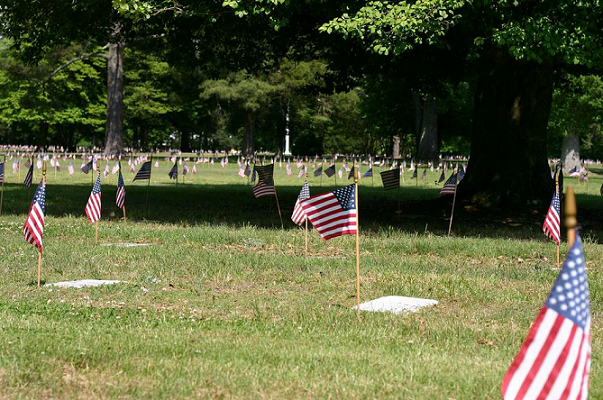
Traditionally, store Memorial Day is a national holiday wherein we set aside a time to remember and pay tribute to the fallen men and women who lost their lives while serving our nation in the U.S. Armed Forces. The holiday first began after the Civil War to honor both Union and Confederate soldiers who died in the war. This year, we celebrated on May 26th and schools, banks, and government offices were all closed. Millions of flags were flown nationwide and placed on the graves of fallen soldiers throughout the nation. There were parades, speeches and commemorative addresses and many paused to pay tribute to the sacrifice of life that freedom often requires.
Having a long weekend and a Monday off means that there are also celebratory barbeques, family gatherings, and blowout sales at shopping malls and retail centers everywhere. Except for the red, white, and blue themed posters and décor displayed throughout the malls, retail spaces, and newspapers, the original intent of a holiday memorializing our fallen soldiers seems to get lost in the commercial trappings and economic opportunism that businesses cannot resist. The controversial opening of the National September 11th Memorial and Museum in New York City brings into sharp focus how difficult it can be to balance memorializing the dead, honoring the living, and serving the public. For the relatives, friends, and comrades of the dead the memorial is the actual gravesite of their loved ones; it is sacred ground. The energy that the ground (where the 2 towers stood) holds is palpable; it is visceral; it is real, not imagined. For the public, the citizenry of NYC, the state, and the nation there is the connection to a national tragedy, a tragedy whose outcome manipulated us as a nation, and without much question or resistance ultimately pulled us into 2 wars with massive loss of life. The function of war is the death and destruction of one’s enemy. That’s what war does. Identifying whom exactly is the enemy and making that identification correctly is the challenge that either makes war righteously justified or tragically misguided. The heightened state of emotions surrounding the 9/11 Memorial and Museum by all contingencies are a testament to that reality.
When we remember and make memorials, we must recognize that they serve multiple purposes. In honoring the dead, we cannot forget the living that they left behind nor can we forget the ones that are yet to come – for which the memorial will serve as both an historic marker of a shared legacy and a teacher of history – but also as a monument and testimony to the resiliency of the people it seeks to honor. The American story continues to evolve through the memories, memorials and lives of both the living and the dead. Memorial Day is a day we set aside to honor our U.S. military men and women who have made the ultimate sacrifice in laying down their lives for their country and for the freedoms for which this nation stands; but the ongoing work is in remembering each and everyday that freedom is not free and the sacrifices of war do not only happen on the battlefields. We, who are left to remember, must not allow those sacrifices made on our behalf to be made in vain.
 Dr.T
Dr.T
Tawnya Pettiford-Wates, Ph.D.
Founder and Artistic Director
The Conciliation Project and
Associate Professor
Virginia Commonwealth University
DrT@Margins2theCenter.com
www.theconciliationproject.org
Up Next Week: How can you call yourself a Christian?
