
By: J. Chevonte’ Alexander
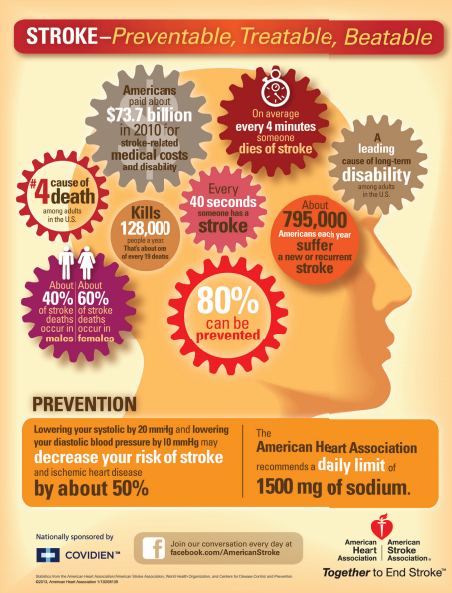
Approximately 15 million people worldwide have a stroke every year.
Stroke is the No.4 cause of death among adults in the United States.
On average every 4 minutes someone dies of a stroke.
Every 40 seconds someone has a stroke.
About 40% of stroke deaths occur in males and 60% in females.
80% can be prevented.
During American Stroke Month in May, the American Heart Association/American Stroke Association asks all Americans to learn two things that may save a life.
- 1. Know if you are at risk for stroke.
- 2. Know the stroke warning signs and what to do in a stroke emergency.
What is stroke?
A stroke occurs when a vessel in the brain ruptures or is blocked by a clot. Ischemic is when the vessel is blocked, and hemorrhagic is when the vessel ruptures. The stroke occurs when blood flow to the brain is interrupted. Without oxygen-rich blood, brain cells die. Eighty seven percent of strokes are classified as ischemic. A TIA (transient ischemic attack) is often called a “mini stroke” or “warning stroke”. The difference between a TIA and a stroke is that the blockage is transient or temporary. Symptoms are exactly the same as a stroke, but usually last less than five minutes.
According to the U.S. National Stroke Association, around 40% of people who experience a TIA will have a stroke.
However, a recent survey from the UK Stroke Association found that 47% of respondents who experienced TIA symptoms did not know what was happening to them, and 37% did not take any action because the symptoms they were experiencing “did not feel like a medical emergency.”
Stroke deaths are higher in the southeastern United States in an area known as the “Stroke Belt”: North Carolina, South Carolina, Georgia, Tennessee, Mississippi, Alabama, Louisiana, and Arkansas.
History
National Stroke Awareness Month takes place in May every year. On May 11, 1989, President George H. W. Bush signed Presidential Proclamation 5975 designating May as National Stroke Awareness Month. Since that time, the Nation has been honoring this special time of the year to increase public awareness of stroke in an effort to conquer it.
Prevention
Stroke is preventable, treatable and beatable. To reduce your risk for stroke, follow the American Heart Association’s Life Simple 7.
– Manage blood pressure
– Eat better
– Get physically active
– Lose excess weight
– Lower cholesterol
– Reduce blood sugar
– Don’t smoke
Lowering your systolic by 220mmHg and lowering your diastolic blood pressure by 10 mmHg may decrease your risk of stroke and ischemic heart disease by about 50%.
“Knowing if you are at risk for stroke is highly important, because many risk factors can be modified and controlled,” said Pat Lane, BSN, RN, Director of Neuroscience Institute at Bon Secours Richmond and American Stroke Association volunteer. “The No. 1 stroke risk factor is high blood pressure. Nearly 78 million Americans have high blood pressure and many more aren’t even aware that they have it. It’s important to check your blood pressure regularly and talk to your doctor about healthy levels for you.”
“Prevention is the best cure, but in the event of a stroke emergency, quick recognition and treatment may have a dramatic impact on the outcome,” said Mark Turco, M.D., chief medical officer, Covidien Vascular Therapies. “If you are at risk for stroke or spend time with someone who is, learning and sharing the stroke warning signs should be a priority.”
Affecting the Community
AfricanAmericans have nearly twice the risk for a first?ever stroke than white people, and a much higher death rate from stroke, largely due to high blood pressure.
African Americans are more impacted by stroke than any other racial group within the American population.
African Americans are more likely to suffer a stroke at a younger age. Among people ages 20 to 44, African Americans are almost two to three times more likely to have a stroke compared to Caucasians.
African American stroke survivors are more likely to become disabled and have difficulty with activities of daily living than their White counterparts.
Act F.A.S.T.
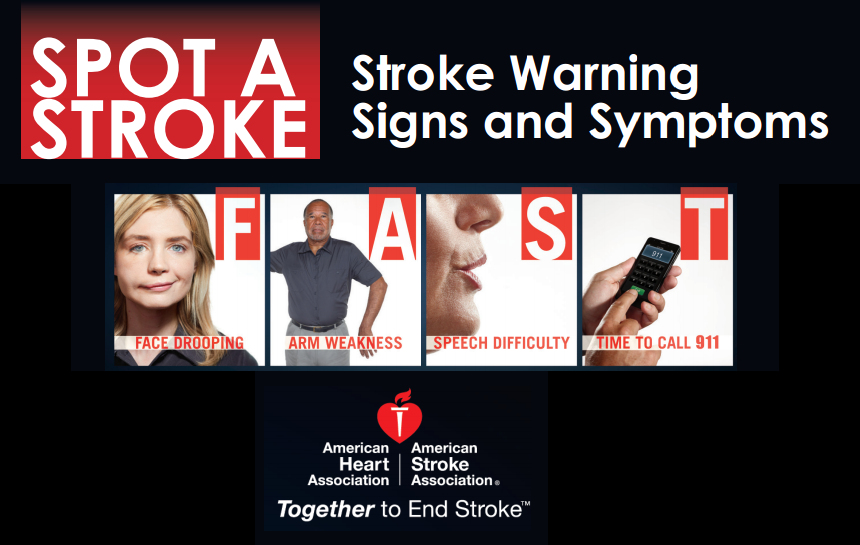
There are several warning signs and symptoms to spot a stroke. The key is to do it fast if you notice something wrong. FAST stands for Face, Arms, Speech and Time and represents a quick field test you can conduct immediately if you suspect someone is having a stroke.
Face Drooping – Ask the person to smile; does the smile look normal? If one side of the face seems to be dropping or otherwise irregular, make a note.
Arm Weakness – Ask the person to raise both arms; is one arm weak or numb? Does it drift downwards against their control?
Speech Difficulty – Is the person’s speech slurred? Ask them to repeat a simple sentence and listen closely. If they have difficulty with any – or all of the tests…
Time to Call 911 – Get them to the hospital immediately. Note the time the symptoms first appeared.
“Pay attention to what the signs are for stroke. If I had only known what the symptoms are, then I would have gone to the doctor sooner. No one recognized, even myself, what was going on.” says Glennys Fleming, recent stroke survivor.
VIDEO: Stroke Warning Signs/Symptoms – Body Language
Additional stroke signs include: Sudden severe headache with no known cause; sudden trouble walking, dizziness, loss of balance or coordination; sudden trouble seeing in one or both eyes; or sudden confusion or trouble understanding.
Together to End Stroke offers a free “Spot a Stroke F.A.S.T.” mobile app for iOS and Android, including the warning signs and a searchable map to find local hospitals recognized for heart and stroke care.
Meet Glennys Fleming
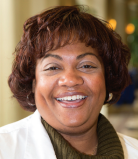 The year 2006 is a year Glennys Fleming will never forget. Not only was it the year she gave up smoking, it was also the year she suffered two strokes and a heart attack all within eight months.
In March 2006, only 25 days after giving up smoking for Lent, Glennys wasn’t feeling like her usual self but she continued to push through her day at work. Two days later things came to a halt when pounding headaches sent her to a doctor where she was diagnosed with an aneurysm, which was caused by a stroke. In June 2006, only three months later, Glennys had just won a card game when her arm went numb. She went to the hospital where, this time, she was diagnosed with having a heart attack. In November 2006, only 5 months later, while watching a football game; Glennys suffered another stroke. All of these events took place over the course of eight months. Glennys underwent three procedures that year; aneurysm coiling, heart catherization and cardiac rehab. Despite all that she has been through, Glennys feels blessed that she survived her experiences because “many people do not live to talk about having had an aneurysm.”
“I wish I had known the signs of strokes then,” says Fleming. “My speech was very slurred. I did not know what was happening.”
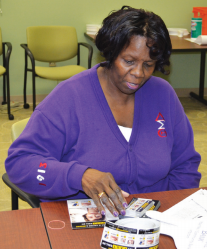 Today, Glennys has been living smoke free for seven years and is a seven-year heart attack/stroke survivor. She feels that her life experiences serve as her testimony when it comes to talking with (and helping) others. Glennys stays busy through her volunteer efforts, including the Girl Scouts, her sorority and the American Heart Association. Glennys realizes the importance of being physically active and is an active participant in water aerobics with her personal trainer.
One of the accomplishments she is most proud of is her coordination of a program entitled ‘CATCH Healthy Habits.’ This program will allow Glennys to work with her Girl Scouts and adults 50 and older from her church in an “intergenerational nutrition and exercise program.”
The goal of this program is to “provide healthy snacks, health education and exercise in 10, 20 or 30 minutes increments over the span of 10 sessions.”
If Glennys were to offer advice to anyone it would be to “listen to your body (and gut instincts) when something doesn’t seem right or feel right.” Doing just that has led Glennys to become a champion for healthier living.
“You have to get a routine with your health. And, you have to listen to your body. If your body does not feel right, it may not be, so you have to pay attention. If you have a family history, pay even more attention to it.”
For more information about stroke or American Stroke Month activities in the Greater Richmond area, visit StrokeAssociation.org/strokemonth or contact Dionne Henderson at (804) 965-6578 or Dionne.henderson@heart.org. Follow #StrokeMonth on Facebook and Twitter to add your voice to the conversation.
Act FAST!
