
Whether or not we need Black History Month is not the question that should be asked as we come to the end of the month in which we celebrate that history. You cannot have a respect for a history that you do not know. And yet, most people know very little about the history of Black people in America except for a cursory knowledge where slavery is the seminal point around which that knowledge is positioned. The complete lack of, or limited knowledge most people have about the role that African descended people played in the birthing, building and developing of the United States of America is distressing. So to close out the month, here are a few African Americans who uniquely contributed to writing that history in the U.S. and the Commonwealth of Virginia.
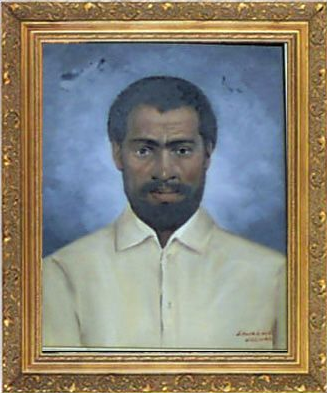 Nat Turner, 1800–1831, was the leader of the Southampton Insurrection in 1831. We call it Nat Turner’s Rebellion, a revolt in which 55 white slave holders and their families were killed. Although Nat Turner initially escaped, he was captured six weeks later and hanged. Many more blacks were killed in retaliation for the rebellion. It was the bloodiest and most serious rebellion in the recorded history of slavery in the United States, and although it led to more stringent slave laws in the South and to an end of the organized abolition movement in the southern states, it became an example of the Black resistance and ferocious will of the enslaved to end the institution of slavery.
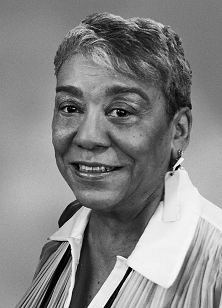 Olivia Ferguson McQueen was a civil rights pioneer in Charlottesville, VA. McQueen’s father was president of the NAACP when it pressed for integration of the public school system in Charlottesville. The NAACP won the case, but the white school board closed down the public school system rather than allow integrated classrooms. Olivia Ferguson McQueen, in her senior year, was segregated with a few of her classmates against court orders and forced to do all of her classes in the school board office. She recalls it as an extremely isolating and lonely time. Fifty years later, the public high school awarded McQueen her high school diploma in a ceremony commemorating the time, the NAACP and Olivia McQueen as a city pioneer for Civil Rights in Charlottesville.
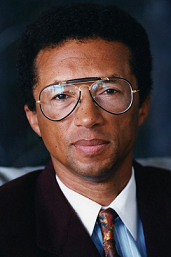 Arthur Ashe (1943-1993), was the first African American man to break the color barrier in the white world of the United States Tennis Association. He was born and raised in Richmond, Virginia. Professionally, Ashe was denied a visa to play in South Africa despite his world-class number one ranking. In protest, he campaigned for the expulsion of South Africa from the International Lawn Tennis Federation. This was the beginning of his activism against Apartheid, which would become a central focus for him over two decades. Ashe suffered two heart attacks, which led to two by-pass surgeries and a transfusion of blood. In 1992, Ashe held a press conference with his wife to announce that he had contracted AIDS. The publicity and attention the announcement generated made Arthur Ashe an influential and effective voice used to raise public awareness about AIDS and its victims. On February 6, 1993 Arthur Ashe died of AIDS-related pneumonia in New York at the age of 49. His body was laid in state at the Virginia Governor’s Mansion. He was the first person to lie in state at the mansion since the Confederate General Stonewall Jackson in 1863. Today a statue of him stands on Monument Avenue where, as a child, Arthur would not even have been able to visit because of the color of his skin. How much do you know about Black History?
 Dr.T
Dr.T
Tawnya Pettiford-Wates, Ph.D.
Founder and Artistic Director
The Conciliation Project and
Associate Professor
Virginia Commonwealth University
DrT@Margins2theCenter.com
www.theconciliationproject.org
Up Next Week: An Endangered Species
