

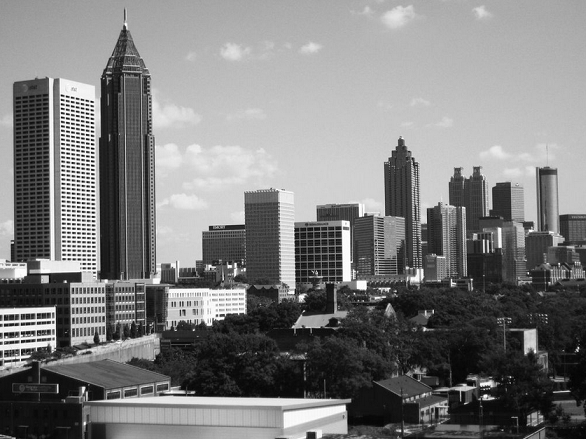
The Top 10 Cities for African American Professionals series continues with city number three, Atlanta, Georgia. We continue to provide information on places to live and/or move to in order to find that perfect career and living environment. The list of cities was assembled by looking at numerous lists and city rankings based on the percentage of African Americans, industries offered, salaries, and crime rate.
This week, we look at Georgia’s largest city, Atlanta.
(Third in Top 10 Cities’ series)
The list:
- Washington, D.C.
- Houston, Texas
- Atlanta, Georgia.
- Dallas, Texas
- Raleigh, North Carolina
- New York City, New York
- Charlotte, North Carolina
- Indianapolis, Indiana
- Columbus, Ohio
- Jacksonville, Florida
Info and numbers from cities taken from the United States Census Bureau website (census.gov) and city-data.com.
Atlanta, Georgia
Gender percentage: Female 50.2 percent, Male 49.8 percent
Median Age: 32.9 years
Percentage of African Americans: 54 percent
As Georgia’s largest city, Atlanta has a variety of things to do for people of all tastes. There is the Underground Atlanta located in the heart of the city. According to the Underground Atlanta website, it’s “one of the city’s favorite attractions and cultural hubs.” Stretching six city blocks, the underground is an underground mall that includes name brand and local stores, restaurants, and entertainment events. It seems Underground Atlanta is for those who want to dive into the culture of the city.
Atlanta also has a great music scene. Its annual Atlanta Jazz Festival is a great venue for those who are really into the genre. In 2013’s festival, musicians such as Oscar Sheppard and the Edwin Williams Trio; Infinite Sound Family; and Antonio Bennett performed. The festival usually runs Friday through Sunday, so it’s three days of non-stop music and fun for everyone.
Music fans may also enjoy the Fox Theatre, one of Atlanta’s venues for live entertainment. The theater serves as a “real memory maker” for the citizens of the city. From Broadway shows to rock concerts and comedy performances, the Fox Theatre provides entertainment for all. According to its website, the theatre was ranked in Billboard Magazine’s 2009 issue as the “#1 non-residency venue worldwide for the decade (5,000 seats or less).” It’s clear that even though Atlanta has many entertainment venues, Fox is one of the best.
Percentage of those with Bachelor’s Degree or higher: 46.2 percent
Atlanta is home to many prestigious colleges and universities. Two of the most famous are Morehouse and Spelman colleges, which are both historically black colleges. Morehouse is an all men’s private school. Its top three majors include: business administration, psychology, and English/literature. Morehouse is known for graduating students who make history, such as Martin Luther King, Jr. It is also the first HBCU to produce a Rhodes Scholar, producing a total of three, two of which (as their website states) were in the last ten years.
Spelman College is the sister school to Morehouse; it is an all women’s private school. It is ranked number 65 in the 2014 edition of the Best National Liberal Arts Colleges. The top three majors at this school include: psychology, social sciences and biological/biomedical sciences. Spelman is also known for being the second largest producer of African American women who go to medical school.
Aside from Morehouse and Spelman, Atlanta has other great universities and colleges such as Clark Atlanta University (also an HBCU), Georgia State University, and the University of Georgia. It’s clear that Atlanta has many options when it comes to higher learning. These schools, offering different degree programs, can be beneficial when trying to find jobs in the top industries in Atlanta.
Average Salary: $46, 146
Top Industries (according to Forbes.com): Financial services, Technology, Telecommunications
Atlanta is a city whose top industries are in financial services, telecommunications, and technology. In terms of technology, Atlanta is considered an alpha (or world) city. This means that it plays an important role in the global economy. The city is ranked in the top five cities, behind New York and Houston that have the most Fortune 500 Companies. The headquarters of SunTrust, Coca-Cola, Newell Rubbermaid, and Aflac are all in Atlanta.
Aside from its Fortune 500 status, jobs in the industry of telecommunications are also offered. Working with the Internet and cable in a person’s home, as well as maintenance and repair, are examples of the duties in telecommunications. The average salary of a person in telecommunications varies based on whether the person is an engineer or technician. Telecommunications engineers, according to indeed.com make an average salary of $84,000. Telecommunications technicians make an average salary of $44,000.
Atlanta is also a city based in finances. As mentioned earlier, SunTrust Bank is headquartered in Atlanta. Banking deals with the handling of money. Whether it’s corporations or individual people, banking plays a big role in the economy. This may be one of the reasons why Atlanta is considered a global city. People working in this industry can make between $24,000 to $300,000.
Crime Rate (Robberies per 100, 000): 550.6
In 2012, Forbes ranked Atlanta as number six of the 10 most dangerous cities in the United States. The city had a violent crime rate of 1,433 per 100,000 residents. According to city-data.com, in 2011, Atlanta had 88 murders, 2,343 robberies and 7,499 burglaries. The top three safest neighborhoods in the city include: Piedmont Road, Chatam Road and Northside Drive (neighborhoodscout.com). In 2013, the Atlanta Constitution-Journal published an article on the Lakewood area of southeast Atlanta. The area had made the top 25 list of the U.S. most dangerous neighborhoods. The article stated that “residents of Hopkins Street and Adair Avenue have a 1 in 12 chance of being the victim of a crime.”
In conclusion …
Atlanta is a city that prides itself on the institution of higher education. Schools like Morehouse and Spelman produce not only successful people, but successful African American leaders who can be the voices of change. The city is also home to many Fortune 500 companies, which paves the path for the competitive college graduates to succeed in a fast paced world. The industries in this alpha city also play a big part in the world economy. Those going into the fields of technology, financial services and telecommunications have the ability to make change and control the lives of others around them. And even though Atlanta is ranked because of its crime, it is still ranked number three on the top 10 best cities for young African American professionals. The reason? Because of the potential it can bring out in those between the ages of 18-25.
