
As we begin the month that has been designated as “Black History Month” the question is: what have we learned from history and how does it inform what we do from here? Although I have conflicting feelings around the “set aside” of a month to focus on the history of Black Americans and people of the African diaspora worldwide, I dedicate myself to study, to speak and to inform others about our history during this month, specifically, because the general knowledge of most Americans about that history is sorely lacking, and because this is the month where I am reasonably assured that people will be listening. It would be nice if the history of African descended peoples in the U.S. was equitably represented within the pages of American History books, but it is not. The history of many peoples who were imbedded in the cultural landscape of this nation and essential in the building of the American story is truncated at best and most often misrepresented or underrepresented in U.S. history books. This is the fundamental rationale supporting the need to set aside a designated period of time to focus on Black History each year, for the month of February, and on other people like Native Americans, Asian and Hispanic Americans, and other cultural and ethnic groups in other months throughout the year.
In my educational journey, I was taught extensively about the so-called Founding Fathers of the United States of America, the American Revolution, the establishment of the 13 original colonies, the signing of the Declaration of Independence, the Constitution and the establishment of the three branches of government. I learned about the Bill of Rights, and then came the lessons on slavery and the Civil War. Hmmm? The Bill of Rights and the institution of chattel slavery were so cognitively dissonant to me as a young student that it created a great schism in how I processed that information, and it remains so to this day. To sit in a classroom and be taught about American Exceptionalism and to understand it as meaning “except you” and people who look like you was one of the most confusing and contradictory lessons of my long and challenging academic career. And yet, it was only after I passed the U.S. history exam and other tests, went to college, and began to interrogate more rigorously the lessons taught and learned during my elementary and secondary educational process, that I understood how deficient my education was and how exclusively it was taught. The educational prescription was singularly focused on elevating the idea that all things worth acknowledgment, celebration or worth a good report found their cultural origins within the frame of Eurocentric models. African models of exceptionalism did not exist within the Eurocentric educational model unless the African descended person was attempting to elevate themselves to the standards set by Eurocentric cultural, religious and social norms. We did learn of Harriet Tubman, who was known as the Black Moses, Sojourner Truth, George Washington Carver and Frederick Douglass, and of course Dr. Martin Luther King, Jr., and each year we learned about them again as if there were no other African descended people worthy of celebration or acknowledgement by all Americans. It wasn’t until I went on to higher education that I learned of Malcolm X, Eldridge Cleaver, Angela Davis, Fannie Lou Hamer, James Baldwin, W.E.B. Du Bois and the Pan African Congress. Learning and understanding your history is important to recognizing where you came from, where you are, and strategizing where you are going. Get a plan, and get armed with the knowledge of what has been, otherwise you are sure to get lost on the road instead of fulfilling your destiny. It’s Black History Month: what have you learned?
 Dr.T
Dr.T
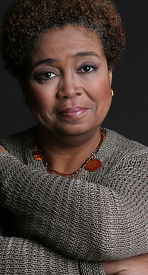
Tawnya Pettiford-Wates. Ph.D.
Artistic Director and Founder
The Conciliation Project
Professor at Virginia Commonwealth University
www.theconciliationproject.org
Up Next Week: @WAR w/ REALITY
