
With more African American students graduating each year, viagra the transition from being an undergrad to a professional is getting tougher. For economic or personal reasons, troche fewer students are going to graduate school, cialis so going to work straight out of college is the only choice for many students across America. The current job market is very competitive. The move to a more digital field in many industries is opening the door for an entirely new market. This new market includes the realms of social media. Coding and blogging have been a result of this new digital movement.
The Chronicle of Higher Education states that, in a 2010 study of about 27,481 students, about 29.2 percent of African American students are graduating in four years. This means more competition in finding jobs. These individuals are not only competing with current graduates, but experienced professionals as well. Not only is choosing the right job important, but the area where the job is located is also the key to post-grad happiness. Urban Views Weekly decided to provide some research to help lessen that burden. Below are the top 10 cities for young African American professionals. The list was determined by looking at other lists and seeing where the cities were ranked. In the coming weeks, we will profile the best cities where young African American men and women can prosper.
The list goes as follows:
- Washington, D.C.
- Houston, Texas
- Atlanta, Ga.
- Dallas, Texas
- Raleigh, N.C.
- New York City, N.Y.
- Charlotte, N.C.
- Indianapolis, Ind.
- Columbus, Ohio
- Jacksonville, Fla.
Info and numbers from cities taken from the United States Census Bureau website (census.gov) and city-data.com.
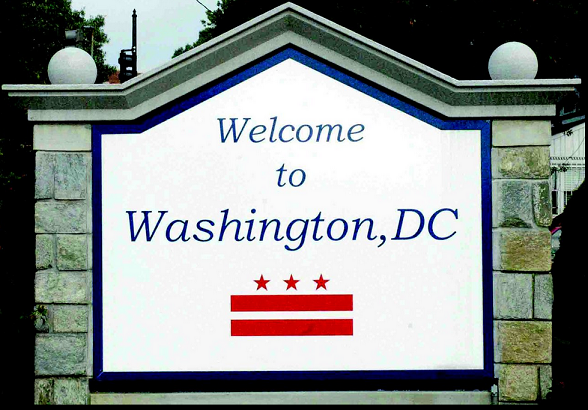
Washington, D.C.
Gender percentage: Female 52.7 percent; Male 47.3 percent
Median Age: 33.8 years old
Percentage of African Americans: 50. 1 percent
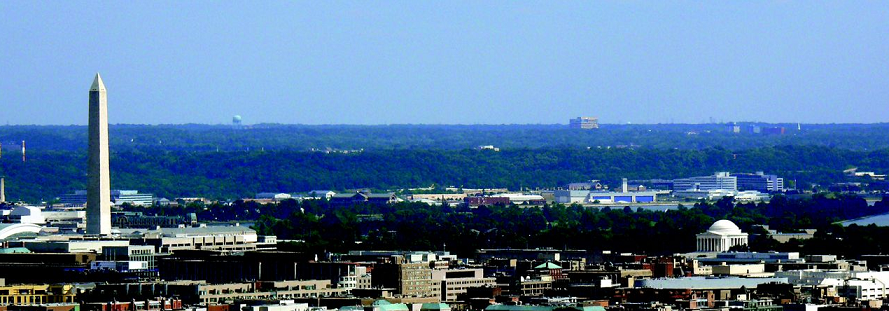
The nation’s capital holds an array of activities for those of all ages. The city is host to a number of museums. For those interested in media history, checking out the Newseum would be very beneficial. Its 9/11 exhibit has received a lot of praise for its emotional historical appeal. It has artifacts from the demolished World Trade Center as well as cameras of the reporters who died trying to document that day. Another museum of choice would be the Smithsonian American Art Museum. Taking a stroll of the capital is also a must; it’s here that the annual Cherry Blossom Festival is held to honor the gift of cherry trees from Japan. And among the many monuments, the Martin Luther King, Jr. memorial, which was completed in October 2011, is definitely a sight to see.
The District of Columbia has an exciting downtown scene. Because of the diversity of the city and its historical background, culture can be seen throughout the city’s nightlife. Jazz and comedy clubs, as well as dance clubs for those of all different music tastes can be found here. The annual D.C. Jazz Festival, held at the beginning of the summer, is according to its website, “one of the largest and most diverse music festivals in the country.” Other annual festivals that take place in D.C. include: Smithsonian Black History Month Family Day Celebration, D.C. Environmental Film Fest, National Capital BBQ Battle, and the Source Festival. A walk around the beautiful Georgetown neighborhood is also an activity for those who want to shop and eat.
Percentage of those with Bachelor’s Degree or higher: 51.2 percent
The nation’s capital is home to many colleges and universities. George Washington University, Georgetown University, and Howard University are three of the biggest colleges in the city. Howard University is known for their top academic standings among Historically Black Colleges and Universities. Howard’s School of Communications, Law, and Medicine are nationally renowned programs. Georgetown University is among the nation’s top universities ranked at 20 on the Best Colleges National University Ranking. Known for their business, law and medical school, Georgetown provides a great opportunity for students to gain real world experience working at the capital. George Washington University is also known for law and medicine; its Columbian College of Arts and Sciences is one of its oldest and largest schools.
With a number of colleges and universities in the city and surrounding areas, it’s no wonder the job market in D.C. is competitive. Big businesses such as: the Washington Post newspaper, Capital One Bank, Freddie Mac, and Sprint are all based in the city. Because of the increasing number of students graduating as well as the competition of obtaining these jobs, Forbes states that job growth in the city has increased 1.2 percent. Forbes also states that the cost of living in D.C. is 21.9 percent above the national average, which is why many of the workers commute from Virginia or Maryland.
Average Salary: $64,267
Top Industries (according to Forbes.com): Federal Government, Education and Tourism
Because it is the nation’s capital, D.C. has a number of federal jobs in both the city and suburban areas. There are a number of military installations in the area such as: Fort Belvoir in Alexandria, Va.; Quantico Marine Corps Base in Quantico, Va; and Fort Meade in Odenton, Md. According to military.com, the government and military hire those from every educational level from high school/GED and no experience to someone having their Ph.D. These jobs are known as General Schedule (GS) jobs. The higher the GS number, for example GS-5, the higher the salary. The average pay for a government employee as of 2012 in the District of Columbia, the Washington Post cited, is $76,467.
Education is also one of the top industries in Washington, D.C. Especially in the suburban areas of Northern Virginia, teachers make a competitive salary. For example, the median salary for an elementary school teacher in Alexandria, Va. is $57,639. The program of Teach for America, where recent grads are sent to low-income schools to teach for a number of years, is another option for graduating college seniors. According to Teach for America’s website, salaries are based on where an individual is placed and range from $25,500 to $51,000.
Tourism is definitely a big market in Washington. Though not under one umbrella, like education and federal jobs are, there are many jobs within the tourism industry to include: Washington Dulles International Airport, The Capitol, and Smithsonian National Zoological Park. According to dcjobs.com, a tour guide can earn between $40K to $50K annually. A travel agent in D.C., according to indeed.com, could start out with a salary of $29,000.
Crime Rate (Robberies per 100,000): 607.8
It is well known that the nation’s capital has its rough spots. According to neighborhoodscout.com, in the last year there have been 7,864 violent crimes and 30,736 property crimes. Also in the last year there were 88 murders, 236 rapes, 4,036 robberies and 3,504 assaults. Washington is ranked as 46 out of the 100 most dangerous places to live in the U.S. Some of the most dangerous areas around D.C. that have a similar or greater than crime rate include: Mount Rainier, Md. with a crime rate of 480.3 (total per 100,000), Hyattsville, Md. and Bladensburg, Md.
In conclusion …
The nation’s capital is a city of both history and diversity. Over half of the population has a bachelor’s degree, so finding the right job could be very competitive. Not only that, but the cost of living in D.C. is expensive to most freshly graduated college students. As far as entertainment and nightlife, D.C. has a wide array of activities for those of all ages. And, even though D.C. has a high crime rate, it is still home to a number of government, tourism management and education jobs that provide competitive salaries. This was Urban Views Weekly’s first view of one of the top 10 cities for African American professionals. Next time, we turn our attention to the largest city in Texas, Houston.
