
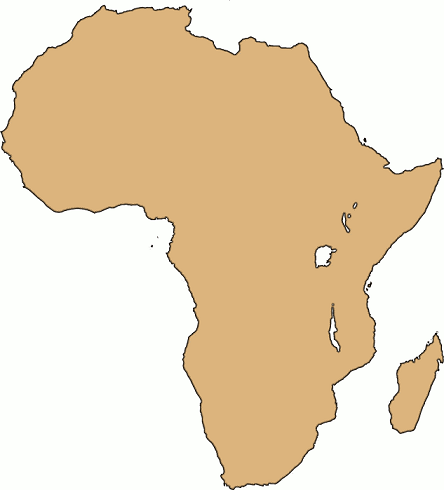
Africans of European descent are all over the continent. However the largest percentages of white Africans live in South Africa and are mainly the Afrikaner and English populations. White people are not indigenous to Africa and are there because of colonization and to a lesser degree, medicine immigration. Africa, site in mythic lore has always been talked about as the “Dark Continent”, which refers to the complexion of its people. In Ancient African times there were regions known as Kemet, Cush and Nubia to name a few. All of the people of those lands were dark in pigmentation. Europeans came to Africa; they are not from Africa. There are certain people in contemporary South Africa who want to argue that “they”, the Afrikaners and the English, built South Africa and claim it as “theirs”! They are Africans! They built this country for their children and their children’s children. It is not insignificant that the system of apartheid guaranteed that claim as a reality for them for generations.
Most nations in Africa have a very small percentage of white people still living there as naturalized citizens, but South Africa maintains a significant population of white Africans and they are South African nationals. The Khoisan people were the indigenous people of the region that is now known as South Africa but many other African people migrated to that region too, before the Europeans. They came from other regions of the continent. Today the black cultures within South Africa are diverse and include the Nguni- Zulu, Xhosa, Sotho-Tswana, Ndebele and Swazi. These people are black Africans, which almost seems to overstate something that should be obvious on its face but the politics make it impossible to simply state that fact. There are also Coloureds and Indians who are South Africans. Indians were brought to South Africa to build the railroads and serve the whites. The Coloureds are of mixed race, a mixture of black and white. Although Indian people are indigenous to India, many have little to no connection to the land of their origin and claim themselves fully African, as do the Coloureds.
What is so absolutely stunning to me is what is embedded in all of these claims is a racism that still denigrates the blackness that is primary to the aboriginal being of what it means to be AFRICAN. Bantu is a term generally used to identify people who speak certain languages. However, the Afrikaners used it as a pejorative term to identify natives as black before identifying them as African.
The complaining and handwringing by whites about the new constitution of South Africa that seeks to redress the legacy of racial preference and oppression now, to them, is unjustified and unfair. As is stated in part of that constitution…” the need to redress the results of past racially discriminatory laws and practices.” Within all their claims, the non-black South African still struggles to maintain their place of privilege and power.
Although the economic power, land and home ownership, educational advantage and access is still dominated by whites in a nation where they are less than 10% of the population and Coloureds and Indians are another 10%, the new constitution of South Africa makes an attempt to begin the process of pursuing equity for all of its citizens. It is a complex and complicated process with many diverse and competing interests and yet I am always inspired when I think of the possibilities.
Dr.T
Artistic Director and Founder
The Conciliation Project
Professor at Virginia Commonwealth University
DrT@Margin2theCenter.com
www.theconciliationproject.org
Up Next Week: The Performance & Response
