

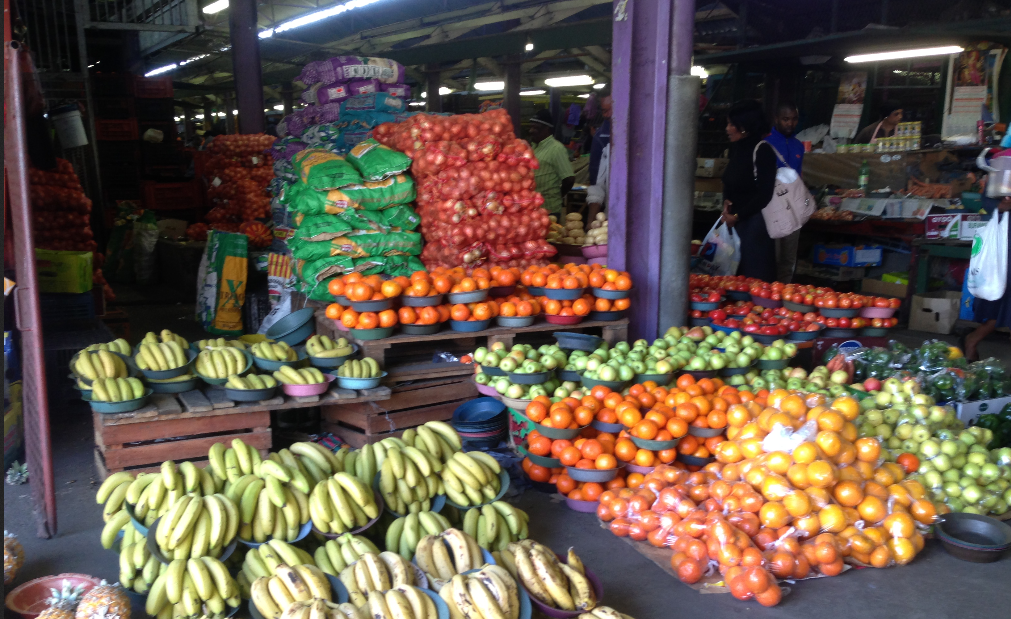
The Market in the City
In Africa, treatment walking is a way of life. Many people walk to work, to school, to market and many other places. It is not a weight loss plan or for physical training. It is a method of transportation. Transportation by motor vehicle is also prevalent, before you begin to think of a “primitive” people and the western mystique of the exotic, all misinformed perceptions of the “so-called” underdeveloped Dark Continent. Africa is very much a part of the modern age and the globalized masses of the 21st century.
I took my class on what is fondly called “the City Walk”. Many of them had never been in this part of Durban, which is not far from the university they are attending. The visible and the invisible…the lines on a grid…the yellow line, the white line, the red line and the dividing lines of class, race, ethnicity and gender. We experienced the sounds, smells and aesthetics of how the imposition of lines and grids in city planning separate people and intentionally create divisions between us, both visible and invisible. Each day, over 650,000 people walk from the outskirts of Durban to the market place and back again doing commerce, working, looking for work and trying to feed their families. What I buy in the shopping mall is many times more expensive than what I can buy in the public market place. While in the mall, we were interrupted by a security guard who told us we had no right to gather there to talk. No one told us we were unwelcome in the public market place…instead we heard cries of “Sawbona!” “Hello, hello!” “Come buy here…Come.”
In South Africa, 25% of the population is unemployed and 40% are under-employed. These figures escalate exponentially for the Black majority population. Consequentially, hundreds of thousands of people live in Squatter Camps waiting for government housing that by law has been promised to every South African after the end of apartheid and the institution of the new constitutional government. Many people stay in these camps called T Camp, M-Camp, etc. Electric poles, with wires exposed, litter the camps like a dense forest. There are centralized toilets and washing stations. The roads are dirt and there are hundreds of metal tubes where families of 5 to 10 members squeeze into small one room so-called temporary housing. Most people living in these communities do not have permanent employment but rather work odd jobs to make money. These are the people pushed to the outskirts of town so that they are unseen. Because transport is expensive, they walk to the City Market place in hopes of making some money or finding a days’ work. Their Walk begins far from the City Market place, and as the students looked towards the hill they see the path where these thousands of people WALK.
Each day, people continue to hope for more than the day before. They continue to wait but many have been living and waiting for over 7, 8, 12 years. The promise of a home for every South African family is a lofty one. It is a promise that is a long time coming, and as the population continues to grow and the economic conditions continue to decline, it is a promise that may never be realized.
 Dr.T
Dr.T
Artistic Director and Founder
The Conciliation Project
Professor at Virginia Commonwealth University
DrT@Margin2theCenter.com
www.theconciliationproject.org
Up Next Week: The Colonized Mind
