
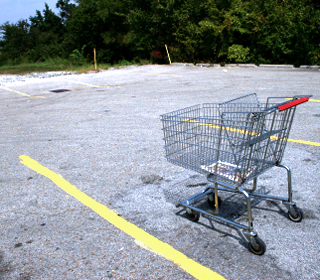
Do you live close to a local grocery store where you can buy fresh and healthy fruits, vegetables and meats? Many people must travel great distances before reaching such a store and some have limited transportation options to get there. Across the U.S., there are long stretches where there are literally no grocery stores available. This is true in rural communities but also in the urban centers of well-populated cities. When there is limited to no access to fresh, healthy food because major grocery companies refuse to build in these rural or urban locations, what is created for its residents is what has come to be known as a “food desert.”
The citizens of these “food deserts” tend to be poor, and because they are often located within urban centers they are also black and brown people. Food Deserts are determined by many factors including location, race and socioeconomic status of the residents within them, and the access to transportation. Food deserts aren’t only inconvenient to the people who live within them; they are an example of food insecurity and they have a negative impact on public health. It is shameful that within these communities, there is little difficulty in building fast-food restaurants or take-out places that are centrally located in areas where fresh food is scarce or nonexistent. Not only does it challenge the health and well being of the community members, due to lack of other options, but it also creates an economic threat to people who can least afford to feed their families daily or weekly through a fast-food option. I have always been privileged to live within a comfortable distance from stores and markets where I can readily purchase fresh food to eat for myself and my family. However, I know many people who do not have that ability or access.
I am currently working and living in South Africa, and each day I can walk to a public market where I buy fresh fruit, vegetables and meat to cook daily. There is nothing like fresh food. I am both thankful and blessed. Processed and instant food is not a “usual” thing here in South Africa or other places I have visited on the continent. Although they do have a few McDonald’s, KFC and Whimpy’s fast-food restaurants, most people do cook daily and those restaurants are options instead of the only choice. They are for a “treat”. Here, fast food is a measure of some sort of social and economic status symbol, particularly among young people. They are not eating fast food because there is no other option, they are actually making a choice to eat it.
Health issues like obesity, high blood pressure, and diabetes have a direct correlation to poor dietary habits and eating foods that have excessive sodium, saturated fats, high cholesterol, high sugar and fructose content and more. Just generally unhealthy food. Although many of the large fast-food chains are now offering “healthy options”, the cheaper options still remain the most unhealthy ones. Some of our citizens have no options for eating healthy fresh food, because they live in a desert and something must be done to change that….when people are thirsty and you have water….what should you do? How can we help to change this within the RVA communities? Do you have any proposals or suggestions for getting fresh foods into underserved communities?
 Dr.T
Artistic Director and Founder
The Conciliation Project
Professor at Virginia Commonwealth University
DrT@Margin2theCenter.com
www.theconciliationproject.org
Up Next Week: Work & Life in South Africa

1 comment
Hi. I know that in the East End of Richmond there are two corner convenient stores that, through an initiative with the City and local farmers’ market, are piloting a small refrigerator with fresh produce. It’s not the be all, end all solution, but it’s a start. A few other convenient stores in other areas have things like bananas and apples available.
Prior to the smoke-free laws, a Norfolk consortium did a smoke-free campaign in Hampton Roads with local restaurants and bars. Businesses that agreed to be smoke-free got a banner for their place, it was photographed and well publicized, received some media attention. A campaign to encourage produce options at convenient stores could follow a similar strategy – banners for places that opt to carry fresh produce (could be done in collaboration with local growers), photo opps and media coverage.
A broader solution is for communities to make these concerns known to city council etc and continue to put on that pressure. While many in these communities have competing priorities and political activism may not be at the top of the list, it’s the job of our local community service organizations to take the lead. As a member of a church, a sorority, and new member of Virginia Organizing, making noise about RVA’s food desert issue through these groups is a goal of mine this year.
Comments are closed.