

“We have two hands. The first one is to help ourselves. The second one is to help others.” ~ Proverb
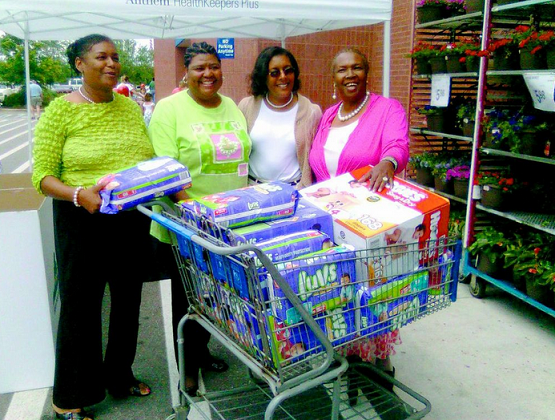
Alpha Kappa Alpha Sorority helping those in need-Sam's Club Richmond
Capital Diaper Bank is wrapping children across Virginia with love and care because every baby deserves a clean bottom, and a clean diaper. With their “Wrapped in Love” campaign, Capital Diaper Bank in Richmond is making sure every child has a clean diaper, enough clean diapers, and raising community awareness about the need for diapers in the community.
Can you imagine having to cut back on groceries to ensure your little one has a fresh diaper? Can you imagine a mother having to deny her child a clean diaper to pay the electricity bill? Well, it is true.
Unfortunately, although very common, the shortage of diapers amongst families is an often over looked issue. Diaper need is a silent crisis in Virginia. Diapers, which are not only a basic sanitary need for children, are as essential to their health and well being as is food and shelter. Capital Diaper Bank of Virginia was started in 2007, when children arriving on Monday mornings after a weekend at home returned to their caregivers wearing the same diaper. The children at the center had increased medical conditions, children were cranky, and so Virginia’s first diaper bank was created to meet this need.
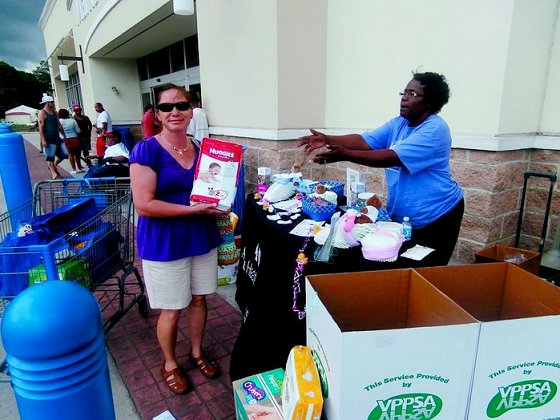
Anthem Diaper Drive- Peninsula
Mission
Capital Diaper Bank’s Mission is threefold in scope: to supply diapers to families in crisis; to educate parents; and to raise community awareness that “basic human needs” include diapers.
What is a diaper bank?
Diaper banks collect, store and help distribute free diapers to families suffering from financial difficulty. They obtain diapers through local diaper drives, from in-kind donations by manufacturers and retailers, and by purchasing diapers directly with donated funds. Diaper banks come in many forms and sizes. Some serve a single neighborhood, others an entire region. Some are based out of churches and run by volunteers; others are independent organizations with warehouses operated by professional staff. What they all share in common is a dedication to combating diaper need. Diaper banks rely on the generosity of volunteers and individual and corporate donors to accomplish their critical mission. Together, they are creating a national diaper bank movement that will ensure that every child in America remains clean, dry and healthy.
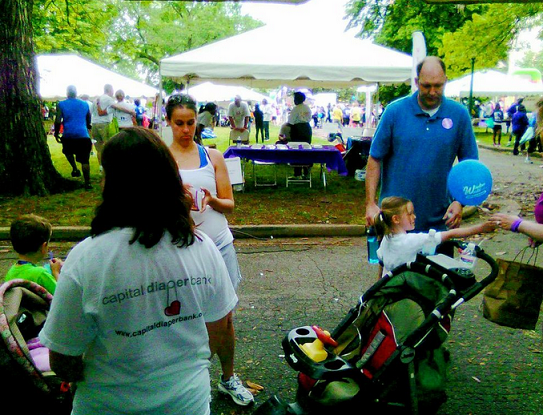
Capital Diaper Bank at the March for Babies
“The need is glaring. Children have several medical issues because families can not provide clean diapers as the child needs them.,” comments Phyllis Bradley, Executive Director of the Capital Diaper Bank in Richmond. “Realizing that diapers are an essential element for all families with young children and that keeping babies in clean diapers is an expensive proposition, we knew that creation of the Capital Diaper Bank was vital. By offering them for free to the community mothers are able to keep their children healthy.”
In 2010, Virginia’s Poverty Reduction Task Force Report found more than ten percent of Virginians currently live below the poverty level. 22 percent of all children in the United States under five years old live in poverty. They are highly concentrated in inner cities and along the state’s southern and southwest borders, with growing clusters in suburban areas. Virginia’s most vulnerable populations are children (13.8 percent poverty rate) – especially those in female-headed households, those over age 85 (27 percent poverty rate) and those with disabilities (19 percent poverty rate).
In 2010 The Voices For Virginia highlighted Children in Virginia’s Congressional District 5 (Richmond, Virginia) reported that the total population of children under age 5 is 36,265, representing 22.5% who are exposed to the devastating physical, social, and emotional effects of poverty.
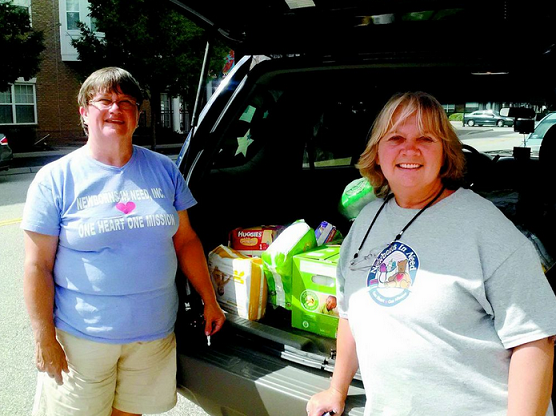
Capital Diaper bank Provides diapers to Newborns In Need-Hampton Roads
In addition to the daily risks of food insecurity, poor nutrition, and inadequate living conditions, research shows that child poverty can have prolonged harmful effects. Children who spend significant time in poverty are 1) more likely to get sick and develop chronic health problems. The recession has taken a heavy toll, pushing nearly 7,000 additional District 5 children into poverty. Research shows that many newly impoverished families will remain poor for years after the recovery begins, exposing many more children to the consequences of prolonged poverty.
Facts about Diaper Need
- 1 in 3 families in America struggle to afford diapers for their children. It is also reported that one in three women in America have a hard-time diapering their children.
- 34% of families surveyed had cut back on basics such as food, utilities or childcare in order to purchase diapers for their child.
- Poverty is most pronounced in households led by single mothers, where 54% of children live in poverty (as opposed to 10% of children under five in double-parent households).
- At an average cost of $18 per week, families require $936—more than 4% of poverty-threshold income—per child per year for diapers.
- Families from a range of incomes struggle to afford diapers, including both families who fall below the federal guideline of poverty ($22,350 for a family of four) and families with incomes above the federal poverty guideline but who are still considered low-income.
- Research suggests that families earning twice the federal poverty guideline still struggle to meet their basic needs.
*Source: National Diaper Bank Network, www.nationaldiaperbank.org
A Mother’s Love…Priceless
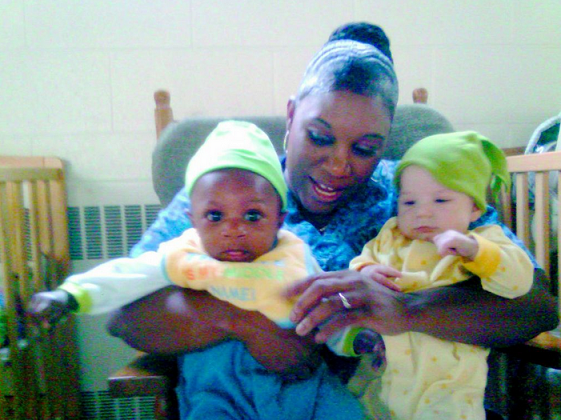
Our teacher keeps us clean, loved and dry.
An analysis completed by the Children’s Action Alliance of Arizona in 2009 concluded that at current costs, a family of four earning $33,920 annually (based on two parents earning $8.15 per hour, equating to 160% of the current poverty rate) would spend all but $54 of their monthly income on housing, utilities, childcare, transportation, food and taxes. That $54 goes to diapers, clothing, personal items, school supplies, haircuts, and other needs of four people for one month. The average child will use more than 2,700 diapers in the first year alone, which can add up to $800 a year to adequately diaper a child (based on the average price of $0.20 per disposable diaper). Just imagine a household with multiple small children; those numbers increasingly grow. Many low-income shoppers also have to frequent drug stores or urban convenience stores resulting in higher costs than big box stores or online retailers.
While the majority of families are aware of food banks, few are aware of the existence of diaper banks. The Capital Diaper Bank of Virginia is working hard to raise awareness about this devastating problem, and to help diaper banks reach families in need. Parents are expected to have the resources to purchase diapers. However, this is not always realistic. Sickness, high fuel bills, reduced working hours, unemployment and unplanned expenses and family crises are the sorts of events that break fragile budgets. Capital Diaper Bank, an affiliate of Capital Center of Virginia was founded to provide diapers to infants, toddlers, and their families who are experiencing poverty, homelessness, major illness and disasters through a diaper distribution network comprised of direct service, health, child welfare, and community agencies.
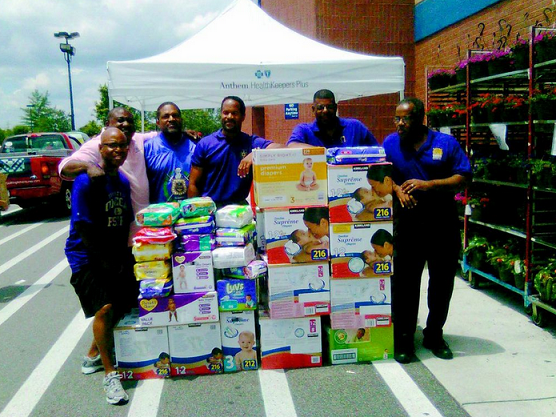
Omega Psi Phi supporting Diaper Change Campaign
Through their years in service, Capital Diaper Bank has aided mothers like Ms. Jones, a young mom who had recently had a stroke after the birth of her child. Determined, she came directly from the hospital to obtain diapers for her baby. The diaper bank was able to provide diapers during such a difficult and trying time for the Jones family. “I don’t know what I would have done had it not been for the support I received from the diaper bank”, says a thankful Ms. Jones.
A Clean Baby = A Happy Baby
CNN VIDEO: In one neighborhood, some parents have to re-use diapers
Changing Lives and Families One Diaper at a Time
Capital Diaper Bank is changing lives and giving hope back to the community. The organization receives donations and support from community partners, including Anthem Blue Cross Blue Shield, Huggies, Sam’s Club, and The National Diaper Bank Network. Everyone in the community needs to face the facts about this diaper crisis, and answer the call to action.
The Impact
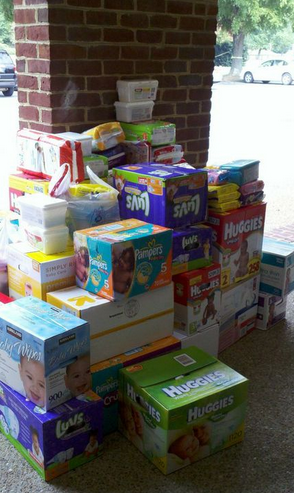
Diaper Drive Hampton Roads
Families unable to afford diapers are forced to choose between a range of undesirable alternatives that can severely impact the health and wellbeing of both their child and their household. Many families report cutting back on basics such as food, utilities or child care in order to purchase diapers for their children. Other families report leaving their children in soiled diapers for a longer period of time than they otherwise would have. Some families’ even resort to cleaning out or drying soiled diapers and reusing them in order to meet their diaper needs.
The diaper crisis has also affected the economy. Parents are buying fewer diapers overall. In an article written by The Wall Street Journal last year, recent data shows diaper sales are slowing, and sales of diaper-rash ointment are rising.
The Facts are Staggering
These alternatives can have severe repercussions for the health, economic and emotional wellbeing of the child, parent and household. Leaving children in soiled diapers longer than they should can lead to diaper rash, infections, irritability and difficulty in mother-child attachment. These consequences can lead to lower self-esteem and depression among parents who are not able to provide adequate diapers. The likelihood of abuse increases when a child is in a household facing the stresses of poverty and increases even more when that child cries due to a soiled diaper and resultant health issues. Low-income families cannot take advantage of free or subsidized childcare if they cannot afford enough diapers for their children while there. Without childcare, these parents are less able to attend work or school on a consistent basis, which in turn leads to increased economic instability and a continuation of the poverty cycle. Some parents are forced to forgo employment or educational opportunities since many daycare programs will not accept children without a supply of disposable diapers.
It’s also a detriment to moms; mothers in need of diapers also feel guilty, stressed and frustrated. One-third of U.S. mothers feel like “bad mothers” when they are not able to change their children out of a dirty diaper, according to a study done with Huggies. Cloth diapers, unfortunately, aren’t a realistic option for many low-income moms either. While cloth diapers may save money in the long term, they require an initial investment of money and time that many low-income families can’t afford. To use cloth diapers a family must either hire a diaper service at a monthly charge or have reliable access to laundry facilities. Personal washers and dryers are bulky and expensive, and coin-operated machines are not cost efficient. And with a bag of soiled linens in one hand and a child (or two or four) in the other, laundromats can be pretty tough to get to for new–and older–moms. Unfortunately it wouldn’t make a dime of difference if laundromats were less expensive and more accessible. Most licensed day care centers refuse to change cloth diapers, so most working parents are essentially required to go the disposable route if they have any hope of holding down a job.
Providing for a child is expensive in general, but when you think about diapers, wipes, formula, and other basic needs, it all begins to add up. Diapering can be seen as a fun activity for mothers, and diapering a child can give mothers a sense of pride and joy. It is reported that mothers who regularly diaper their baby are more likely to enroll in GED courses and attend parenting classes.
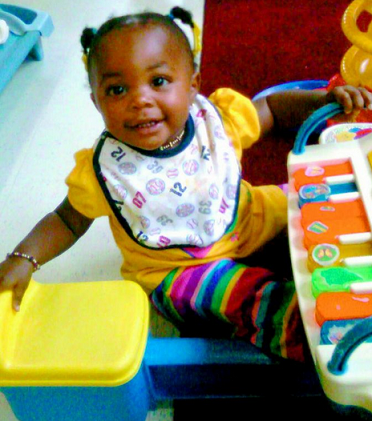
The Need
The 2010 census data shows 35 percent of metro Richmond children live in poverty. Families in need have few opportunities for free or discounted diapers. The federal government makes no provision to provide diapers to those in need. Federal benefits such as Food Stamps and the Special Supplemental Nutrition Program for Women, Infants and Children (WIC) cannot be used for diapers because they are seen as a “hygiene” item. Children, mothers, and families pay a heavy price when their health and welfare needs are inadequate.
Most licensed daycare centers do not accept cloth diapers and require parents to leave enough diapers for their children each day. Most people living in poverty cannot access washing facilities, due to cost, distance, and timing. Furthermore, most coin-operated laundromats do not allow customers to wash cloth diapers at their facilities for health and sanitary reasons.
Facing Reality
One diaper can cost anywhere from 18 cents to as high as 31 cents per diaper. Acting as a second responder to child protective services, social services, local hospitals, shelters and schools, Capital Diaper Bank provides diapers free of charge for families with children who have been professionally screened and identified as crisis cases living in situations of poverty and economic need.
In 2011 a diaper drive was conducted in Hampton Roads that raised over 33,000 diapers. Those diapers were depleted in this community within three months confirming that the need in this region is great.
Capital Diaper Bank has been fortunate to expand their resources to the Hampton Roads area, which opened a branch of the diaper bank in Newport News. Coupled with assistance from the city and the public schools system the same crucial support services will be provided.
“Families were traveling from all over the state to come to Richmond for the diapers, so it was imperative that we opened up another location to make it easier for those needing our services.” says Bradley.
The opening of another diaper bank proves the need in the area, and the Capital Diaper Bank is excited for the new opportunity to help the community.
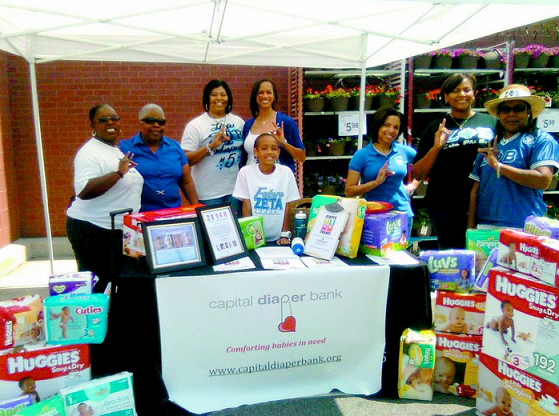
Zeta Phi Beta Sorority Alpha Phi Zeta Chapter Diaper Change Campaign at Sam's Club
How You Can Help
Babies and young children are at their most vulnerable during the early years. You can help by donating to the Capital Diaper Bank of Virginia.
“I spent time at the Capital Diaper Bank last year as a volunteer, and their vision and dedication to our children in need is truly commendable. The need for such a program is vital in Richmond and in our region. I encourage all of those who can to give back and assist Capital Diaper Bank”. comments a Capital Diaper Bank volunteer.
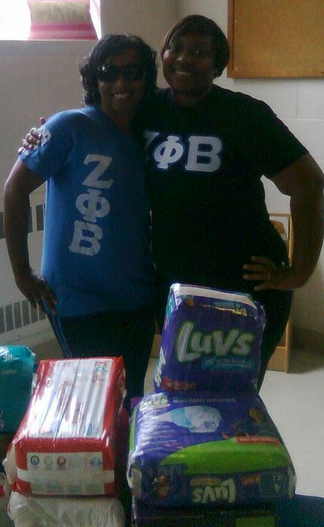
Zeta Phi Beta-Petersburg Chapter providing diapers for babies.
In 2012, Capital Diaper Bank began a collaboration with HealthKeepers, Inc. to conduct diaper drives in the Eastern and Central regions of Virginia. The collaboration will expand through out the entire state of Virginia in 2013. The kick-off for this year’s diaper drive will begin in March and run through June. If you have a business that is interested in participating as a drop off location, or if you would like to donate, please visit www.capitaldiaperbank.org. If you have a business this is interested in participating as a drop off location, or if you would like to donate, please visit www.capitaldiaperbank.org.
To continue answering the desperate need in our community, monetary donations are accepted as well. No donation is too large or too small to change a child’s life. Monetary donations allow the diaper bank to replenish much needed supplies when diaper donations are down.
Diapers may seem like a small thing, but for a baby and a family without access to a supply of clean diapers, it can change their lives. Make a difference in your community today, and help a mother to help their child grow up healthy and strong from the bottom up.
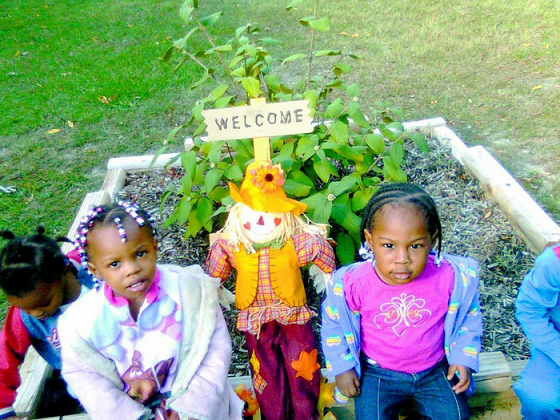
Taking a break from gardening...Capital Diaper Bank Babies

3 comments
This article implies that the Anthem Diaper Change Campaign will be expanded throughout Virginia in 2013. Actually in Fall of 2012 Anthem expanded the program to Southwest Virginia, starting in the Bristol, VA area, with the help of Tricities Diaper Ministry of Bristol, VA
The cheapest way to cloth dipaer organically is to buy natural organic (flat cloth) that you fasten in the front with what is called a . I tried doing this at first with my newborn because some suggested it would be easier while the umbilical cord was healing. However, it leaked HORRIBLY because, unlike other dipaering options, it isn’t . The next most economical way to cloth dipaer is to use with to put over the prefold. The most natural, organic dipaer cover is a , but those can be expensive, but the plus side is that as long as the cover does not get any excrement (poop) on it, it can be air dried and reused with a different dipaer (prefold) afterwards. Fortunately, in the long run cloth dipaering your baby is cheaper (and more ecologically-friendly) than using disposable dipaers. (Not to mention how much gentler it seems to be on baby’s skin.) I, personally, really love pocket dipaers. I use . You can use the same covers from newborn to potty-training and they are really easy to use. They do have , but they are a little more expensive. I prefer the pocket dipaer to the all-in-one because I think you can get the pocket dipaer cleaner and it dries faster. Hope that answers your question! Also, if you have any natural parenting stores in your area that sell cloth dipaers, many of those same stores also offer classes on cloth dipaering that will really help answer a lot of your questions. Good luck and happy dipaering!
in need of help unemployed and need some help with baby items
Comments are closed.