
 The “R” word (racism) is one of the most misunderstood, misinterpreted and misused words within the context of the American cultural landscape. People use it to describe other people, situations, and behaviors that often have nothing to do with racism or being racist. Racism, itself, is a social-political construct; an invention to institutionally divide power along lines based on the color of one’s skin. It was created to define that which is superior and that which is inferior. Whiteness has been defined socially and politically as that which is superior and powerful while defining blackness as inferior and powerless. These are the two dichotomous ends of an entire spectrum. The institutionalized doctrine of racism in America lives within that spectrum. Although this discussion is local, the prevalence and proliferation of racism is a global phenomenon.
Ironically and conveniently, Americans fully embrace equality, especially, when interrogating a social construct like racism. When speaking about the topic, Americans of all races tend to want to make racism a social malady that applies to all groups with equal impact and effect. As illuminated above, racism is defined by power and privilege. And by that definition, one would be hard pressed to argue that as a construct racism can be equally applied to all ethnic groups. In America, power is defined by ideology, economic, and political structure. The members of the dominant culture (whites) are the gatekeepers and sustain the power quotient while non-white groups are left making attempts to gain access to the so-called gates, towers, and institutions by way of acquiring the appropriate “keys.” Education is a key to: the door of power, a career rather than a job, and the ability to influence systems and policies through personal or organizational impact. These are all “keys” to the gates of the power structure that will assign both limited power and access to groups and/or people outside of its own constituency. The truth is that black and brown people have far less representation in the inner circle at those levels of power than do white people.
Many whites who are poor, undereducated, or feel disenfranchised look at their circumstances and do not believe they are at all a part of the privilege that their more educated, more affluent and influential white brothers and sisters are clearly a part of. However, whether or not they “feel” the privilege that is associated with the color of their skin or not, they are full participants in what is called the “invisible knapsack of white privilege.” This unknown and unidentified knapsack that is carried around by white-skinned people regardless of their educational or social status was identified by a social scientist named Peggy McIntosh. McIntosh wrote an article titled “Unpacking the invisible knapsack of white privilege” in 1988 that deconstructed and interrogated the basic tenets of white privilege as a social phenomenon. This theory confronted many well meaning and well intentioned, progressive, and liberal white people who disassociated themselves from racism or racist behavior long ago. It called upon them to wake up and recognize that the privilege assigned to them by the color of their skin also caused them to be inextricably bound to institutional and systemic practices of racism that directly undermine the progressive ideology of equality they champion.
People of African descent can be prejudiced; they can be biased or bigoted. They can even be racial in their observations, tone or language but they cannot be racist. Those who are racist and practice racism participate in a social political system of oppression based upon the ideology of supremacy—white supremacy. People of color cannot participate in that system because, by design, they do not have the power to do so. To accuse them of such is to use a false equivalency based on a comparison that is non-existent.
If we ever expect to undo the constructed system of racism, we must first openly and honestly define what it is and what it is NOT. It is an act of courage to take personal responsibility for how you actively participate in building and sustaining the system of racism and thereby contribute in the active care and feeding of The Racist. Making excuses for the system or for those who practice its behaviors, whether intentionally or unintentionally, is to keep Racism alive and well. It must be challenged at every level and we must start by defining it properly and refusing to accept trite sayings like “everybody’s a little bit racist sometimes.” No. Everybody is Not. How about you? Do you contribute to the care & feeding of racism or do you actively work to deconstruct it? Talk to me.
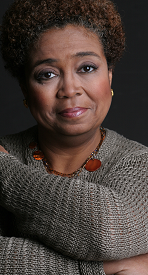 Dr. T
Dr. T
Artistic Director and Founder of
The Conciliation Project & Professor
At Virginia Commonwealth University
DrT@Margin2theCenter.com
www.theconciliationproject.org
Up Next week: Un-Equal Access & Un-Accessed Opportunity

2 comments
[…] For a more in-depth explanation see here: https://dev.urbanviewsweekly.com/2013/02/26/what-is-racism/ […]
There are actually some intriguing points in time in this article but I do not know if I see all of them center to heart. There is some validity but I will take hold opinion until I look into it further. Beneficial write-up , thanks and we want a lot more! Added to FeedBurner also
red soled shoes christian louboutin
Comments are closed.