
From slate.com
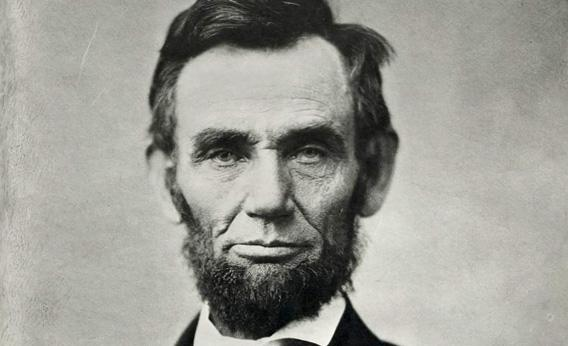
Oh freedom, oh freedom, oh freedom over me…what we know about freedom is that freedom sure ain’t free! There is a cost to be paid for freedom in blood and treasure. After seeing Steven Spielberg’s film LINCOLN, I began to re-examine whether The Emancipation Proclamation’s primary goal was to free the slaves. Certainly, there were men and women committed to ending slavery as an institution. There was, indeed, an Abolitionist Movement that included blacks and whites whose commitment to the eradication of slavery, as a sanctioned institution of the state, was clear. However, President Lincoln spoke in contradictions as to his fundamental beliefs about slavery, freedom and equality. Lincoln did not believe in the humanity or intelligence of the Black race. In fact, he was a white supremacist; if not in his time then certainly by the measurement of our time. In his own words, Lincoln stated in a speech he delivered in Charleston, Illinois in 1858:
“I will say, then, that I am not, nor ever have been, in favor of bringing about in any way the social and political equality of the white and black race…I, as much as any other man, am in favor of having the superior position assigned to the white race.”
So then, what was the motive of the so-called Great Emancipator to sign the Emancipation Proclamation? Taking Lincoln at his word, we can eliminate that he believed freedom for enslaved African people had anything to do with allowing them to fully participate as equal citizens or have equal protection, as citizens under the law. We can also eliminate that Lincoln believed slavery to be an abomination as the Lincoln mythology has taught us. In contrast, Lincoln believed that the institution of slavery offered an unfair advantage to elite wealthy whites to own slaves that it did not afford to whites without the economic ability to do so. His primary concern was to save the Union and put down the rebellion. There were deep concerns with ending slavery for the President such as: what to do with the millions of slaves once they were freed? Could they be given guns, made into soldiers, and enlisted to help the Union Army? Or should they be sent out of the country to Central America or Liberia, a free African nation founded in 1821?
Lincoln did not see the Civil War as a struggle to free the nation’s over four million slaves but rather a campaign to keep the Southern States from dividing the nation in two for all time. The Emancipation Proclamation was used, mainly, as a tool to undermine the Confederate war efforts by allowing thousands of freed black men to flee the south and fight on the side of the Union crushing the Confederacy. And finally, The Emancipation Proclamation didn’t even FREE most slaves. It was, essentially, a wartime proclamation and had no jurisdiction over Border States like Delaware, Maryland, Kentucky and Missouri. Selected areas of the Confederacy that had already come under control of the Union were also exempt from the proclamation in addition; The Emancipation Proclamation of 1863 had no control over the Confederate states still fighting against the Union. So it was, essentially, a “paper” document with little effectiveness on the institution of slavery itself. It would be much later, once the 13th Amendment was ratified in 1865, that any impactful progress towards freedom for this nation’s enslaved citizens would occur; and much further down history’s road before the issues of equality and justice would be addressed.
I do not buy into the saintly overcoat of “The Great Emancipator” as the 16th president is memorialized in the granite monument that bears his name in Washington, DC. Lincoln was a man of his time, a politician and an individual with deeply held beliefs and convictions. In The Crisis magazine in May 1922, W.E.B. Dubois wrote that Lincoln was a huge jumble of contradictions: “…he was –cruel, merciful; peace-loving, a fighter; despising Negroes and letting them fight and vote; protecting slavery and freeing the slaves…” The mythology of Lincoln was the one I was taught in elementary school; it is one reflected in Spielberg’s film and it is effectively allowed to remain as the foundational narrative in American history. Although the film was well made, it did have its shortcomings and problematic perspectives. Most troubling was the absence of the African American perspective. Mrs. Lincoln’s dressmaker appeared in a few scenes (Elizabeth Keckley), Congressman Thaddeus Stevens’ black housekeeper Lydia Hamilton in one scene and several anonymous black soldiers during the war segments-all tokens. Yet, one of the most important historic voices was missing, that of Mr. Frederick Douglass.
Why did the film leave out the most prominent and effective black voice for the abolition of slavery and the interrogation of LINCOLN? Was it because, like The Emancipation Proclamation was not essentially about the freeing the slaves, the film itself had another agenda? It appears to have once again effectively deified Lincoln while silencing dissenting opinion, especially from Black folks. What do you think?
 Tawnya Pettiford-Wates, Ph.D.
Artistic Director and Founder of The Conciliation Project www.theconciliationproject.org and a Professor of Theatre at VCU
Up next week- Lift as we climb; the role of mentorship in the Black Community
