
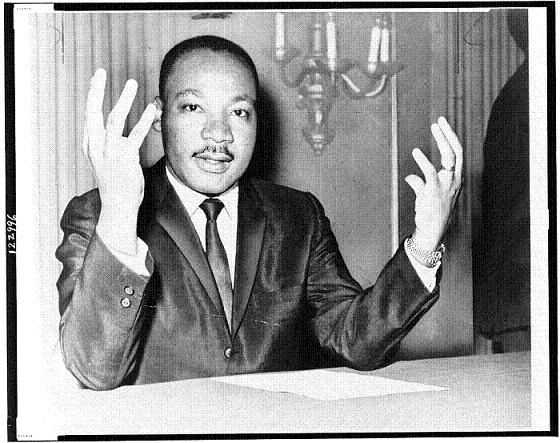
Dr. Martin Luther King, Jr. was a man who with the help of countless others pricked the consciousness of a nation and unleashed the Civil Right Movement in America causing a country to question the very nature of its character and creed. As we embark on what MLK could only dream of, the second term of President Barack Obama, our nation’s first Black president, it begs the question WWMLKD in the face of such incredible inertia, struggle and resistance to change? We are a nation founded on and governed by a constitution. We have the right and privilege to choose through the process of election the people who are supposed to represent us through the constitutional process of governance. An electoral process that many fought and died to provide that ALL citizens would be able to participate- the Voting Rights Act of 1965. As we celebrate the life and legacy of Dr. King in conjunction with the inauguration of President Obama it gives me pause as I consider how far we have really come.
In the election of 2012, we had to engage actively once again to protect the right to vote as challenges to our constitutional rights abounded all over the nation. Courts once again bustled with cases bringing into question the constitutionality of the basic tenets found in the Voting Rights Act of 1965. Once again the fight Dr. King, Goodman, Chaney, Schwermer and other martyrs of the struggle for equal justice, liberty and the right to the ballot box fought and died to provide was at the center of political discourse. Applauding the forward progress of the 21st century notwithstanding, we have not come as far as we think we have when we are still having the same struggles, same resistance to change and politics is still entrenched along race, class and gender lines.
Holding up the tattered flag of the civil rights struggle in America, we cannot forget that the struggle continues and it needs the same strength of conviction, purpose and commitment as ever- if not more than ever. The history of the struggle is long. After the passage of the Emancipation Proclamation in 1863 and the 13th Amendment abolishing slavery, the 15th Amendment gave African American men the right to vote in 1870. A limited chronology is as follows: 19th Amendment in 1920 gave women the vote, 1923 “high caste Hindus” from India do not qualify as “white” and cannot vote as citizens under the Naturalization Law, 1937 Breedlove v. Suttles ushered in the era of “poll taxes” creating constitutional barriers to African American voting rights- 1943 Chinese Exclusion Act finally repealed- 1954 Brown v. the Board of Education declares separate but equal unconstitutional- 1959 Supreme Court approves literacy tests in North Carolina in order to vote- 1963 March on Washington focuses international attention on US policy towards its citizens of color-1965 Voting Rights Act barring direct barriers to political participation by racial and ethnic minorities is finally passed into law.
Voting is one of the most important acts of civic responsibility one can exercise. Local and state elections are more important than ever because of their impact on the representatives we as “the people” have in the US Congress. Local and state governments draw lines, dig trenches and build barriers through redistricting and gerrymandering all set up to keep the political process unequal and unfair. The 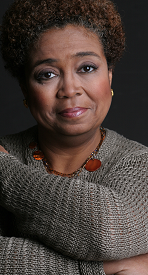 struggle is not over, we have not arrived, and this is not a post-racial America. WWMLKD? He would continue in the struggle for justice and freedom. “Injustice anywhere is a threat to justice everywhere” –MLK What do you think he’d do? Let’s move this one from the margins to the center. It needs some real dialogue.
Tawnya Pettiford-Wates, Ph.D.
DrT@margins2thecenter.com
Artistic Director and Founder of The Conciliation Project and a Professor of Theatre at VCU
Up next week- What if black & brown people en masse applied for permit-to carry licenses and took up arms? Would that affect the discourse about 2nd Amendment rights?
