
Imagine you are a married heterosexual man who has just discovered that you have HIV. You’re confused, hurt and in need of support. You turn to your church. An associate pastor responds by holding his hand over your head and declaring that he’s been led to “pray the gay” away. You are not gay. You’re distraught. Your faith is challenged but after some time you find another church that accepts you as someone living openly with HIV. You help to grow the HIV ministry there. One day you are asked to speak about HIV during a prayer meeting focused on healing. You watch the pastor anoint, embrace then pray for a fellow church member who is living with end stage cancer. He then turns to you, wanting to pray for you as a representative of all those who are infected with HIV. Instead of anointing or embracing you, he holds his hand over your head and begins to pray. You realize he is likely afraid to touch you.
Summarized from the Pastoral Brief of the NAACP’s initiative “The Black Church & HIV: The Social Justice Imperative,” this is one of the many stories of HIV/AIDS in the Black community and the stigma associated with it. It is one example why a day like World AIDS Day is important.
Established in 1988 by the World Health Organization, World AIDS Day is focused on remembering those who have perished and on acknowledging progress, challenges and opportunities in regard to combating AIDS. AIDS or Acquired Immunodeficiency Syndrome is the most advanced stage of HIV (the Human Immunodeficiency Virus). HIV weakens the immune system by attacking the cells that defend the body from illness.
The 2012 World AIDS Day is focused on “Getting to Zero” – zero new HIV infections, zero discrimination and zero AIDS related deaths. This is a vision that is especially important for the Black community.
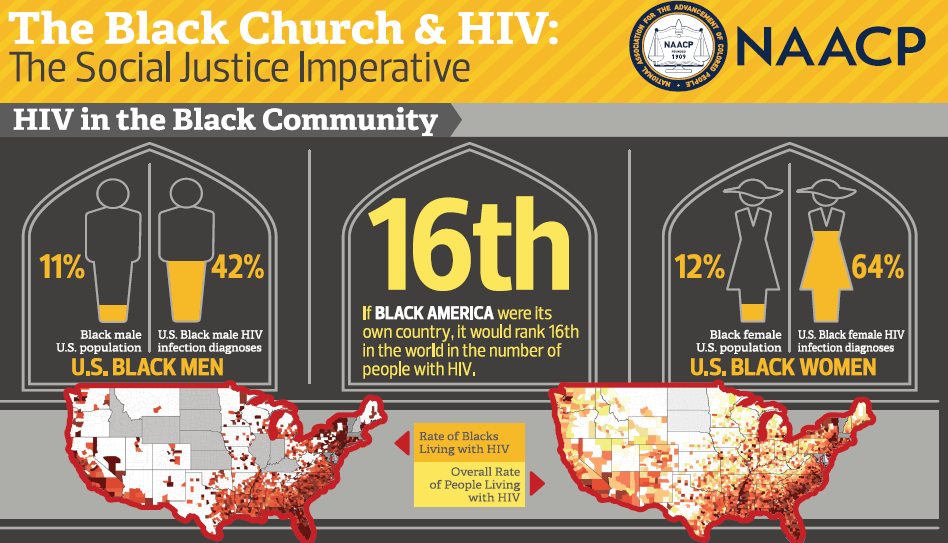
“Black Americans have been disproportionately affected by HIV/AIDS since the epidemic’s beginning, and that disparity has deepened over time,” reports The Henry J. Kaiser Family Foundation’s July 2012 HIV/AIDS Policy Fact Sheet. While accounting for only 14% of the U.S. population in 2009, African Americans represented almost half (44%) of all new HIV infections that year, according to the Centers for Disease Control (CDC).
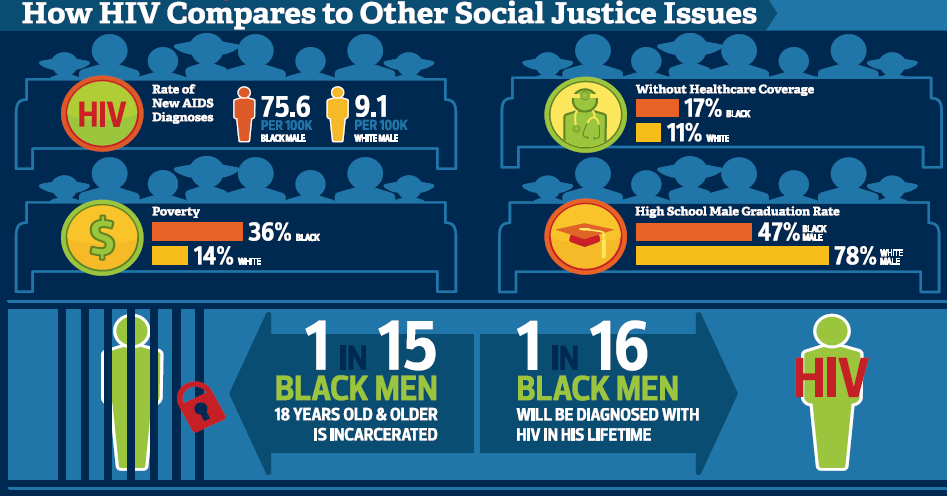
“Oftentimes in the Black community we do not talk about sex, sexuality, HIV and other related topics,” says Marquietta Alston, Assistant Director of HIV Prevention at the Virginia Department of Health (VDH). The harmful effect of that silence seems evident within 2009 CDC statistics. That year, Black men who have sex with men, but may not identify as gay or bisexual, represented 73% of all Black men infected with HIV. Black women who contracted the infection through heterosexual contact accounted for 85% of all Black women infected. Would these statistics continue to hold true if more people felt safe to talk honestly about sexuality and HIV?
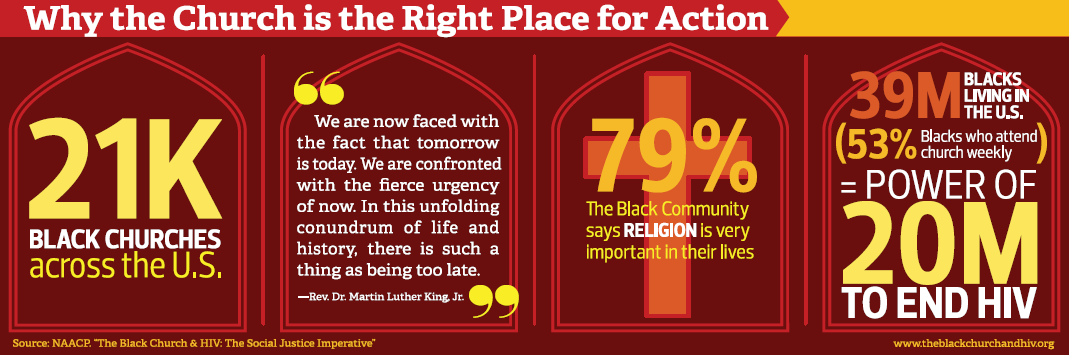
The Virginia Department of Health hopes that making space for such honest conversation will indeed help reduce the alarming HIV/AIDS statistics within the Black community. On December 3rd and 4th, it will hold a conference for clergy and faith leaders titled, “No More Secrets: Honest Conversations about Sexuality, Stigma, HIV and the Black Church.” Alston explains the need for the conference stating, “In Virginia, Blacks represent nearly 20% of Virginia’s population but accounted for 61% of the new HIV/AIDS diagnoses in 2011.” She adds, “Historically the church has always been a strong, influential institution in the Black community. It is imperative that public health strategies involve respected institutions within the Black community such as churches to bring about positive change and stop HIV which is preventable.” The conference will cover topics such as sexuality, stigmas related to HIV, ways to reduce stigma, and the role of faith leaders in addressing HIV/AIDS. For more information on the conference, contact Alston at marquietta.alston@vdh.virginia.gov or 804-864-8006.
The NAACP also believes the Black Christian church has an important role to play in addressing HIV/AIDS. In a year-long research tour, NAACP representatives visited 11 cities and met with over 250 faith leaders to discuss best practices and challenges to addressing HIV/AIDS within Black churches. From the information gathered on that tour, it launched its initiative, “The Black Church & HIV: The Social Justice Imperative” and developed two resources to encourage faith leaders to build HIV awareness at their churches: a Pastoral Brief and an Activity Manual. Both resources can be downloaded for free at www.theblackchurchandhiv.org.
As the church saying goes, the truth will set you free. “Being afraid to talk openly and honestly about HIV allows misconceptions and myths to continue and (to) hold people in bondage to HIV; afraid to seek HIV testing, afraid to get care if they test positive, afraid to seek emotional and spiritual support for fear of how others may treat them,” says Alston.
One way to break the silence regarding HIV/AIDS and address the stigma associated with it is to humanize those living with the disease. A project that is attempting to do that is the Facing AIDS project. Through it, the public is invited to upload pictures of themselves holding statements about AIDS in honor of World AIDS Day.
In terms of preventing the disease, it is important to talk about sex. The HIV virus is spread through infected body fluids such as semen, pre-cum, vaginal fluids, blood and breast milk. The virus is most frequently spread through unprotected sex but can also be spread through the sharing of needles. To avoid contracting HIV through vaginal, oral or anal sex, the CDC recommends not having sex; having sex only within a mutually monogamous relationship in which your partner is not infected; and using a latex condom every time you have sex.
Given that 1 in 5 people are living with HIV and don’t know they have it yet, it is important to talk about HIV testing. In Richmond, testing can be done at the Richmond City Health District, the Fan Free Clinic, the Daily Planet, and the Minority Health Consortium. You can also locate a site by calling the Virginia HIV/STD Hotline at 1-800-533-4148.
